
Last updated November 16, 2026
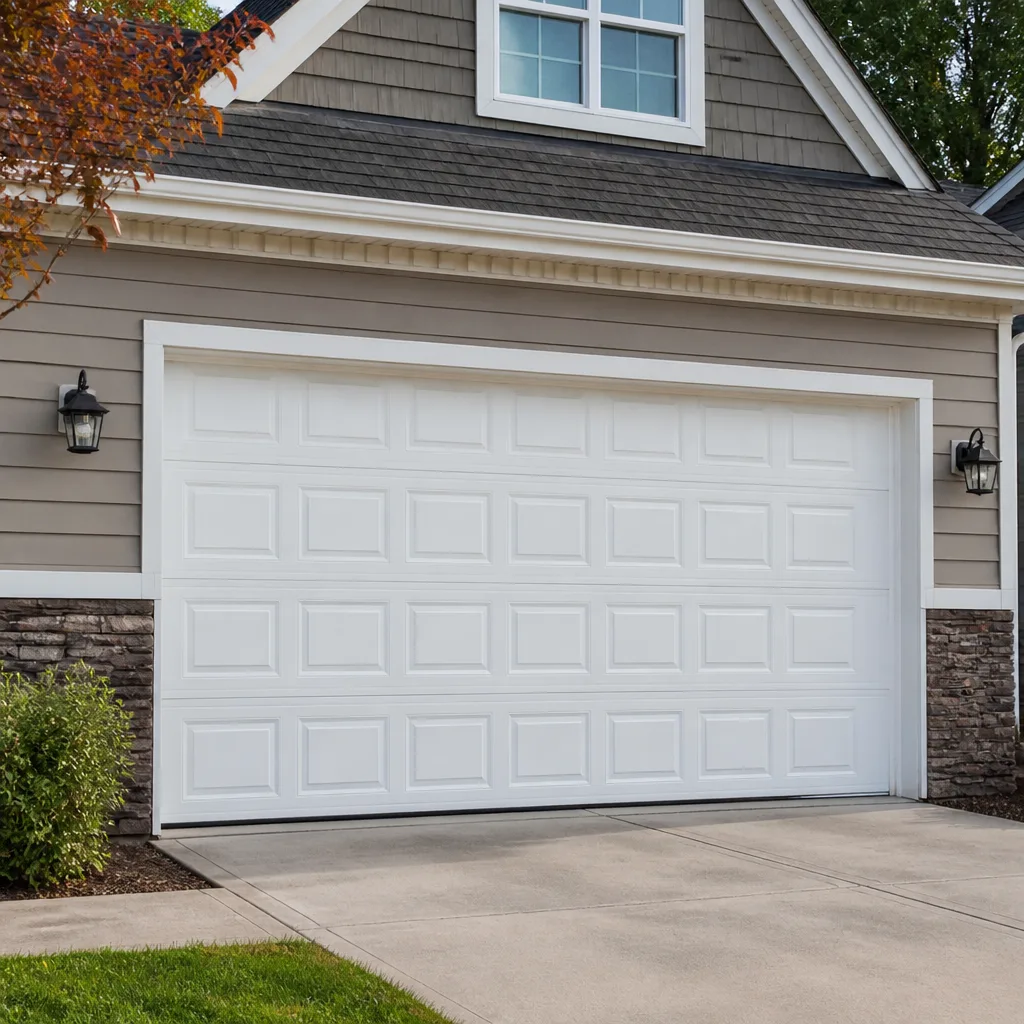 Raised-panel steel
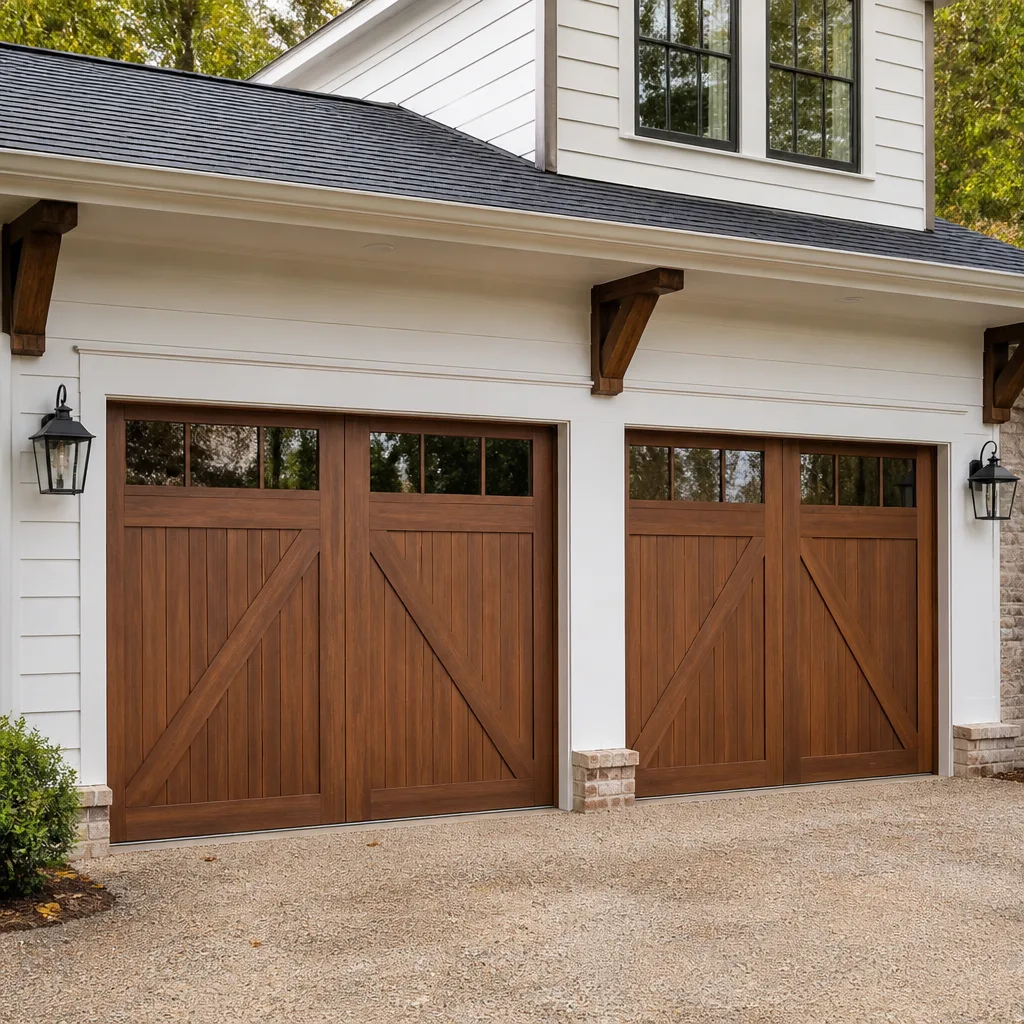 Carriage house
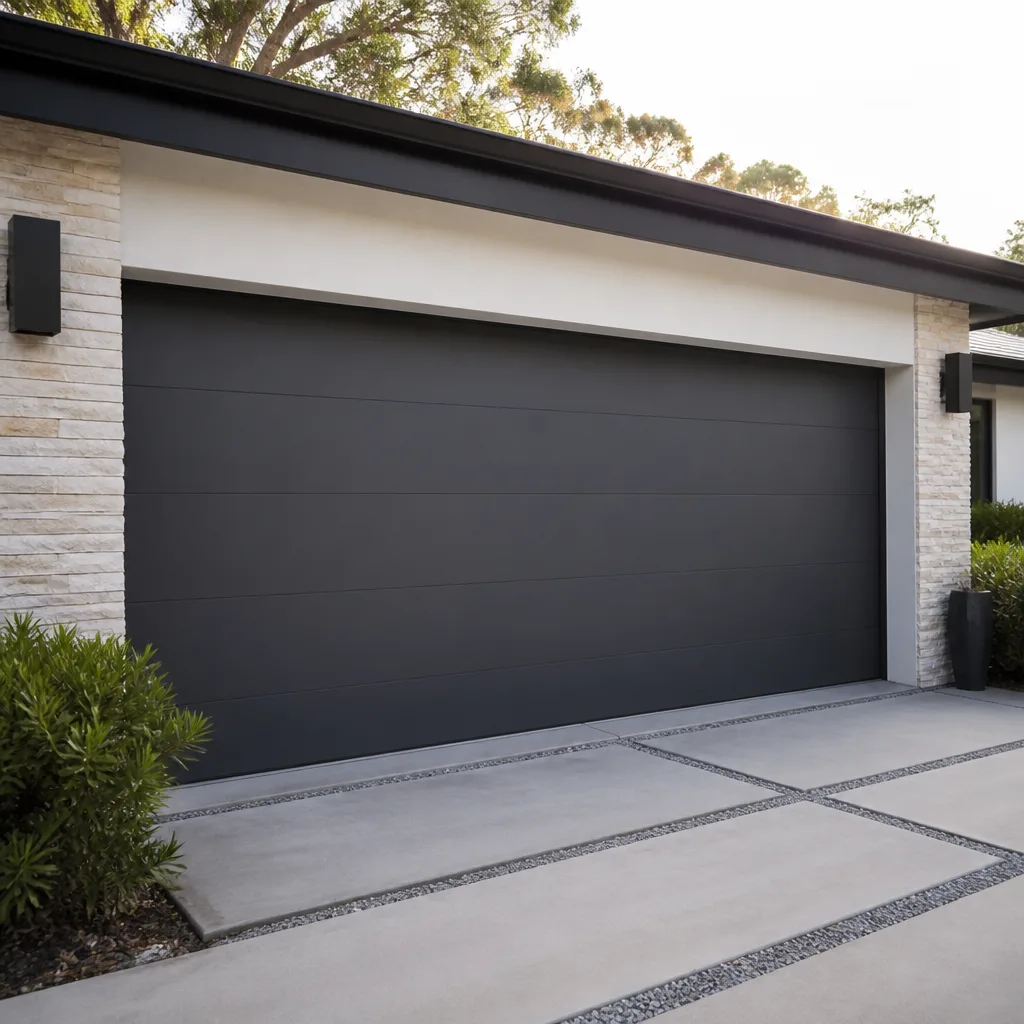 Modern flush
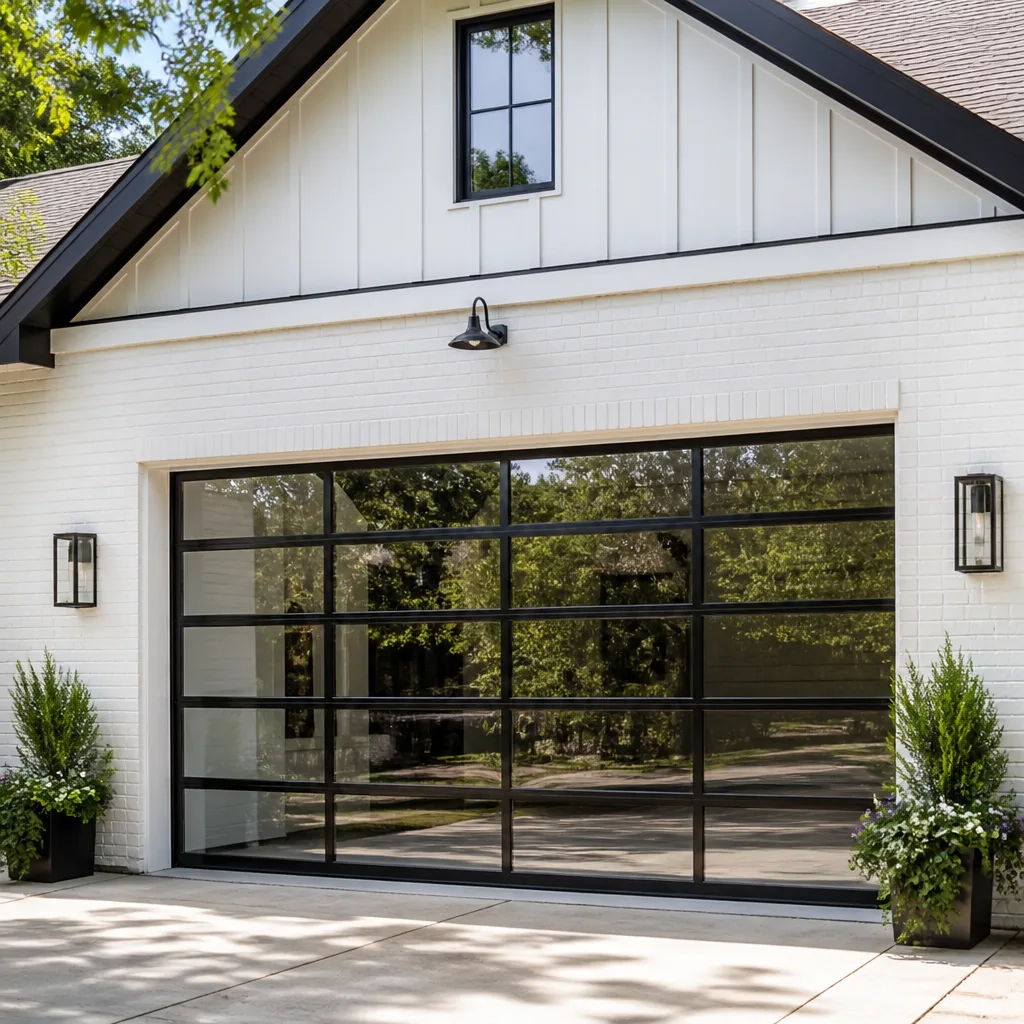 Full-view glass
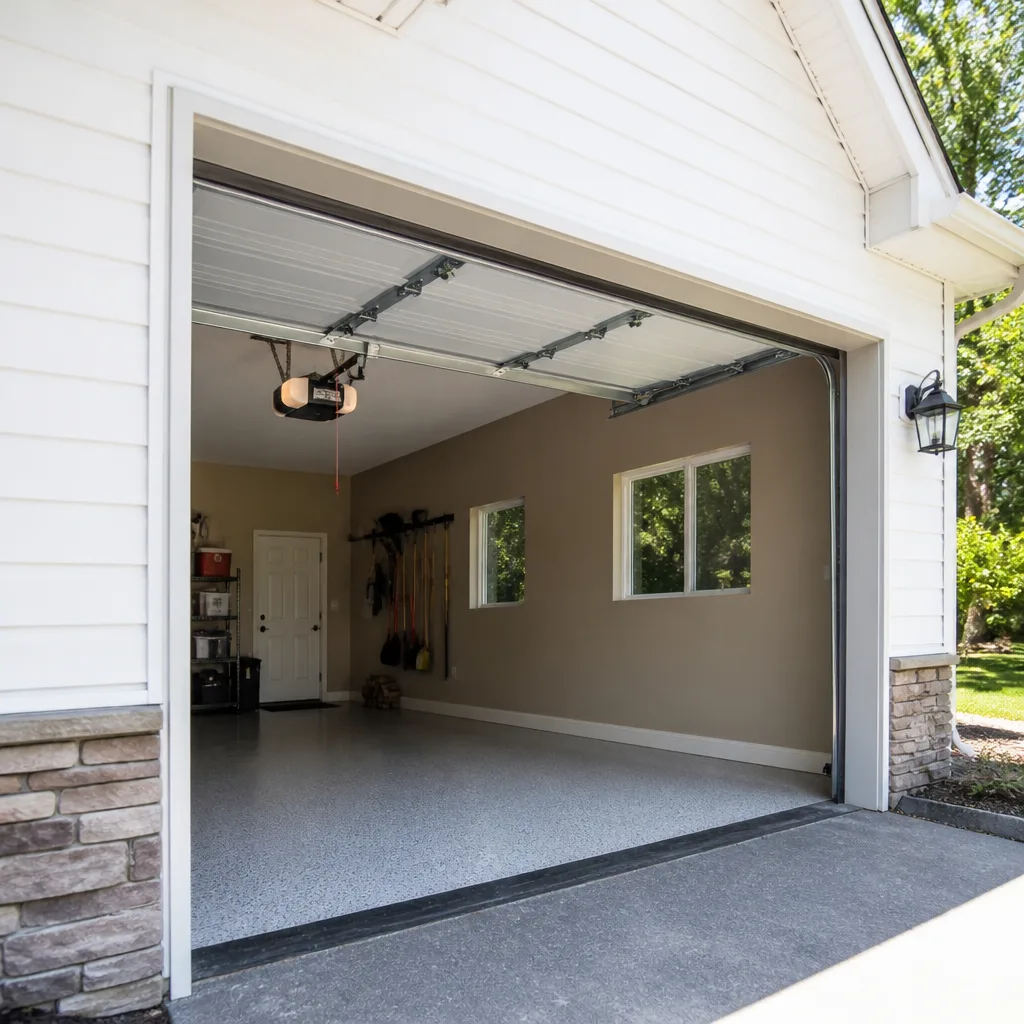 LiftMaster openers
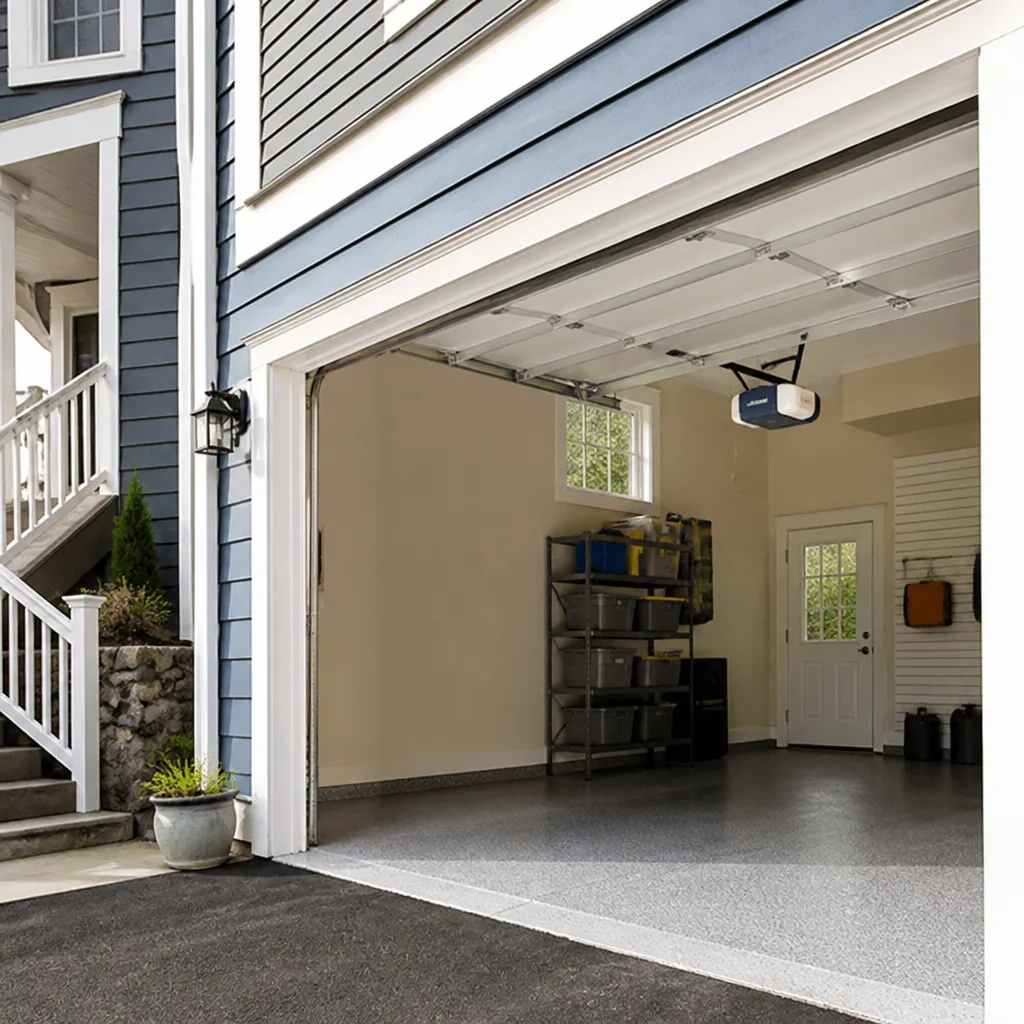 Chamberlain openers
Full 25-point door and opener safety check with every visit - springs, cables, rollers, tracks, and your LiftMaster or Chamberlain opener included
You get a price before we start. It does not change when the pro arrives.
Get your free estimateDIY vs Professional Garage Door: The Edmond Homeowner’s Decision Guide
Most garage door advice splits into two useless camps. One says everything is dangerous and you should never touch your door. The other says a handy homeowner can do it all with a YouTube video and a Saturday afternoon. Both are wrong, and both cost Edmond homeowners money. Here’s the truth we’ve learned from years of working on doors across every major brand: a few garage door tasks carry enough stored energy to seriously hurt you in a fraction of a second, while plenty of others – replacing rollers, lubricating hinges, reprogramming a remote – involve zero real danger and are genuinely fine to handle yourself. This guide draws the line task by task, with costs, tools, and the exact point where finishing a DIY job stops making financial sense.
Quick Answer
For an Edmond homeowner, the DIY-versus-professional decision comes down to one question: does the task involve the springs, cables, or the door’s balance under tension? If yes, call a professional – those parts can injure you badly regardless of how handy you are. If the task is maintenance, lubrication, roller swaps, weather seal replacement, or opener programming, it’s safe to do yourself and worth doing. Everything else sits in between, and this guide tells you where each job lands.
Styles & brands we work with
- Raised-panel steel
- Carriage house
- Modern flush
- Full-view glass
- LiftMaster openers
- Chamberlain openers
Table of Contents
- The Safety Line: Which Garage Door Tasks Are Actually Dangerous
- Safe DIY: The Garage Door Jobs You Can Genuinely Handle
- The Tool Gap: Jobs That Need Equipment You Don’t Own
- Cost Comparison: DIY vs Professional for the Five Most Common Repairs
- The Oklahoma Warranty Angle Most Homeowners Miss
- When a DIY Job Has Gone Too Far: How to Know
- How Edmond’s Climate and Housing Shape This Decision
- A Realistic Maintenance Routine for an Edmond Door
The Safety Line: Which Garage Door Tasks Are Actually Dangerous
Garage door springs store enough energy to cause a serious injury in a fraction of a second. That is the single most important fact in this entire guide, and it’s the reason the DIY-versus-professional question has a hard line running through it. A torsion spring under load holds hundreds of pounds of force. When it fails during adjustment, it releases that energy instantly, with no warning. Extension springs can whip toward whatever is in their path. The cables that run alongside them are equally unforgiving. A trained technician understands the tension, the winding process, and the failure modes because they’ve handled it many times. A homeowner with a pair of winding bars and a video has none of that margin for error.
Here’s the task-by-task breakdown we give Edmond homeowners when they ask whether they can do a job themselves:
- Dangerous – do not DIY, at any skill level: spring replacement (torsion or extension), cable replacement, winding or unwinding springs, adjusting spring tension, and any work requiring the door to be disconnected from the opener while under load.
- Caution – safe only with the right tools and a second person: track alignment, hinge replacement on a door that carries tension, and roller replacement on the bottom section where spring tension is present.
- Safe DIY – no meaningful injury risk: lubricating hinges, rollers, and tracks; replacing the bottom weather seal; cleaning photo-eye lenses; reprogramming a remote; adjusting opener travel limits and force settings; replacing a light bulb in the opener housing.
The distinction matters because pushing professional service on the safe category wastes a homeowner’s money and breeds distrust. Replacing a $4 weather seal yourself is a fine decision. Winding a torsion spring yourself is a decision that can put you in an emergency room. We don’t treat those the same, and no honest guide should. If a task involves the springs or cables, that’s when you call for garage door repair and let a trained technician handle it.
Safe DIY: The Garage Door Jobs You Can Genuinely Handle
A mechanically confident Edmond homeowner can keep a door running smoothly for years with nothing more than basic tools and an hour twice a year. These jobs carry no meaningful injury risk and cost very little in parts. We’d rather you do them yourself than pay for a service call you don’t need.
The maintenance tasks worth doing yourself:
- Lubricate the moving parts. A garage-door-specific spray lubricant on the hinges, rollers, and the torsion spring itself (sprayed lightly, never handled) quiets squeaks and slows wear. Avoid heavy grease, which collects grit.
- Inspect the rollers. Worn nylon rollers develop flats and make the door rumble. If your door uses the push-in style roller and a hinge bracket that isn’t under tension, swapping a roller is a 15-minute job.
- Replace the bottom weather seal. The rubber seal along the bottom of the door hardens and cracks, letting in drafts and water. Pull the old one out of its channel and slide a new one in. This is one of the most common Edmond repairs and one of the easiest to do yourself.
- Clean the photo-eye lenses. The small sensors near the floor trip the safety reverse. Dust and cobwebs on the lenses cause intermittent problems. A soft cloth fixes it.
- Reprogram a remote or keypad. Whether it’s a Genie or a LiftMaster unit, most remotes reprogram through a learn button on the opener housing and a short sequence in the manual. No tools required.
- Adjust opener travel and force settings. If the door stops slightly short of the floor or reverses for no reason, the travel limit screws on the opener are usually the culprit. The owner’s manual walks you through it.
None of these touch spring tension, and none of them require you to lift or balance the door. That’s the dividing line. If your only issue is a squeak, a drafty bottom seal, or a remote that stopped working, you can solve it before dinner and save the cost of a service call.
The Tool Gap: Jobs That Need Equipment You Don’t Own
Some garage door jobs aren’t dangerous so much as they need specialized equipment most homeowners simply don’t have. Edmond is full of well-equipped garages with circular saws and impact drivers, and none of that helps here. This is the middle category: tasks a confident homeowner could theoretically learn, but where the tool cost and the risk of getting it wrong make a professional the smarter financial call.
What it takes to do the harder jobs properly:
- Winding bars for torsion springs. These are specific solid-steel rods sized to the spring. Improvised tools (screwdrivers, pipe) are how people get hurt. The bars themselves cost little, but owning them doesn’t make the winding safe for someone who hasn’t done it.
- A cable puller and proper cable clamps for cable replacement, because a cable must be installed with correct tension and secured with the right hardware, not zip ties.
- A level and shims for track alignment, plus the knowledge of how much play a track should have before it binds.
- Drill bits, anchors, and correct measurements for any installation work, where a door hung out of plumb will bind and wear out its opener.
- A second person for anything involving a door section, because door panels are heavy and awkward.
The tools themselves aren’t the real barrier. The barrier is doing the job enough times to recognize when something is off. That’s why our team handles spring and cable work as a matter of course: we’ve seen the failure modes and know the warning signs. For an Edmond homeowner, the tool gap usually tips the decision toward calling a professional once a job needs anything more than a screwdriver and a spray can. If opener problems are what’s driving the call, that’s a separate, specialized area – see garage door opener repair for how that gets diagnosed.
Cost Comparison: DIY vs Professional for the Five Most Common Repairs
Here’s the honest math on the five repairs we handle most often in Edmond. DIY parts cost is what you’d pay at a hardware store or online for the part; professional cost is the typical range for the completed repair, part and labor together. Neither includes a service-call fee, because we don’t charge one on top of a free estimate.
| Repair | DIY Parts Cost | Professional (Part + Labor) | Verdict |
|---|---|---|---|
| Bottom weather seal replacement | $15-$35 | $90-$160 | Do it yourself |
| Roller replacement (full set) | $20-$50 | $130-$220 | Do it yourself if not under tension |
| Opener gear and sprocket kit | $30-$70 | $180-$320 | Professional – opener disassembly is fiddly |
| One torsion spring | $40-$90 (part only) | $180-$340 | Professional – dangerous |
| Cable replacement | $20-$45 | $150-$280 | Professional – dangerous |
A matched pair of torsion springs is almost always replaced together, so a pair costs about twice the single-spring figure. The written estimate you get is the price – it’s set before any work starts, so there’s no surprise invoice after the fact.
Notice the pattern. The two safe jobs save you real money doing them yourself, because the professional price is mostly labor for a task that takes ten minutes. The dangerous jobs are the opposite: the part is cheap, but the risk isn’t worth the savings. That’s the whole calculus in one table.
The Oklahoma Warranty Angle Most Homeowners Miss
Many garage door and opener manufacturers void parts of their warranty when a product is installed or repaired by someone who isn’t a qualified technician. This doesn’t get talked about enough, and it’s the angle that changes the math on bigger jobs in Edmond. If a homeowner installs a new Clopay or Amarr door themselves and the door later develops a defect, the manufacturer may decline the claim because the installation wasn’t done to spec. The savings on the install can vanish the moment a warranty claim gets rejected.
What this means practically:
- Installation: a new door is a significant purchase, and the warranty is part of what you’re buying. Professional installation protects it. This is the strongest argument for having a specialist install rather than self-install.
- Opener replacement: same logic. A Wayne Dalton or Genie opener installed incorrectly can void coverage on the unit and, in some cases, on the door it drives.
- Repairs: smaller part warranties usually survive a DIY repair, but check the paperwork before you start. It takes two minutes and can save a headache.
We work with the major manufacturers on both doors and openers, which means we install to the specs their warranties expect. For an Edmond homeowner weighing a self-install, ask the manufacturer directly whether a homeowner install keeps the warranty intact. Sometimes it does, often it doesn’t, and it’s worth knowing before you order the door.
When a DIY Job Has Gone Too Far: How to Know
The most expensive repair we see isn’t the one that started broken. It’s the one that started as a DIY job and then got worse. A homeowner attempts a fix, it doesn’t quite work, they try again, and by the time they call us the original problem has been joined by stripped bolts, a bent track, or a door that’s now off its hinges. The cost to finish is higher than the original repair would have been. Here’s how to recognize the moment to stop.
The warning signs that a DIY job has reached the point of no return:
- You’ve removed a part and can’t get it back exactly as it was. Springs, cables, and hinges are load-bearing. If reassembly isn’t going smoothly, stop and call.
- The door is now out of balance or won’t stay level. A door that lifts halfway and slumps means the tension is wrong. Continuing to run the opener on an unbalanced door damages the opener motor.
- A bolt is stripped or a bracket is bent. Forcing it further turns a simple repair into a track replacement.
- The door has come off its track. Do not pull it back by hand. A door off track is unpredictable and heavy. This is a stop-and-call situation.
- You’ve made the original symptom worse. If the door was noisy before and now it binds, you’ve crossed from maintenance into repair.
The honest rule: if you’re past the maintenance tasks and into anything with tension, weight, or alignment, and it isn’t going cleanly, stop. The cost to finish a botched job is almost always more than the original repair. For a diagnostic on a job that’s gotten sideways, or any repair across the major brands, our team can take it from there.
How Edmond’s Climate and Housing Shape This Decision
Edmond’s weather works on garage doors in ways that make some DIY jobs more tempting and others less forgiving. The hot summers and the freeze-thaw swings of an Oklahoma winter are hard on springs, seals, and the lubrication you’re supposed to keep up with. A door that’s ignored through a summer of 100-degree days and then hit by a hard freeze is more likely to snap a spring or crack a bottom seal than one in a milder climate. That raises the stakes on doing the safe maintenance tasks on time, because the dangerous failures often trace back to skipped maintenance.
A few Edmond-specific points worth knowing:
- The bottom seal takes a beating. Summer heat hardens the rubber and winter ice finishes it off. Replacing it yourself is cheap and prevents water intrusion that rusts the door’s bottom section.
- Lubrication matters more here. Heat and dust dry out moving parts faster than in cooler climates. Twice-a-year lubrication is the single best DIY habit for an Edmond door.
- Newer subdivisions mean builder-grade hardware. Homes in neighborhoods around Edmond often came with builder-installed doors using generic or lower-grade hardware. Those doors are more likely to need maintenance and more likely to hit a spring failure earlier. Genie and Craftsman openers are common on these builds, and both are easy to service once you know the model.
None of this changes the safety line. It just means the maintenance tasks aren’t optional in Edmond. Doing them keeps the door out of the danger zone longer.
A Realistic Maintenance Routine for an Edmond Door
A garage door that gets a little attention twice a year rarely gives its owner a surprise. The routine below is entirely safe to do yourself and costs very little. Treat it as a checklist, not a project. The goal is to catch small wear before it becomes a spring or cable failure that only a professional should touch.
Twice a year, and always after a hard freeze:
- Open and close the door slowly by hand (with the opener disconnected) and listen. Grinding, popping, or a door that feels heavier than usual are early warnings.
- Lubricate hinges, rollers, and the torsion spring with a garage-door lubricant. Wipe off excess.
- Inspect the rollers for flats and cracks. Swap the easy push-in style yourself; flag any roller under tension for a technician.
- Check the bottom seal for cracks and gaps. Replace it if it’s hardened or torn.
- Test the safety reverse by placing a block of wood under the door and closing it. It should reverse on contact. Clean the photo-eye lenses if it doesn’t.
- Look for loose bolts on the hinges and brackets. Snug them, but don’t overtighten.
If anything in that list points to a spring, a cable, or a door that won’t balance, that’s the boundary. Everything before it is yours to handle. Everything after it belongs to a trained technician, and that’s the moment to stop DIY and make a call. A free estimate and a written price before any work starts is what you should expect, and it’s what we provide across Edmond.
Common Mistakes to Avoid
- Winding a torsion spring yourself because a video made it look easy. The video shows someone who has done it dozens of times. The stored energy doesn’t care how careful you are. This is the single most common way garage door DIY goes badly wrong.
- Using the top section’s weight as a test. Lifting a door partly open to “see if it balances” while the opener is disconnected can drop the door on you. Balance checks happen with the springs intact and the door closed first.
- Replacing only one of a matched pair of springs. The second spring is nearly as old and usually fails soon after. Replacing both together saves a second service call and is the standard practice.
- Greasing the tracks. Tracks are meant to stay dry. Lubricating them attracts grit, which binds the rollers. Grease goes on the moving parts, not the rails.
- Ignoring a door that reverses on its own. Edmond’s dust and pollen clog photo-eye lenses, and a door that reverses randomly is usually a dirty sensor, not a failing opener. Clean the lenses before assuming the worst.
- Self-installing a new door to save money and losing the warranty. The part you’re most likely to need covered is the part a bad install voids. Check the manufacturer’s warranty terms before you order a door or opener.
- Forcing a door back onto its track by hand. A door off its track is under uneven load and can come down suddenly. This is exactly the call where a professional prevents an injury.
See the difference
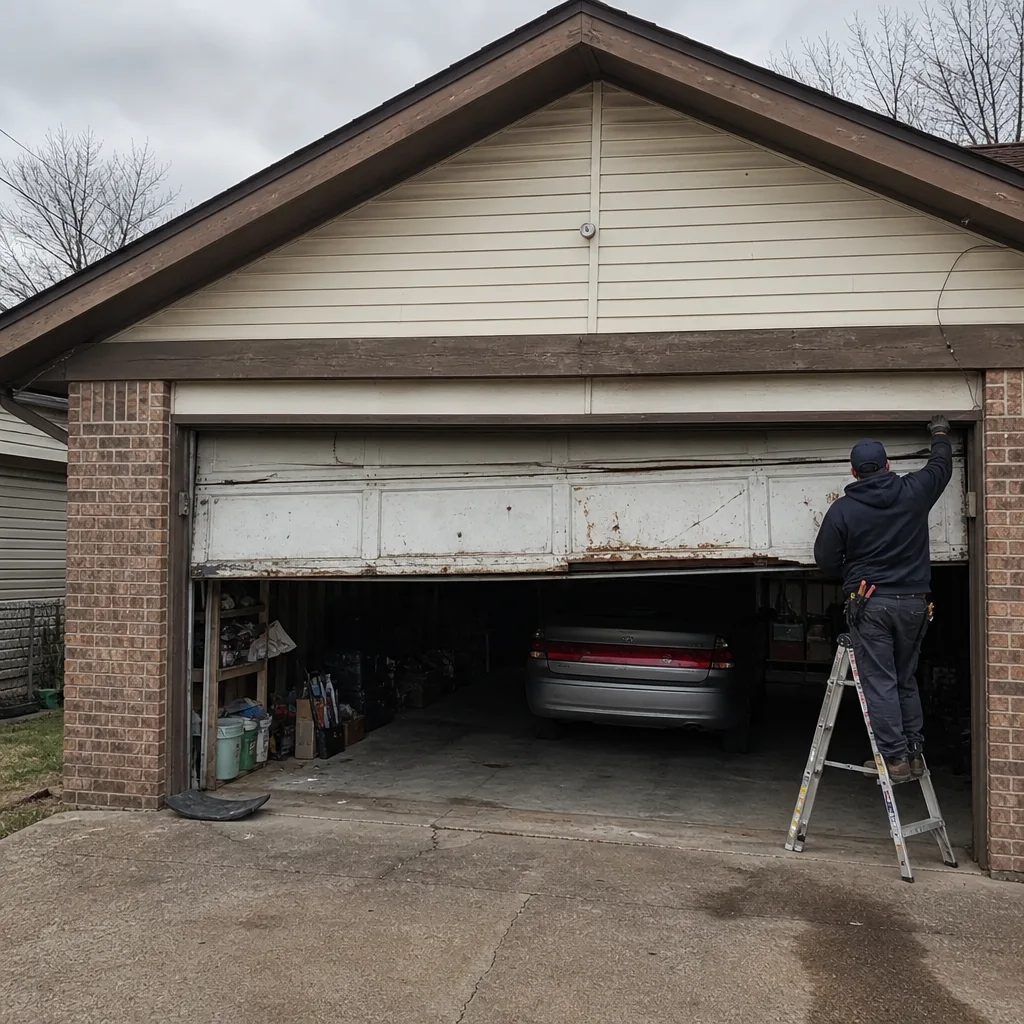 Before
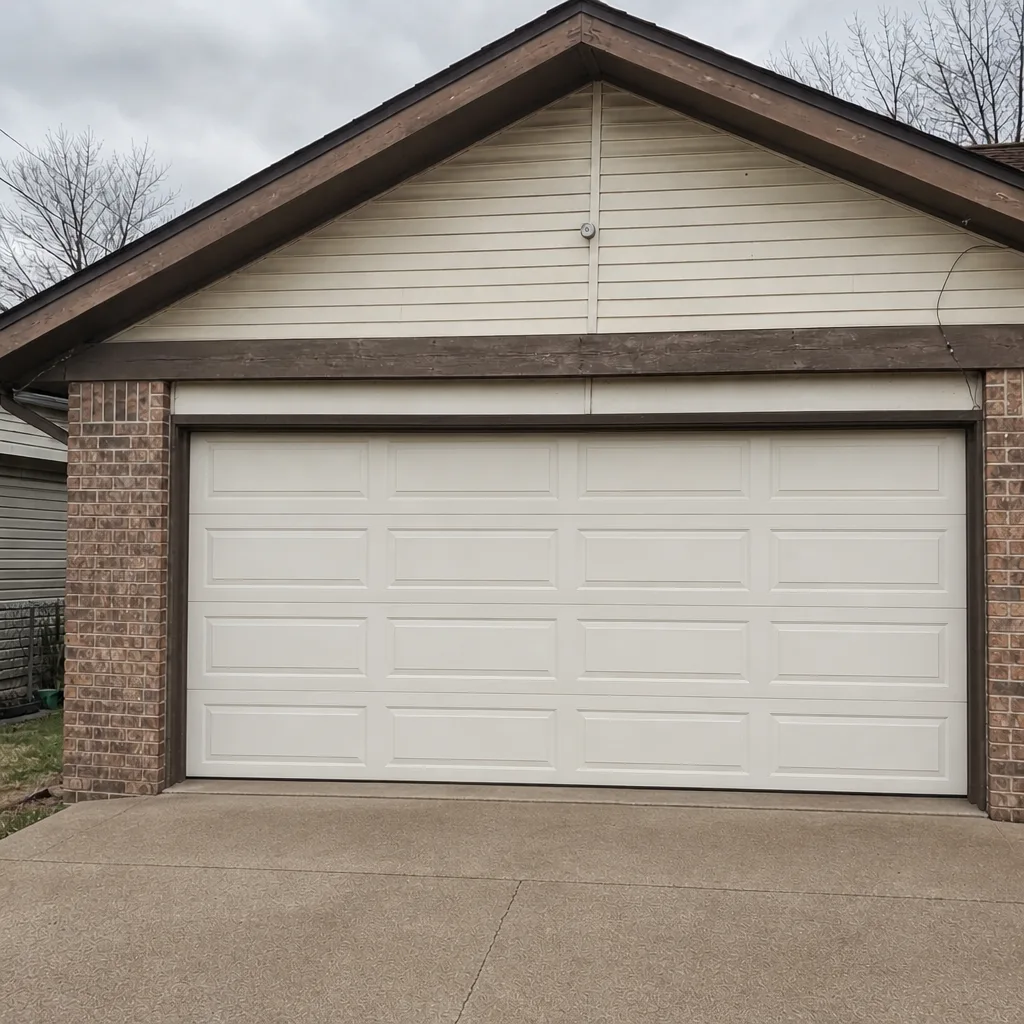 After
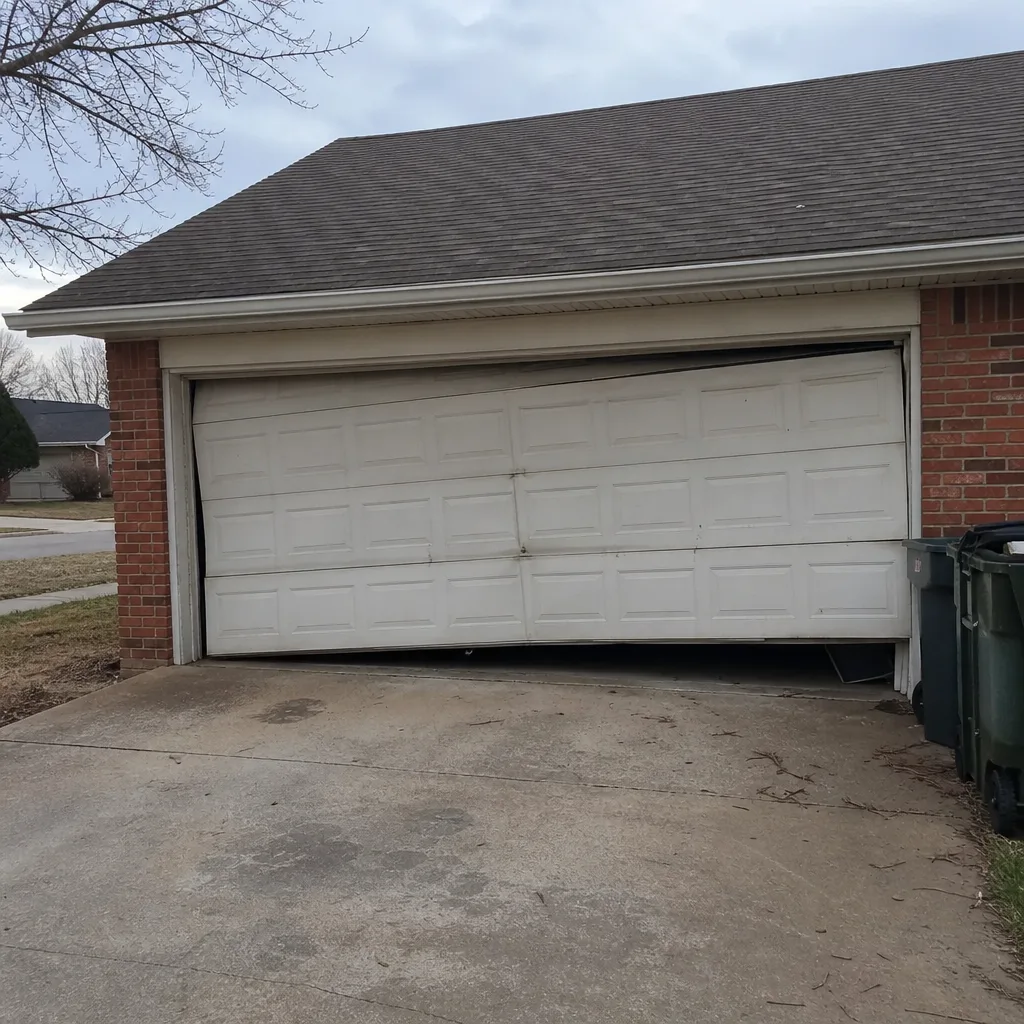 Before
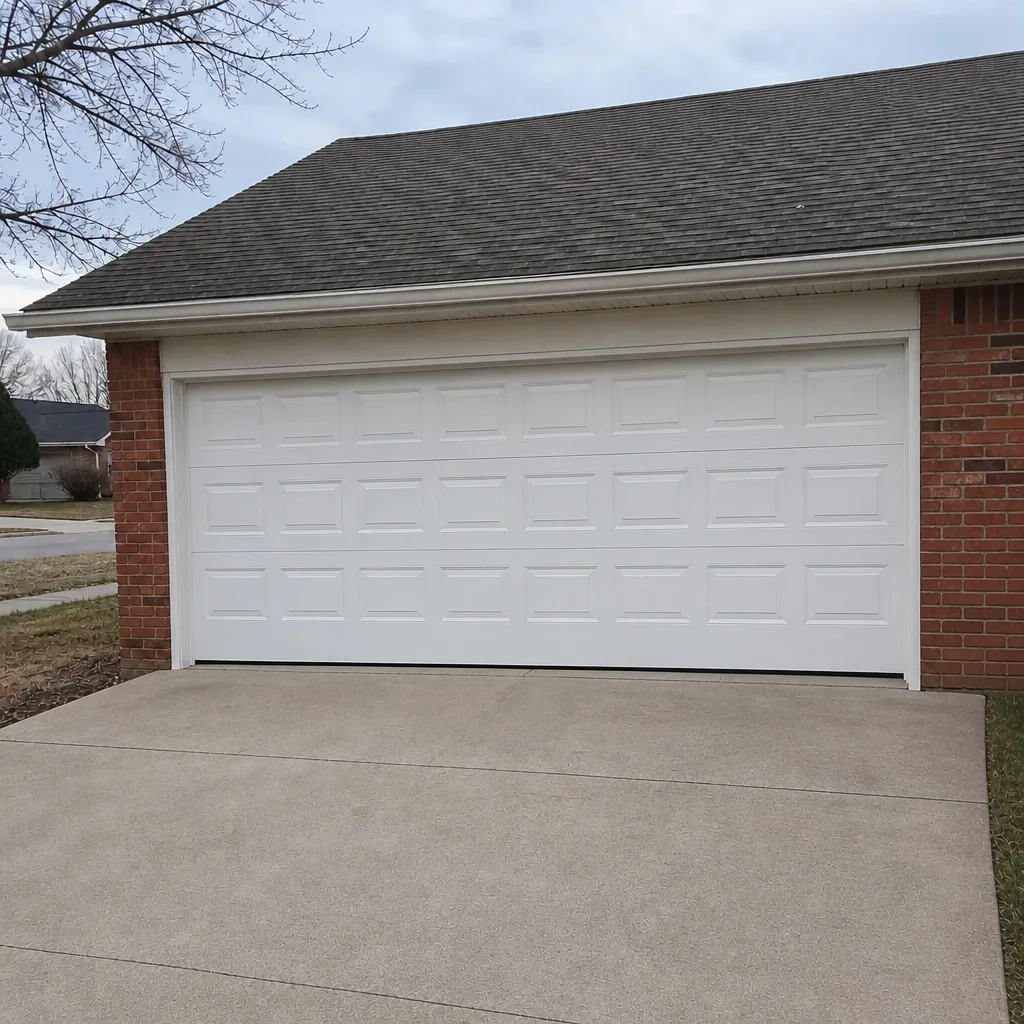 After
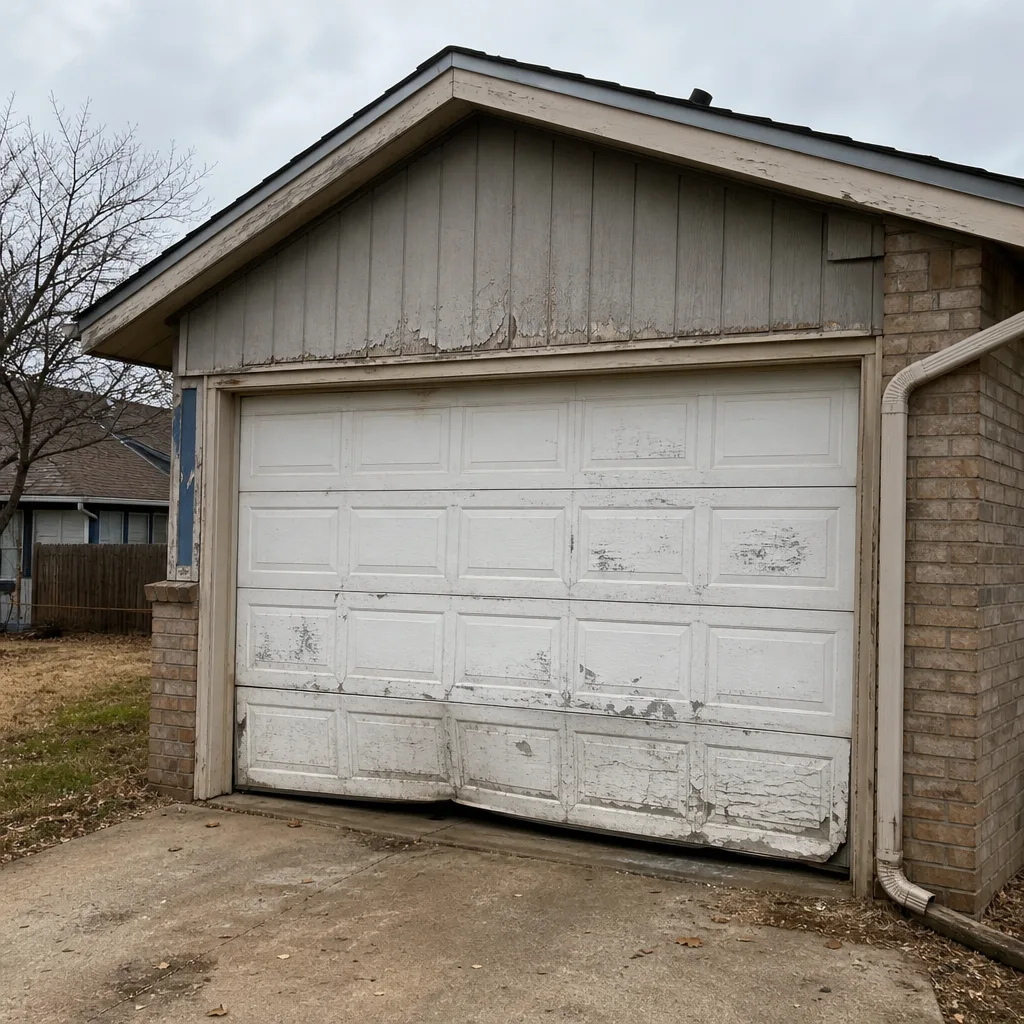 Before
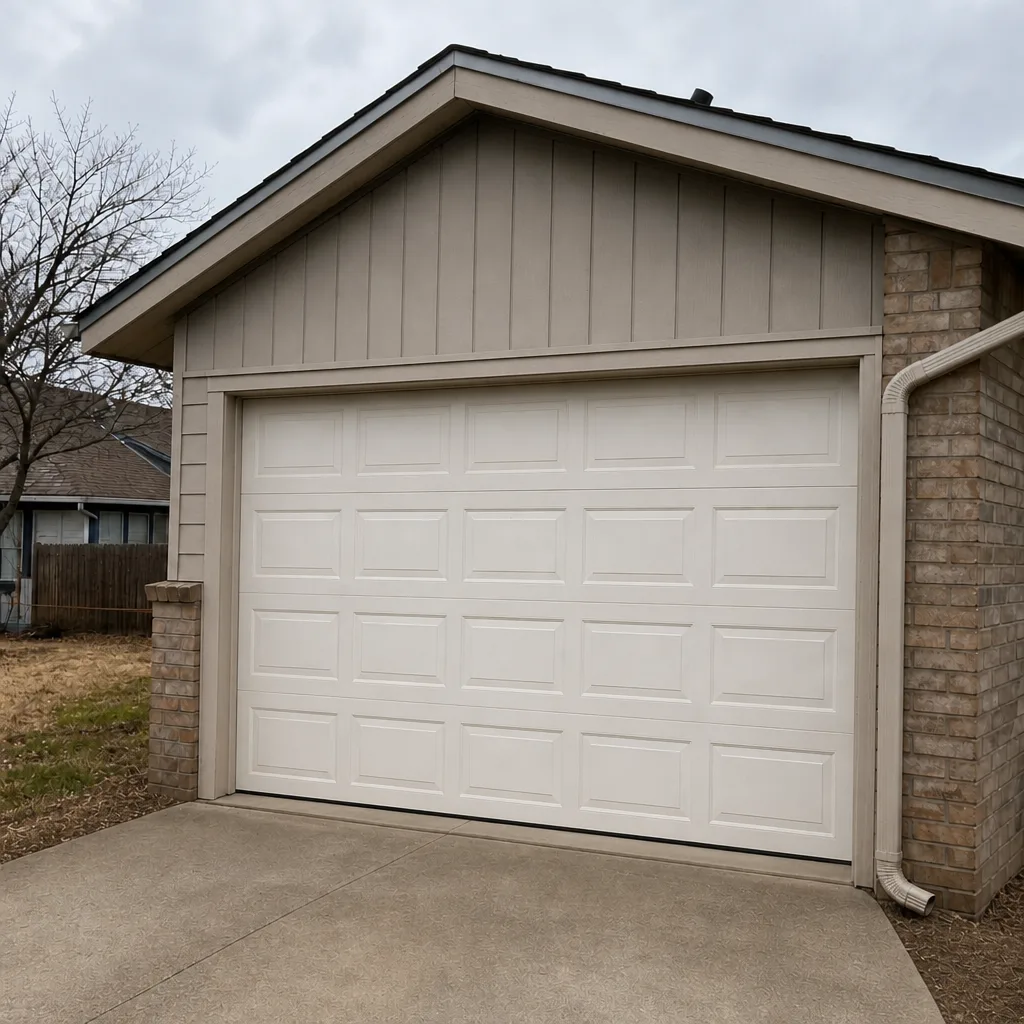 After
When to Call a Professional
Call a professional for anything involving the springs, the cables, the door’s balance under tension, off-track doors, or any repair that started as a DIY attempt and didn’t go cleanly. Those are the jobs where the risk or the tool gap makes DIY a bad trade. Call us too if you’re not sure which category a job falls into, or if a new door or opener is on the horizon – installation is measured and scheduled, and it’s where warranty protection matters most. We work on your brand, whichever it is, and one call covers the repair, the opener, and the install. Edmond Garage Door Service offers free estimates in Edmond – call (833) 545-4561. We answer 24/7. Fast dispatch from 7am to 7pm, Sunday through Friday.
Frequently Asked Questions
No. Spring replacement is the one garage door job we never advise a homeowner to attempt, regardless of skill. Torsion springs store hundreds of pounds of force and release it instantly if they fail during winding or removal, and extension springs and cables can whip with no warning. A trained technician has the winding bars, the tightening procedure, and the experience to do it safely. Call (833) 545-4561 for an exact quote – estimates are free.
It depends on the task. For safe jobs like replacing a bottom seal, swapping easy rollers, lubricating hinges, or reprogramming a remote, DIY saves real money and carries no risk. For dangerous jobs like spring or cable work, the savings on a cheap part disappear the moment something goes wrong, which makes a professional the better value. Call for a free estimate to compare exact numbers on your job.
Often it will, at least on the parts most likely to need coverage. Many manufacturers require installation by a qualified technician to keep the warranty intact, and a claimant who installed the door themselves can have the claim declined. Check the warranty terms with the manufacturer before you order, especially on a Clopay, Amarr, or Wayne Dalton door. We install to the specs the warranties expect, and a free estimate tells you the exact cost of having it done right.
We answer the phone 24/7 and dispatch technicians from 7am to 7pm, Sunday through Friday, so a broken spring is usually a same-day repair. A call outside dispatch hours gets booked into the next opening. We’re closed Saturday. The price is quoted and agreed before any work starts, so there’s no surprise when the job is done. Call (833) 545-4561 for an exact quote – estimates are free.
Safe jobs like a weather seal or roller swap cost $15 to $50 in parts versus $90 to $220 professionally, so DIY wins on those. Dangerous or tool-heavy jobs like a torsion spring or cable run $150 to $340 professionally, versus a cheap part and real injury risk doing it yourself. A matched pair of springs costs about twice the single-spring figure. The written estimate sets the final price on any job; call (833) 545-4561 for a free one.
Yes, our technicians are state-licensed and insured, and they specialize in garage doors rather than splitting attention across many trades. We service and install every major brand – Genie, LiftMaster, Chamberlain, Clopay, Amarr, Wayne Dalton, Craftsman, and Raynor – so your system is covered whichever it is. Our technicians have up to 10 years of experience. Call (833) 545-4561 for a free estimate on any repair, opener job, or installation.
The Bottom Line
The DIY-versus-professional decision isn’t about skill. It’s about which specific tasks carry catastrophic risk and which ones are genuinely safe. Maintenance, lubrication, seals, rollers, and opener programming are yours to handle and worth doing. Spring and cable work, off-track doors, and anything with tension is a hard stop for a professional, regardless of how confident you feel. Installation is its own decision, shaped by warranty protection on a major purchase. Edmond’s hot summers and freeze-thaw winters make the safe maintenance tasks more important, not more dangerous – keeping up with them is the best way to avoid the jobs that require a specialist. When a job crosses the line, or you’re not sure which side it’s on, one call covers the repair, the opener, and the install across the major brands. Call (833) 545-4561. We answer 24/7. Fast dispatch from 7am to 7pm, Sunday through Friday.
For an Edmond homeowner who wants a reliable, knowledgeable technician who diagnoses accurately and doesn’t push unnecessary work, that’s the standard we hold to. You can learn more about Edmond coverage or start at Edmond Garage Door Service to see the full range of what we handle.
Written by the team at Edmond Garage Door Service.