
Last updated November 16, 2026
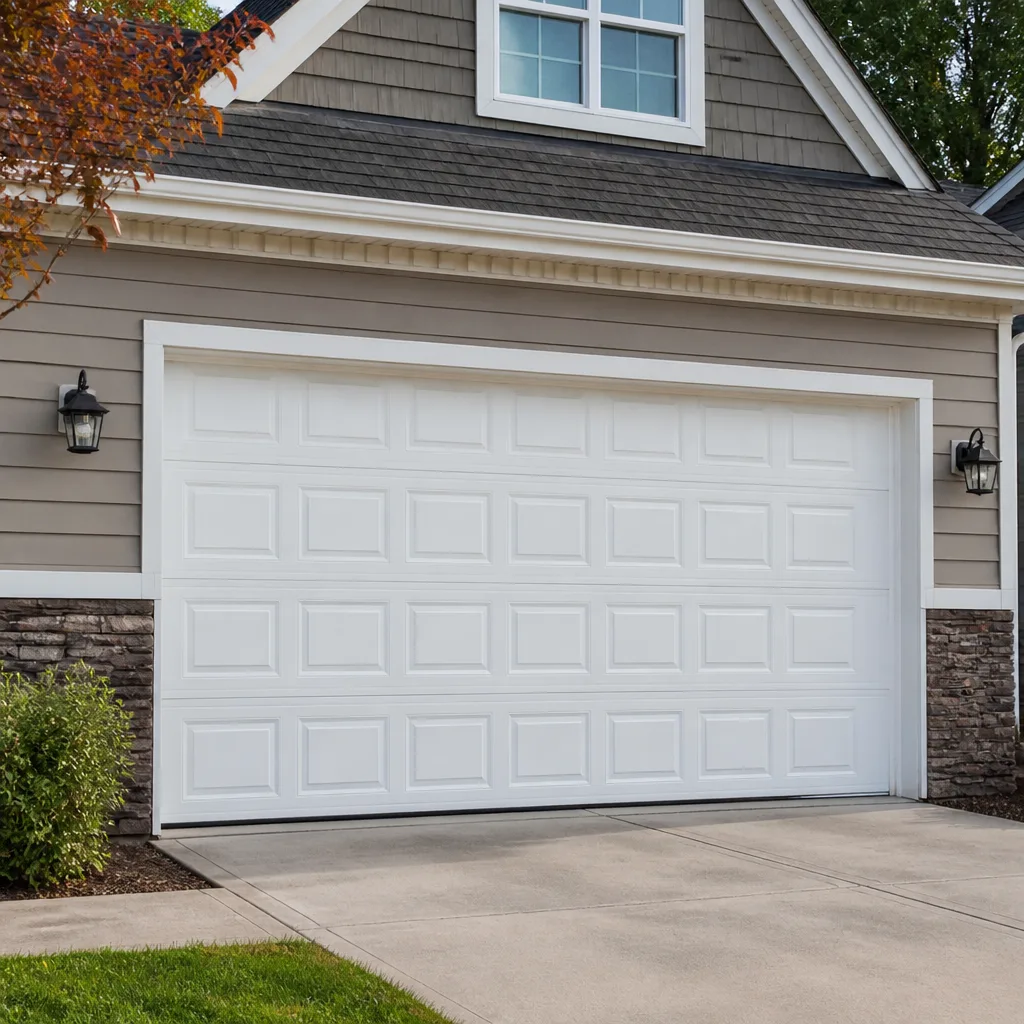 Raised-panel steel
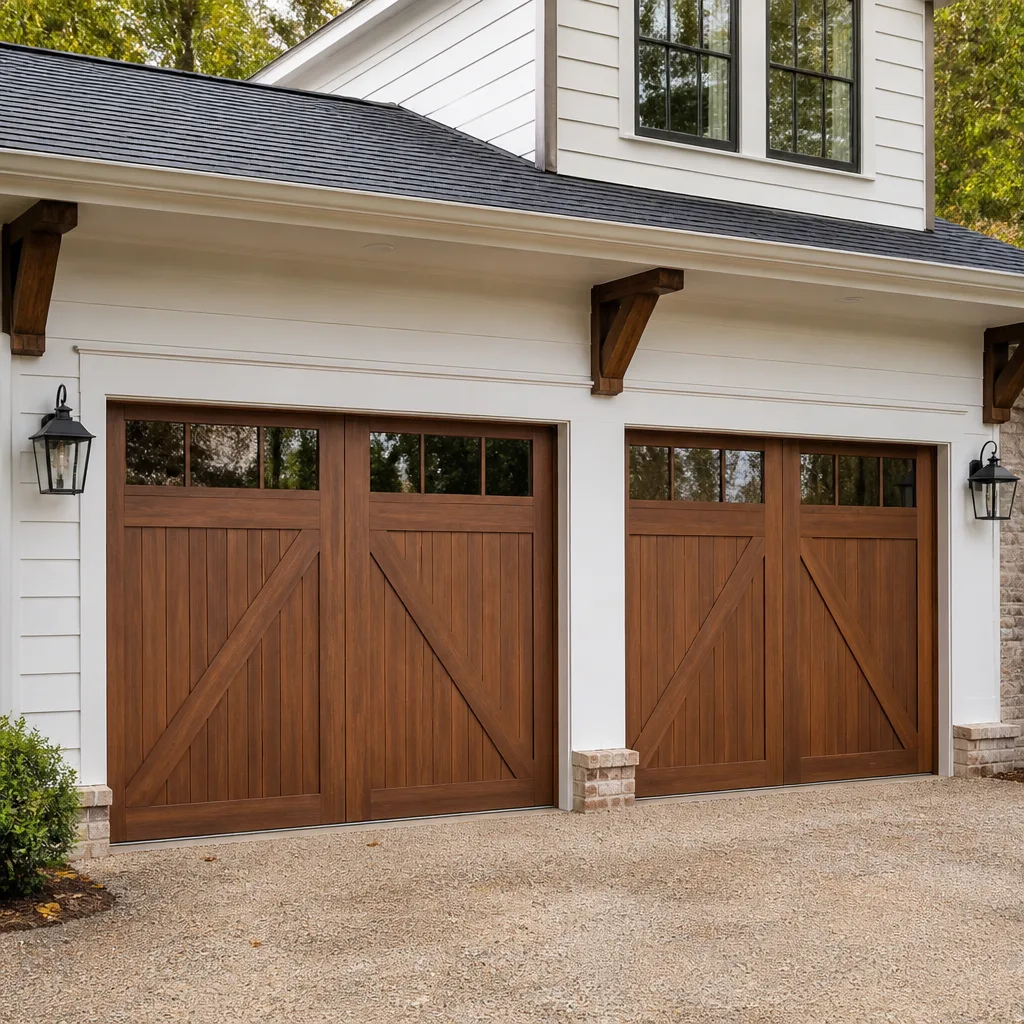 Carriage house
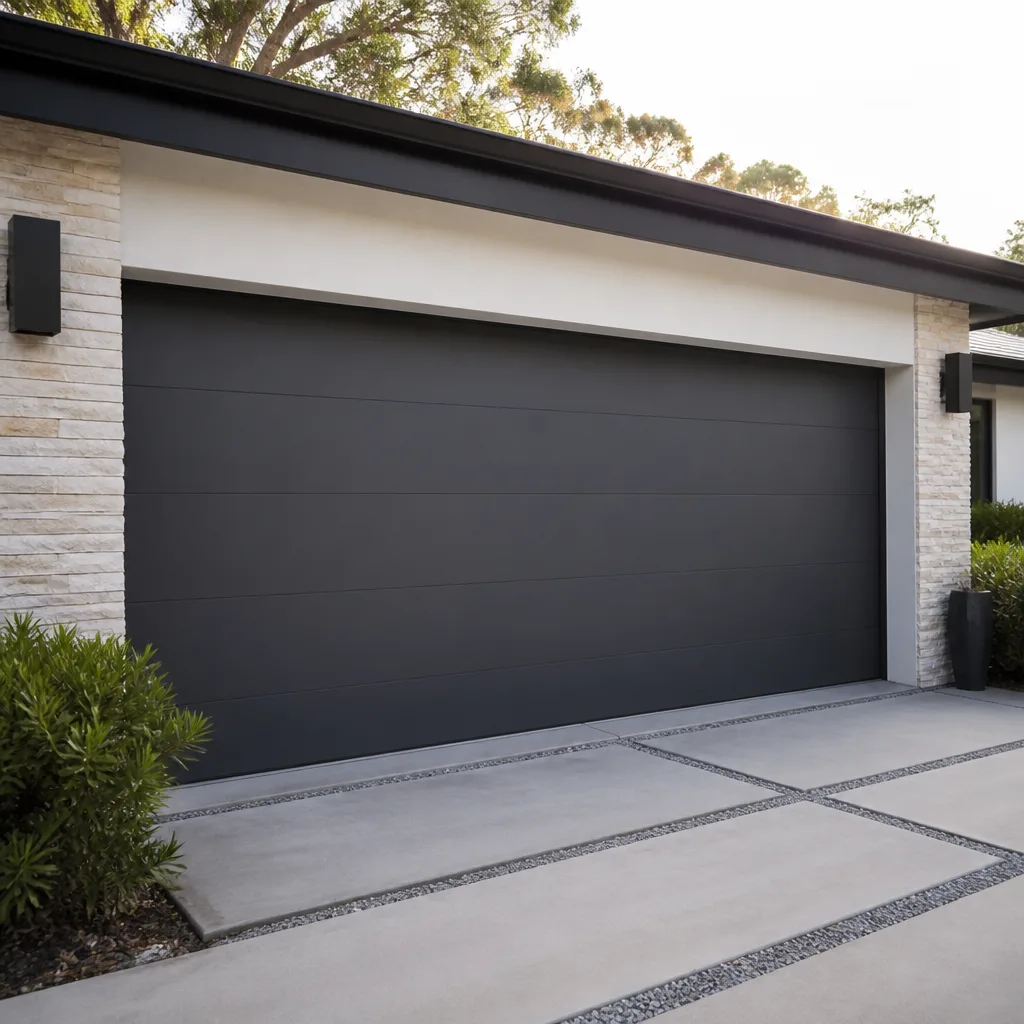 Modern flush
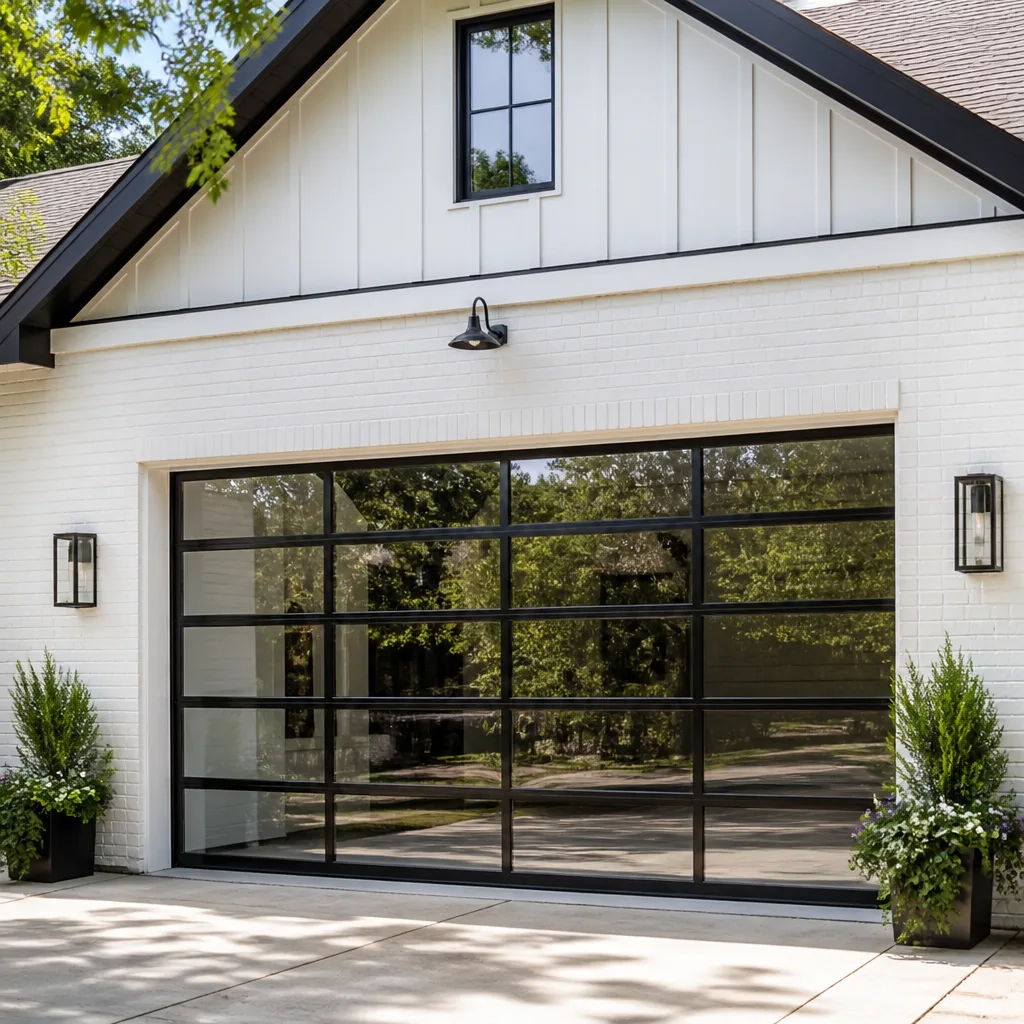 Full-view glass
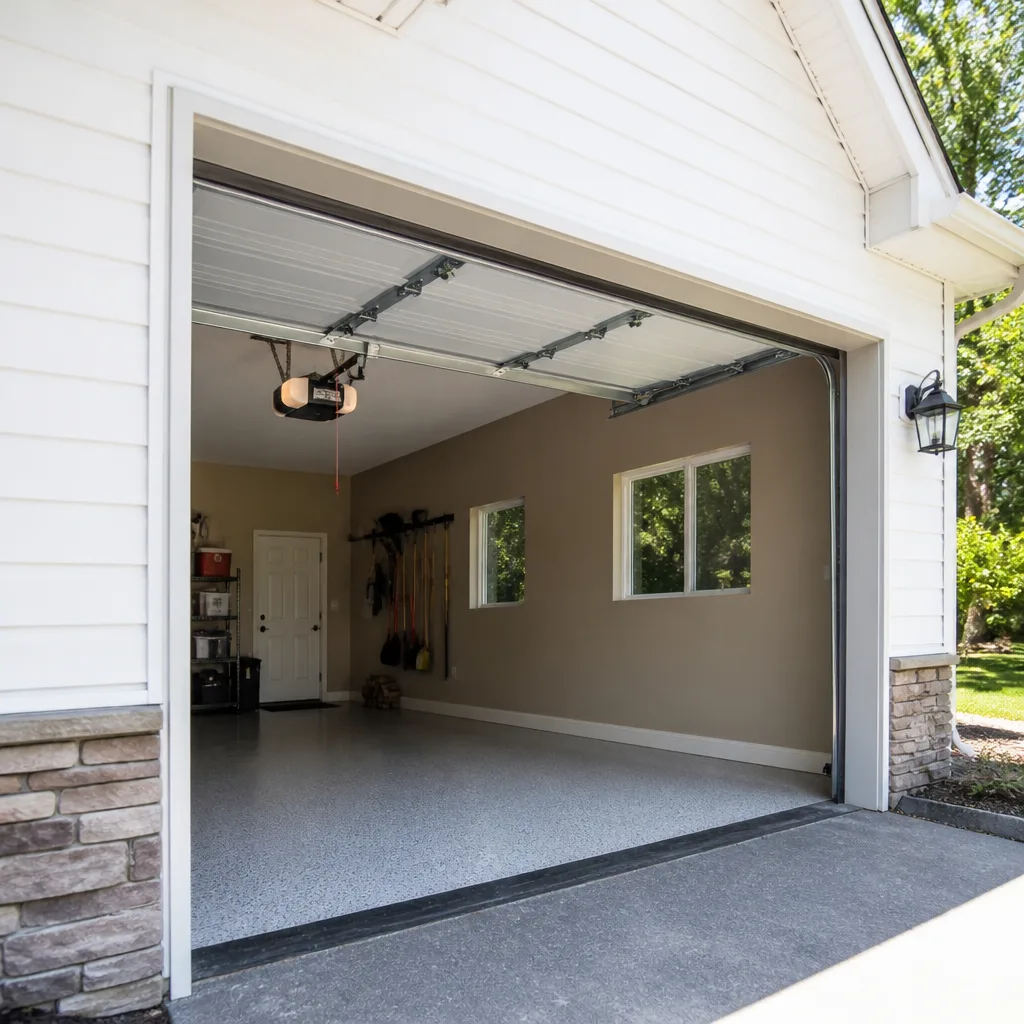 LiftMaster openers
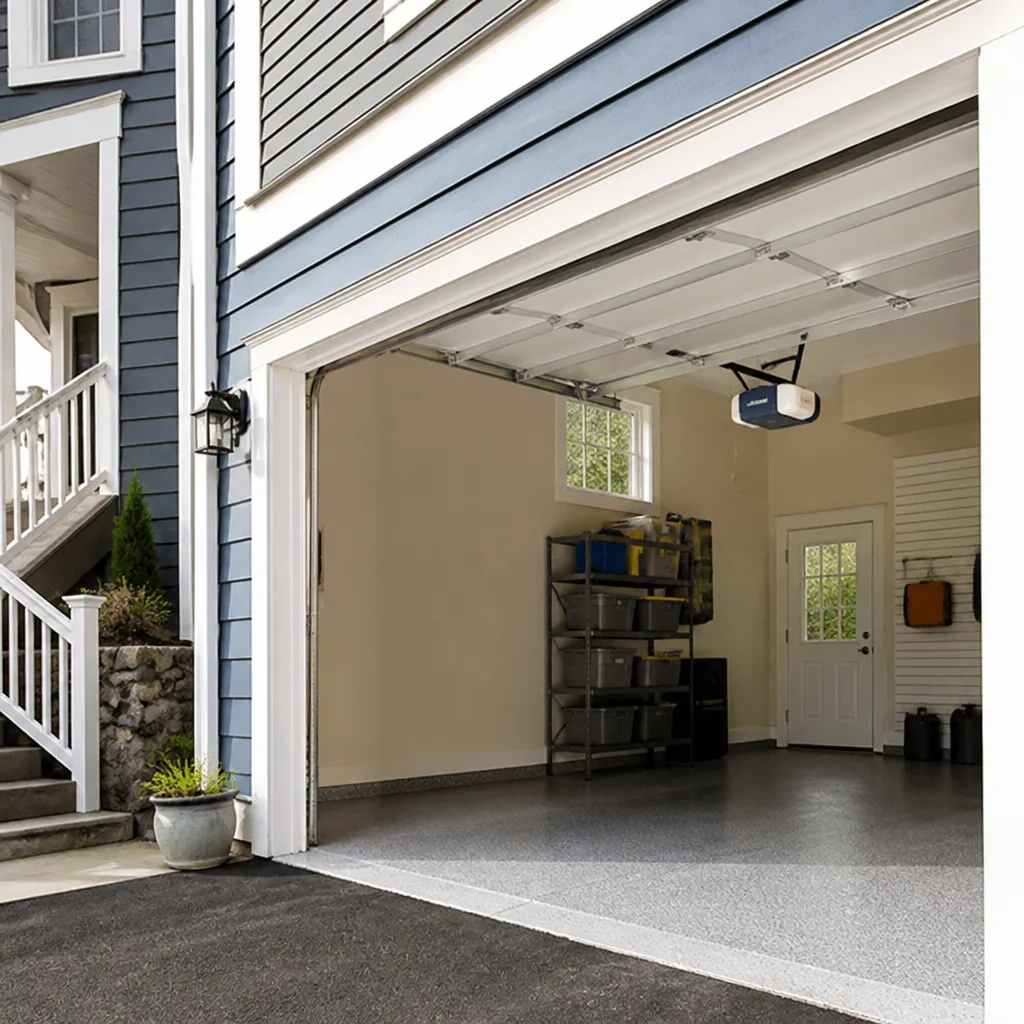 Chamberlain openers
Full 25-point door and opener safety check with every visit - springs, cables, rollers, tracks, and your LiftMaster or Chamberlain opener included
You get a price before we start. It does not change when the pro arrives.
Get your free estimateGarage Door Emergency Preparedness Guide for Edmond Homes
Most homeowners think of a garage door emergency as a broken spring on a Tuesday morning. In Edmond, the bigger risk arrives with the sky. During an active tornado warning, a partially open garage door can create enough pressure differential to accelerate roof lift on a standard residential home. And most Edmond homeowners have never practiced the manual release on their opener in the dark, let alone during 70 mph wind and hail. This guide covers what you need to know before the next storm: how to operate your door by hand, how to judge damage safely, how to secure a compromised door until a technician arrives, and why a physical key override matters more in Oklahoma than in most places. Read it once now, and you’ll be ready when it counts.
Quick Answer
A garage door emergency in Edmond usually means one of three things: the opener has lost power after a storm, the door has been damaged by hail or wind, or the door is stuck and can’t be secured. In every case, the first move is to stop using the opener and switch to the manual release. Know where your release cord is, know how to test the door by hand, and have a physical key override or external keypad so you’re not locked out when the power fails. If the door won’t stay closed, won’t stay up, or the tracks are bent, don’t run the opener again. Call (833) 545-4561 for a same-day garage door repair visit in Edmond. We answer 24/7. Fast dispatch from 7am to 7pm, Sunday through Friday.
Styles & brands we work with
- Raised-panel steel
- Carriage house
- Modern flush
- Full-view glass
- LiftMaster openers
- Chamberlain openers
Table of Contents
- Why Garage Door Emergency Preparedness Matters More in Edmond
- How to Operate Your Garage Door Manually, by Opener Type
- When the Door Won’t Stay Up After You Release It
- How to Assess Post-Storm Damage Before You Touch the Opener
- What to Do When the Opener Loses Power and the Backup Battery Is Dead
- How to Temporarily Secure a Damaged Door
- Why a Physical Key Override Belongs in Every Edmond Garage
- Building a Garage Door Storm Kit
Why Garage Door Emergency Preparedness Matters More in Edmond
Edmond sits in the heart of tornado alley. That single fact reshapes how you should think about your garage door. This isn’t a coastal climate problem where salt air chews through hinges. It’s a wind and hail climate, and the garage door is the largest moving panel on your home. During a tornado warning, the pressure changes inside a garage can turn that door into the weak link in your home’s envelope. A door that’s rated for wind load, properly reinforced, and correctly latched behaves very differently from a builder-grade panel that’s been slowly losing its seals for a decade.
The other reason preparedness matters here is grid reliability. Oklahoma storms regularly knock out power across wide swaths of the metro. When the power goes, your opener goes with it, and if your only way into the garage is the wall button, you’re locked out of the largest storage and shelter space in your house. We’ve seen homeowners forced to break a window in the door just to get in. A five-dollar key override would have prevented it.
Add in the local housing mix. Edmond has a lot of newer construction with LiftMaster and Chamberlain openers and Clopay or Amarr doors, plus older neighborhoods where Genie and Craftsman openers are still running on original springs. Each of those systems releases differently and each responds differently to storm damage. Knowing which one is on your ceiling is the first step.
- Wind risk: Tornado warnings and straight-line winds are a seasonal reality, not a one-off.
- Hail risk: Hail dents and warps builder-grade steel panels more than premium-gauge doors.
- Power risk: Storms routinely cut electricity, disabling every electric opener until power returns.
- Age risk: Older Edmond homes often still run original springs and openers past their service window.
How to Operate Your Garage Door Manually, by Opener Type
Every residential opener has a manual release, and learning to use it in daylight is the single most valuable preparedness step you can take. The release is a cord or lever that disconnects the door carriage from the opener rail, letting you lift the door by hand. The process is similar across brands, but the specifics vary enough that you should confirm yours before you need it.
- Find the release cord. Look for a rope hanging from the carriage on the rail, usually with a red handle. On most LiftMaster and Chamberlain units, it’s a red T-handle.
- Pull straight down and toward the door. A firm, steady pull disconnects the carriage. Don’t yank sideways; you can bend the lever.
- Lift the door by hand. Use the bottom panel handle if you have one, or the bottom edge with both hands.
- Test the balance. A healthy door stays up on its own at roughly waist height. If it drops, the springs are compromised. Stop and call.
- Lower it under control. Never let the door slam. Guide it down slowly.
On older Genie and Craftsman units, the release is often a metal lever on the carriage rather than a cord. Side-mount openers (common on high-lift doors) use a lever near the wall bracket. Jackshaft openers mounted beside the torsion bar release differently, so check the manual or ask us. Door brand matters here too: a heavy Clopay or Amarr panel with a broken spring can be dangerous to lift manually because it carries all the weight itself. Never stand under a door you’re manually lifting. If you feel resistance or the door feels heavier than it should, stop. Torsion springs and cables are under extreme tension and can cause serious injury. That work is for a trained technician, not a DIY afternoon.
When the Door Won’t Stay Up After You Release It
If you release the carriage and the door drops instead of staying up, the springs have lost tension or failed. This is the most common garage door failure we see in Edmond, and it’s also the most dangerous to work around. The drum, cable, and torsion bar are all under load. Don’t try to reopen the door with the opener, don’t try to prop it up, and don’t reach into the track.
Here’s what to do instead:
- Leave the door in the closed position. Don’t fight it open.
- Lock the door manually at the bottom with a slide bolt or a bar if you have one.
- Park outside or use a side entry door to access the garage.
- Call for garage door repair. Spring replacement is a same-day job once a technician is on site.
One common mistake: homeowners re-engage the carriage and let the opener try to lift the door with broken springs. The opener motor isn’t designed for that load. It will strip the gear, burn out the logic board, or both, and now you’ve paid for an opener repair on top of a spring repair. We carry replacement units for most brands, but the cheaper path is always to leave the opener alone until the springs are fixed.
If the door is fully closed and won’t budge, and you’re in the middle of active weather, wait until the storm passes. Don’t stand in the garage working a stuck door while a tornado warning is live. Your garage door will still be broken in the morning.
How to Assess Post-Storm Damage Before You Touch the Opener
After the storm passes, resist the urge to hit the wall button and see if everything still works. Run through this inspection first. It takes two minutes and could prevent a much worse outcome, like a door coming off its track while you’re standing under it.
- Look at the panels. Dents, creases, and separation along the seams are common after hail and wind. Note the door brand if you can see it; Clopay and Amarr panels are usually stamped with a model identifier on the bottom panel.
- Check the tracks. Walk both sides. Tracks that are bent, twisted, or pulled away from the door frame mean the door shouldn’t be run.
- Inspect the springs and cables. Look for a visible gap in a torsion spring or a cable that has jumped its drum. Don’t touch anything. Just observe.
- Test the manual balance. Release the door and see if it holds at waist height.
- Check the weather seal. A torn bottom seal lets water in and is usually fine to replace alongside other work.
- Look at the opener rail and carriage. Bent rails and cracked carriages are common after a close lightning strike or a house shift.
If everything looks structurally sound and the door balances by hand, re-engage the carriage and try the opener once. If you hear grinding, straining, or nothing happens at all, stop and call for garage door opener repair. Modern openers like LiftMaster and Chamberlain have safety reversal systems that can behave oddly after a power surge; a technician can reset and test them in a few minutes.
What to Do When the Opener Loses Power and the Backup Battery Is Dead
A dead backup battery after a storm is one of the most common calls we get in Edmond. Many newer LiftMaster and Chamberlain openers ship with battery backup that handles a few open-close cycles on outage. But those batteries degrade quietly and often sit dead for years because no one tests them. When the power goes and the battery is flat, you’re relying entirely on the manual release.
Here’s the sequence:
- Disconnect the opener using the manual release.
- Operate the door by hand until power returns.
- Check the backup battery once a season. Most openers have a test button or indicator light that tells you the battery health.
- Replace the battery every few years. It’s a small cost that prevents a much bigger headache.
- Get in through a keypad or key override if you’re locked out of the garage to begin with.
If the battery is fine and the opener still doesn’t respond, the issue may be a tripped breaker, a power surge that damaged the logic board, or a loose outlet. Don’t rule out a lightning-induced surge. We service Genie, LiftMaster, Chamberlain, and Craftsman units and can usually tell you within a few minutes whether it’s a battery, a board, or a connection. Call (833) 545-4561. We answer 24/7. A call outside dispatch hours is booked into the next opening, Sunday through Friday, 7am to 7pm.
How to Temporarily Secure a Damaged Door
If your door is bent, off-track, or jammed open after a storm, the priority shifts to securing the garage interior until a technician can arrive. Edmond homes often use the garage as storage, a laundry area, or a workshop, and an open garage is an open door to the whole house. You want the door closed and locked, even if it’s not moving on its own.
What actually works for a temporary fix:
- Slide bolt locks on both sides of the door, if you have them, are the fastest and safest solution.
- C-clamps on the vertical track above the bottom roller can hold a door in the closed position.
- Heavy-duty ratchet straps across the inside of the door can stabilize a bent panel.
- A 2×4 wedged under the bottom panel is a last resort but works for a door that wants to creep up.
What doesn’t work: duct tape across the bottom, bungee cords, or anything that relies on tension across the full width of the door. None of those will hold against a gust, and none will stop a panel that’s already loose in its track. Don’t try to force a bent door back into its track by hand. The panel can snap, and the springs on the side of the door can release suddenly.
Once the door is stable and your home is secure, that’s when you book the repair. Don’t wait for the next storm to come through before you fix it. We work across Edmond and can typically schedule a same-day visit for urgent repairs. For new doors and replacements, we measure and quote first, then order, then install on a scheduled date. That work doesn’t happen in a single day, and anyone promising otherwise isn’t being straight with you.
Why a Physical Key Override Belongs in Every Edmond Garage
If there’s one preparedness item most Edmond homeowners are missing, it’s a physical key override. This is a small lock cylinder that mounts on the outside of the garage door frame. It lets you disconnect the door from the opener with a key and lift it by hand. It doesn’t need electricity, it doesn’t need a working battery, and it doesn’t need your smartphone to have a signal. It just works.
The reason it matters so much here is simple: Oklahoma storms take down power. When your opener is dead and your only entry is through the wall button inside the garage, you’re locked out. An external keypad is a good backup too, but keypads are still electronic and can fail when their battery dies or the circuitry gets wet. A key override is mechanical, which means it works in a blackout, in freezing rain, and after a hail storm that shorted out your keypad.
Adding one is inexpensive compared to the alternatives. If you don’t have one, this is the single upgrade we recommend first for storm-prone homes in Edmond.
- Key override: mechanical, no power needed, works in every outage.
- External keypad: convenient and useful, but electronic and dependant on battery health.
- Backup battery in the opener: helpful for a few open-close cycles, but degrades silently.
- Side entry door: the simplest backup if your garage has one and it isn’t blocked.
Building a Garage Door Storm Kit
Put together a small kit now, so you’re not searching for it in the dark. Nothing on this list is exotic. Most of it is in a typical Edmond garage already, just scattered across three drawers and a shelf.
- A flashlight with fresh batteries, mounted where you can reach it from the garage floor.
- A physical key for the key override, stored somewhere other than the garage.
- Two C-clamps sized for your track.
- A printed summary of your door and opener brands, so a technician can identify the system fast. LiftMaster, Chamberlain, Genie, Craftsman, Clopay, Amarr: knowing which one you have saves diagnostic time.
- The phone number for your garage door specialist, written down and taped inside a cabinet. (833) 545-4561.
- A note on where the manual release cord is, for anyone in the household who might need it.
One more item worth knowing: how to reach the opener’s manual if you’ve lost it. Most manufacturers publish model-specific instructions online. If you know your opener brand and model, you can usually find the release procedure in minutes. If you don’t know your brand, that’s a good reason to look. We work on the major brands across Edmond and can identify yours on the first visit, whether it’s a mechanical Genie from the 90s or a current-generation smart LiftMaster.
Common Mistakes to Avoid
- Never running the opener with broken springs. The motor will strip its gear or burn out the logic board, turning a spring repair into an opener replacement. This is the most common avoidable mistake we see in Edmond.
- Trying to force a bent door back into its track. Panels snap, and the springs on the side of the door can release. Leave the door in place and call.
- Relying only on a keypad. A keypad is useful right up until the battery dies or a storm surge fries the board. A physical key override is the mechanical fallback.
- Skipping the seasonal battery test. Backup batteries degrade silently. Test them twice a year, and replace them every few years even if they still test fine.
- Lifting a heavy Clopay or Amarr door manually without checking the weight. Some doors are heavier than they look. If it won’t lift with a firm, steady pull, stop and call.
- Standing under a door during an active tornado warning while trying to fix it. Wait for the storm to pass. The door will still be broken in the morning, and you’ll still be there to fix it.
- Ignoring small dents after a hail storm. Small dents become panel separation, and panel separation becomes water intrusion. Small problems in Edmond quickly become big ones once the next storm arrives.
See the difference
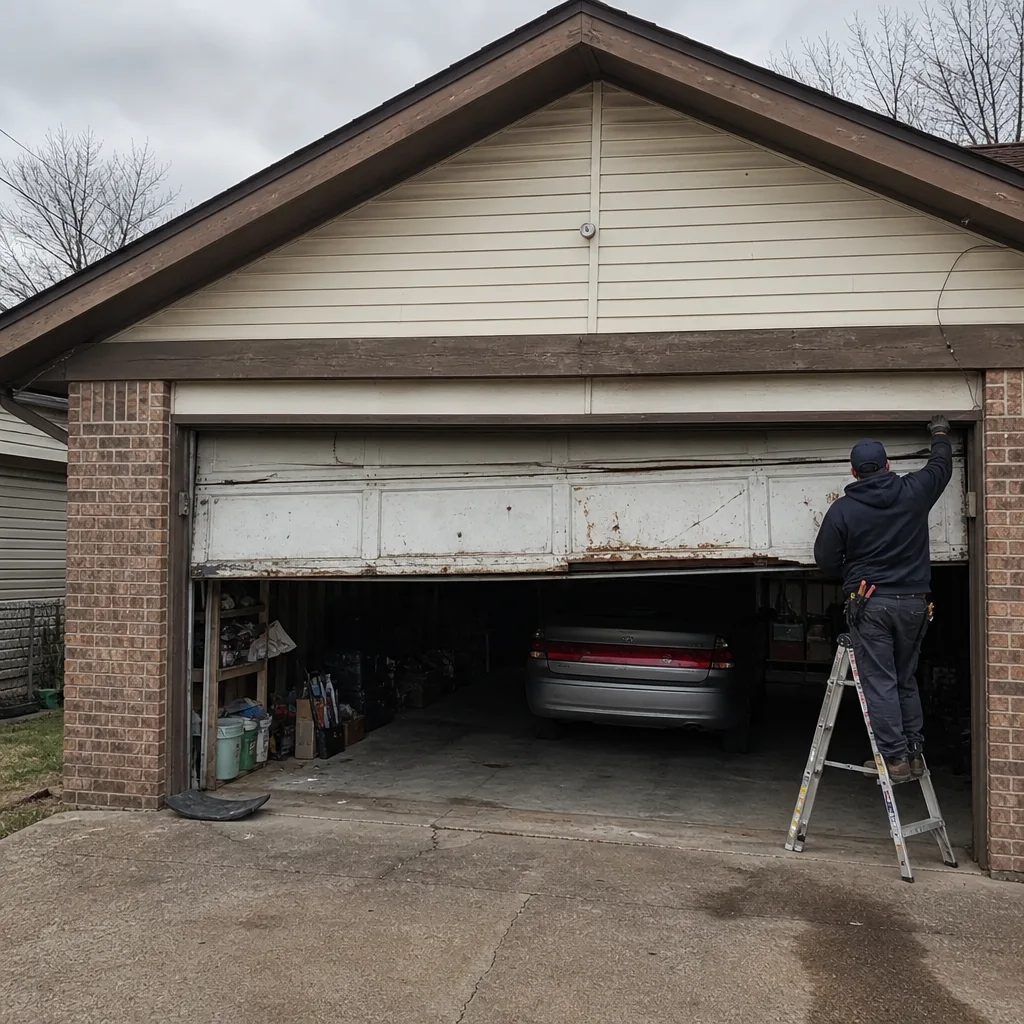 Before
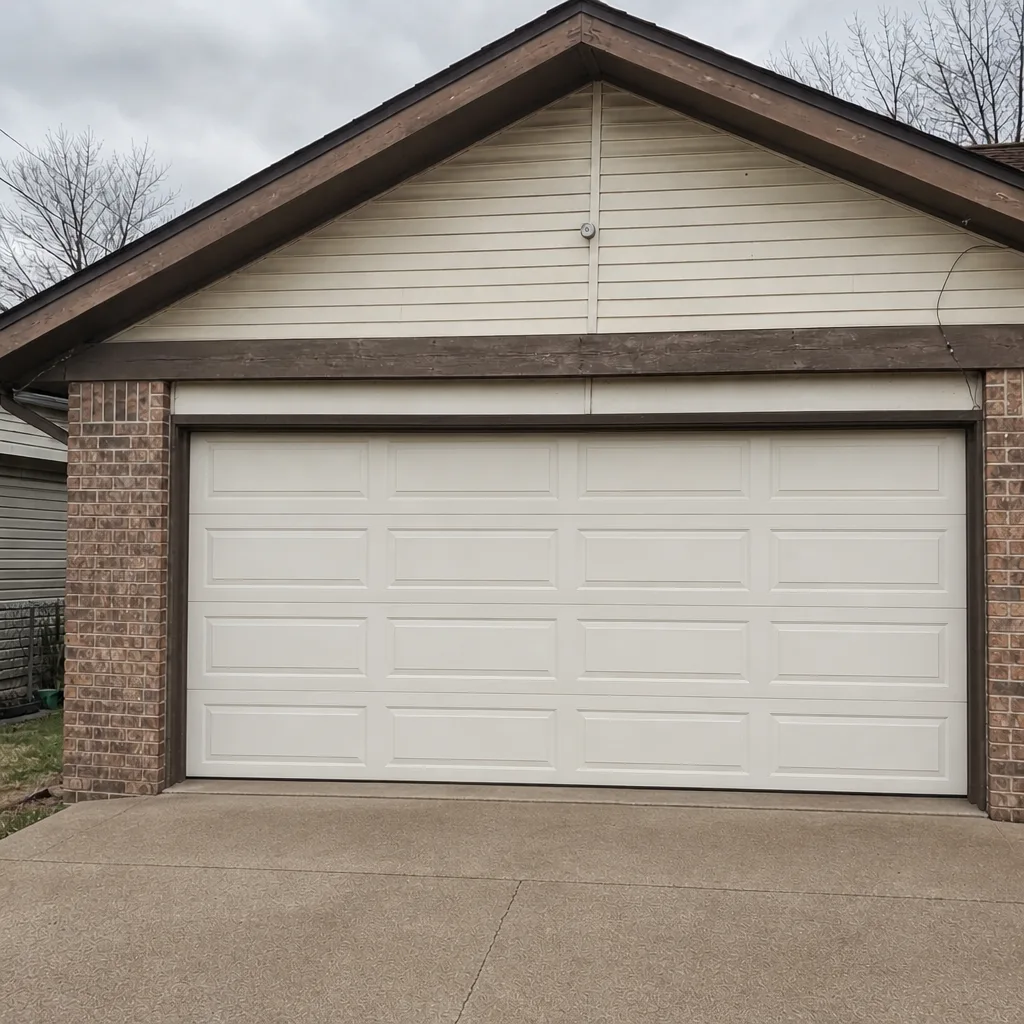 After
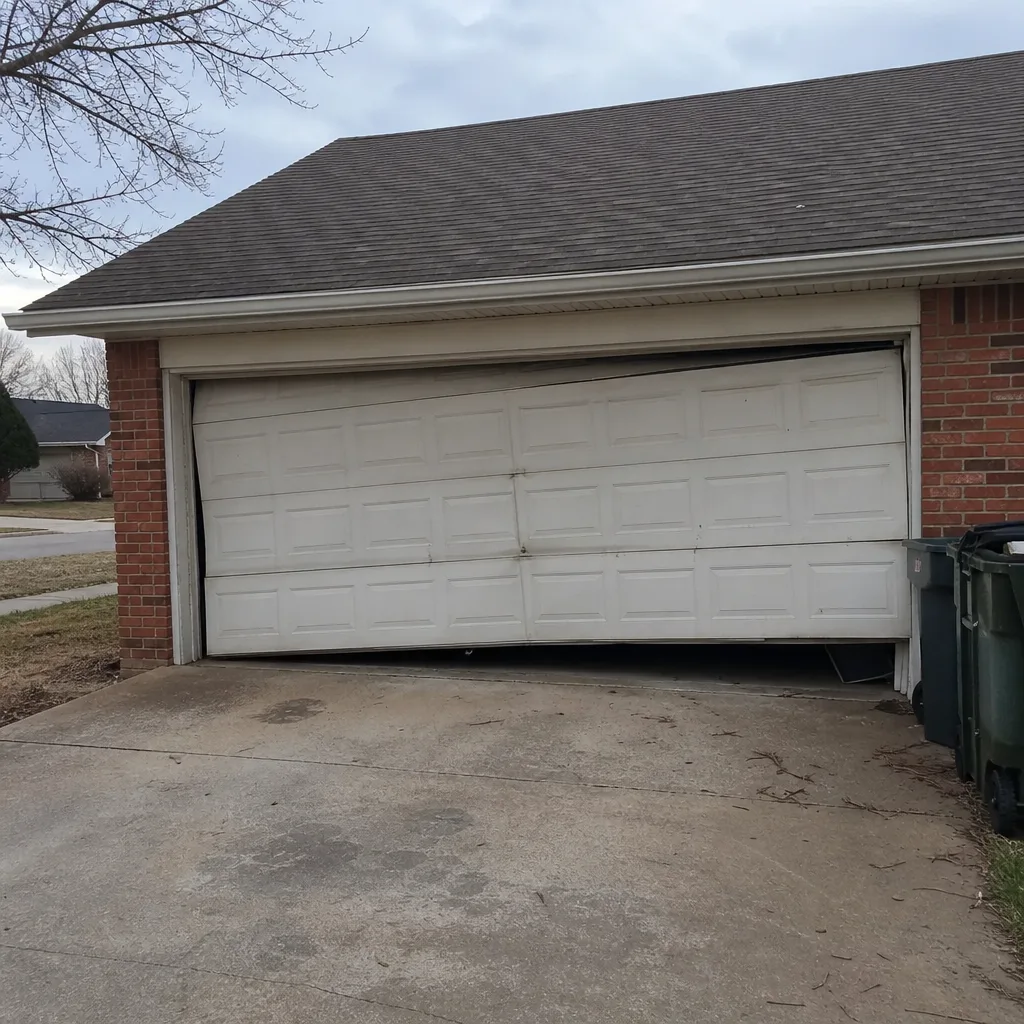 Before
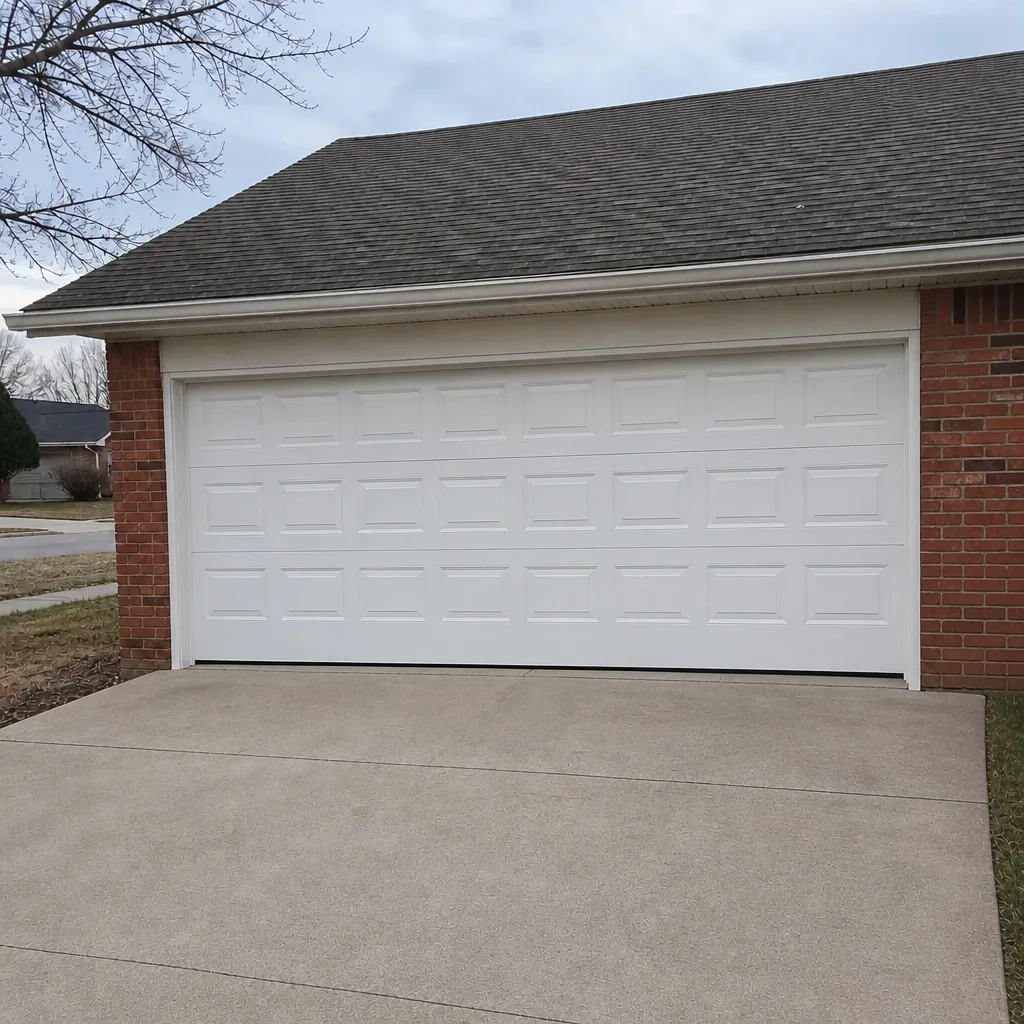 After
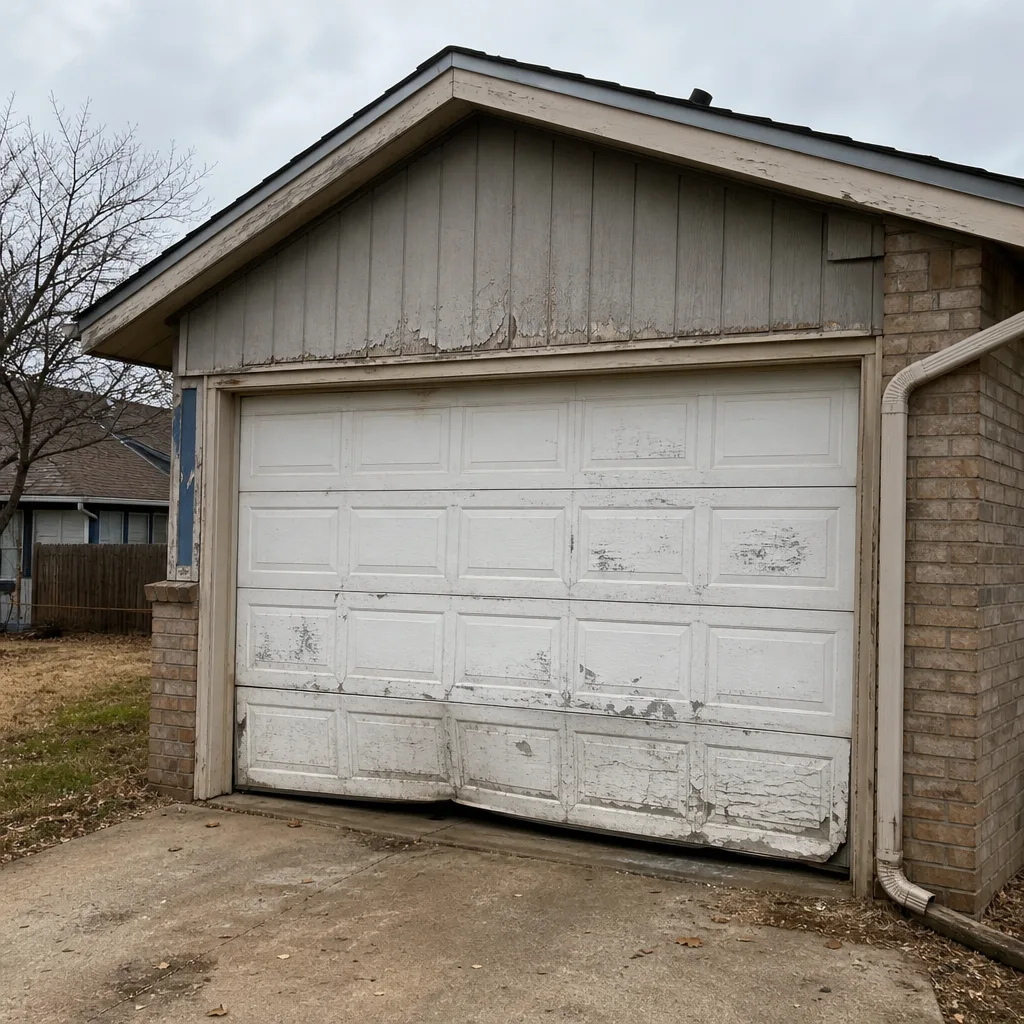 Before
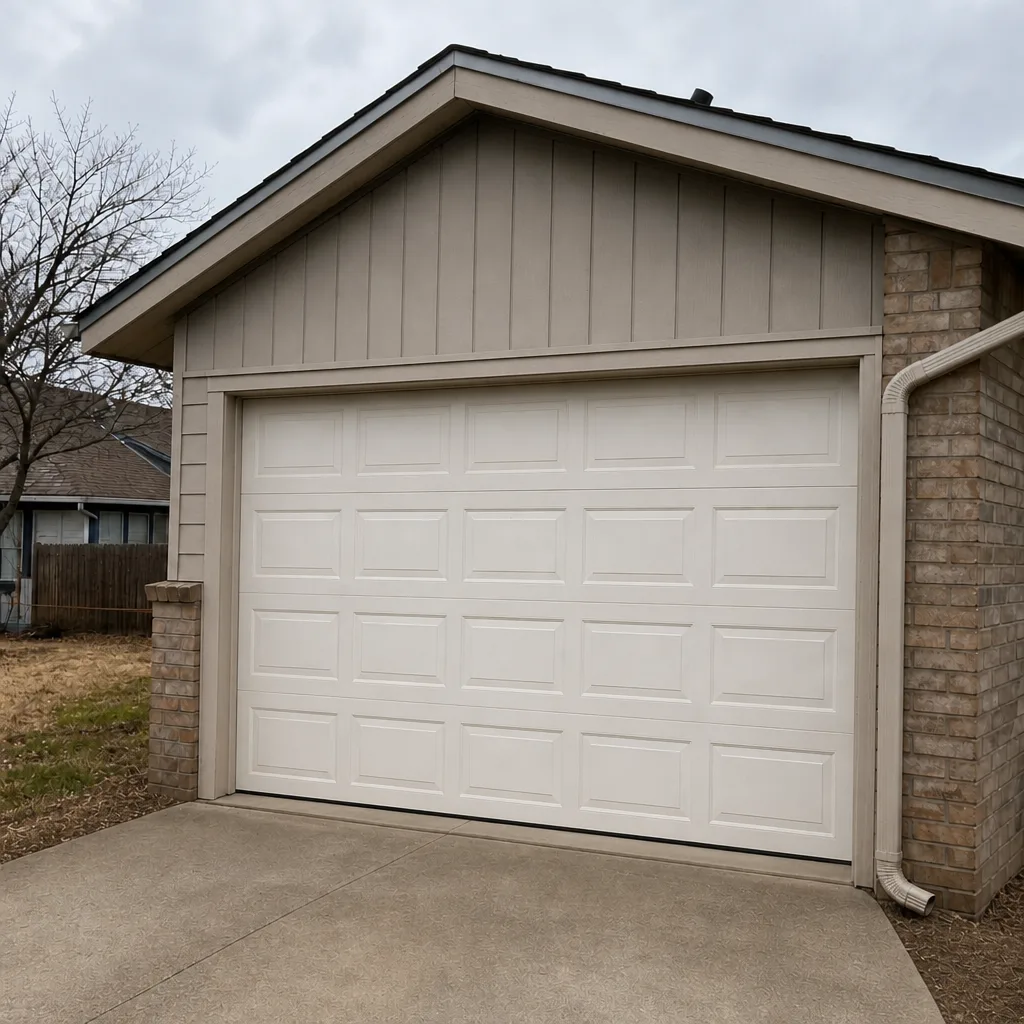 After
When to Call a Professional
Call a professional when the door won’t stay closed, won’t stay up, or behaves unpredictably when you run the opener. Those three symptoms nearly always trace back to springs, cables, or an off-track panel, and none of those are safe to troubleshoot by hand. Call us when the opener runs but the door doesn’t move, when you hear grinding, when the carriage is bent, or when the wall button does nothing after a power outage. Call us when a storm has left the door visibly damaged and you need temporary securing or full replacement. Edmond Garage Door Service offers free estimates in Edmond. Call (833) 545-4561. We answer 24/7. Fast dispatch from 7am to 7pm, Sunday through Friday. Our technicians have up to 10 years of experience working on garage door and opener systems across all the major brands.
Frequently Asked Questions
Pull the manual release cord or lever on the opener carriage, then lift the door by hand. Confirm the door stays up at waist height before you walk under it. If the door drops or feels very heavy, the springs are compromised; stop and call a technician, because a door with failing springs can cause serious injury.
Secure it manually first, then book a repair. Try slide bolt locks, C-clamps on the vertical track above the bottom roller, or heavy ratchet straps across the inside of the door. Don’t run the opener again until a technician has checked the springs, cables, and tracks. Call (833) 545-4561 for a same-day Edmond visit.
Yes. A partially open garage door can create enough pressure differential to accelerate roof lift on a standard residential home. Close the door fully and lock it during a tornado warning. If the door is damaged and won’t close, secure it as best you can and shelter in an interior room.
The battery has likely degraded below the level needed to run the motor. Many backup batteries work for the first cycle or two but can’t sustain repeated opens. Test the battery seasonally, replace it every few years, and know how to release the door manually so you’re not locked in. Call us for garage door opener repair if the unit is dead even after a battery swap.
Yes, especially in Edmond. Storms knock out power often enough that relying on an electronic keypad or opener alone leaves you locked out. A key override is mechanical, needs no battery, and works in a blackout. It’s inexpensive and it’s the first storm-readiness upgrade we recommend.
Look on the opener motor housing for the brand name (LiftMaster, Chamberlain, Genie, Craftsman), and on the bottom panel of the door for a stamp or label (Clopay and Amarr doors usually carry a model identifier). If you can’t find it, we’ll identify it on the first visit and match the right parts to your system.
The Bottom Line
Garage door emergency preparedness in Edmond comes down to a handful of habits. Know where your manual release is. Test your backup battery twice a year. Install a physical key override so a power outage doesn’t lock you out. Inspect your door after every storm before you run the opener again. Never fight a broken spring, a bent track, or a jammed door by hand. And keep a small storm kit where you can find it. None of these steps takes more than an afternoon to set up, and any of them could be the difference between a quick fix and a much bigger repair once the next storm rolls through Edmond. If you’re not sure how your door or opener will behave in an emergency, get it checked now, before you need it to work.
If a storm has already left your door damaged, or you just want a readiness check, call (833) 545-4561 for a free estimate. We service and install the major door and opener brands across Edmond, so one call covers it all whether it’s a repair, an opener issue, or a new installation. We answer 24/7. Fast dispatch from 7am to 7pm, Sunday through Friday. Same-day service is available for urgent repairs. Our technicians have up to 10 years of experience, and the price is set by the written estimate before any work starts.
Written by the team at Edmond Garage Door Service.