
Last updated November 16, 2026
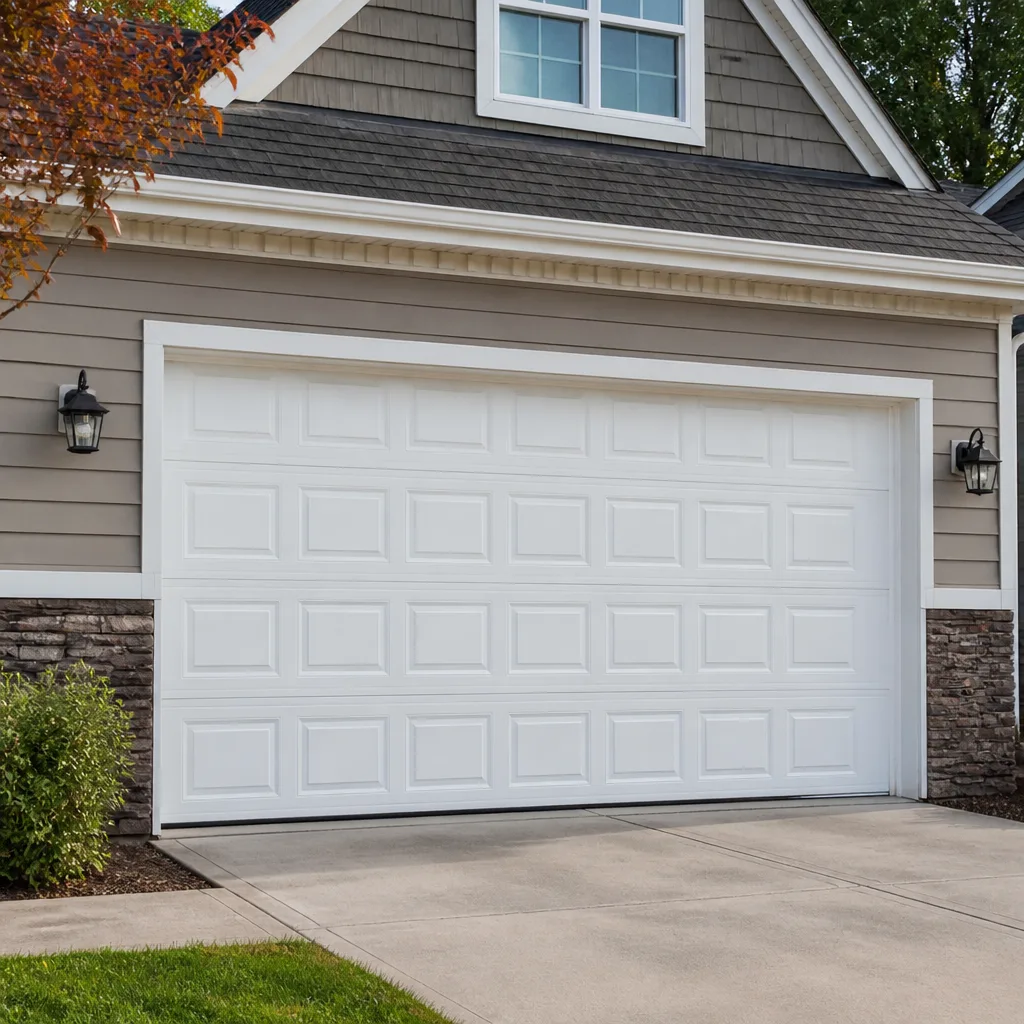 Raised-panel steel
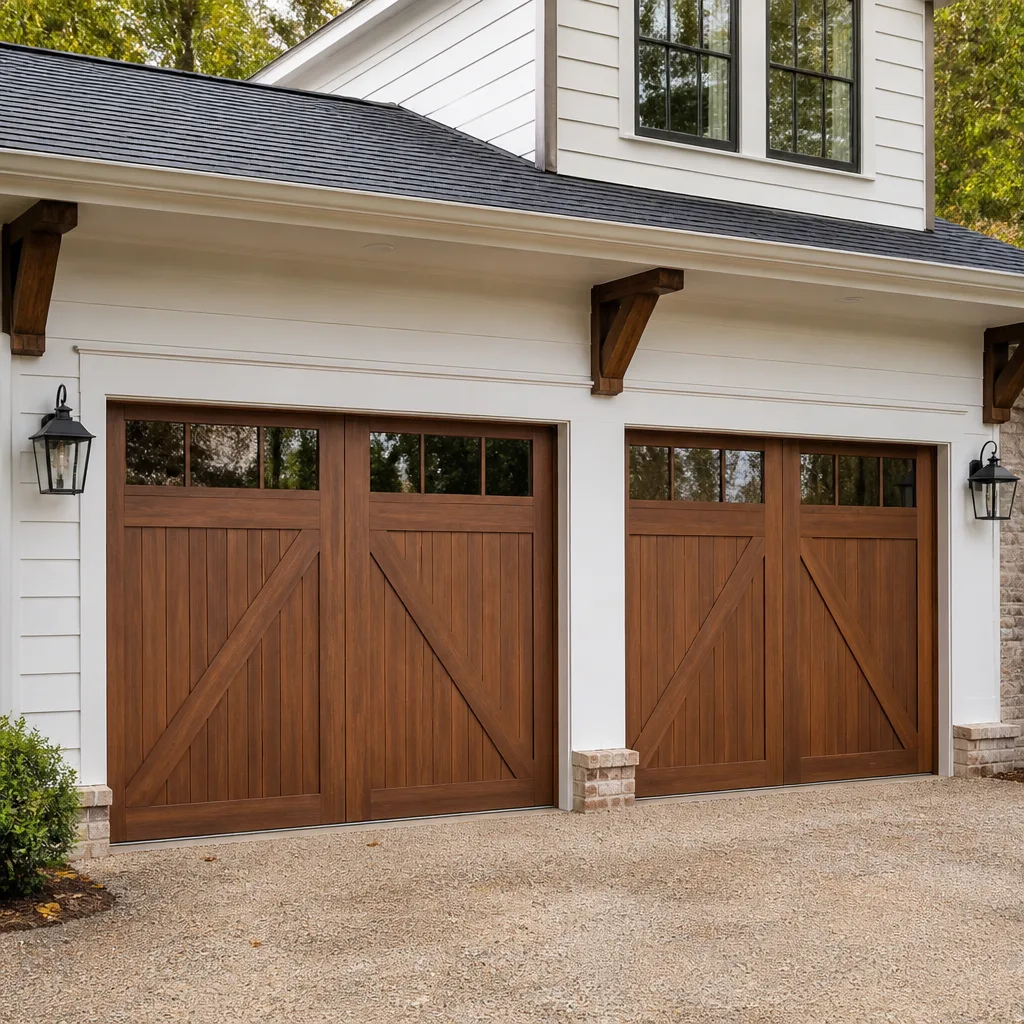 Carriage house
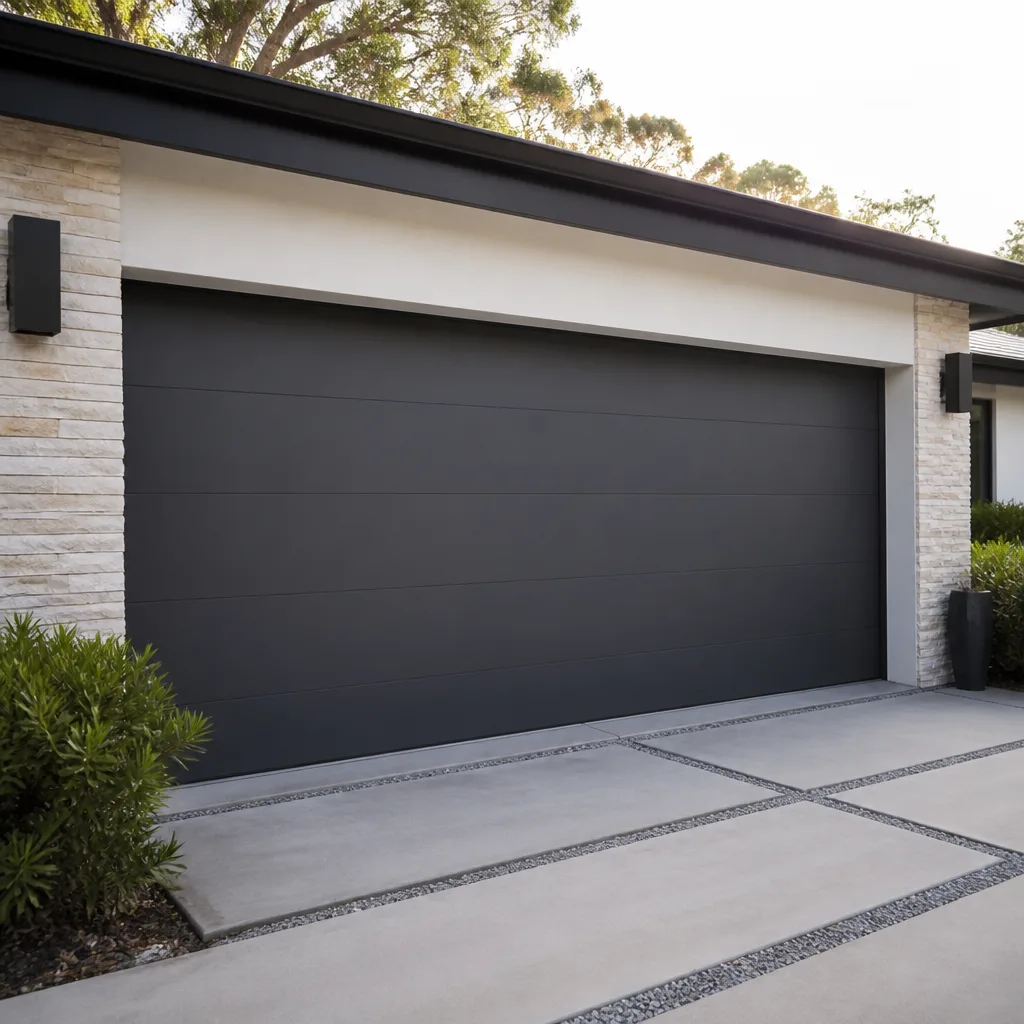 Modern flush
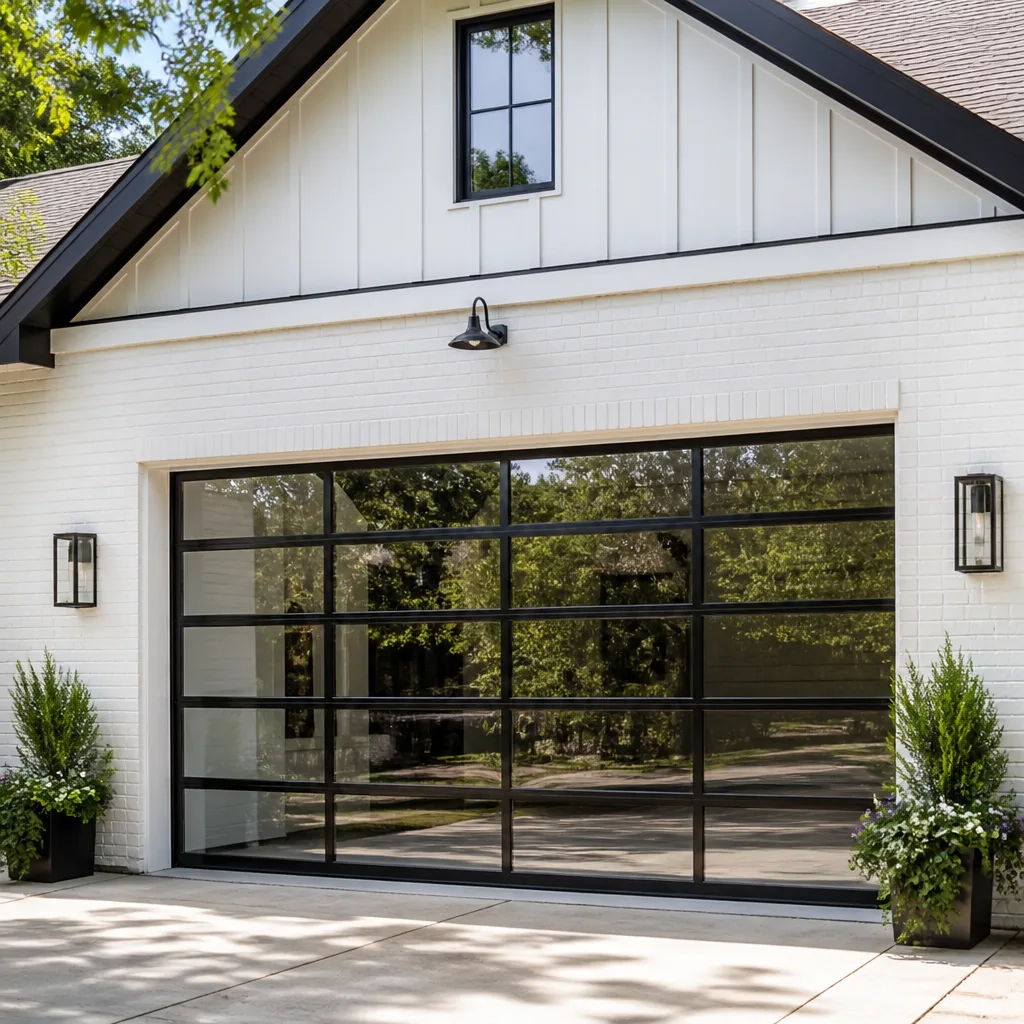 Full-view glass
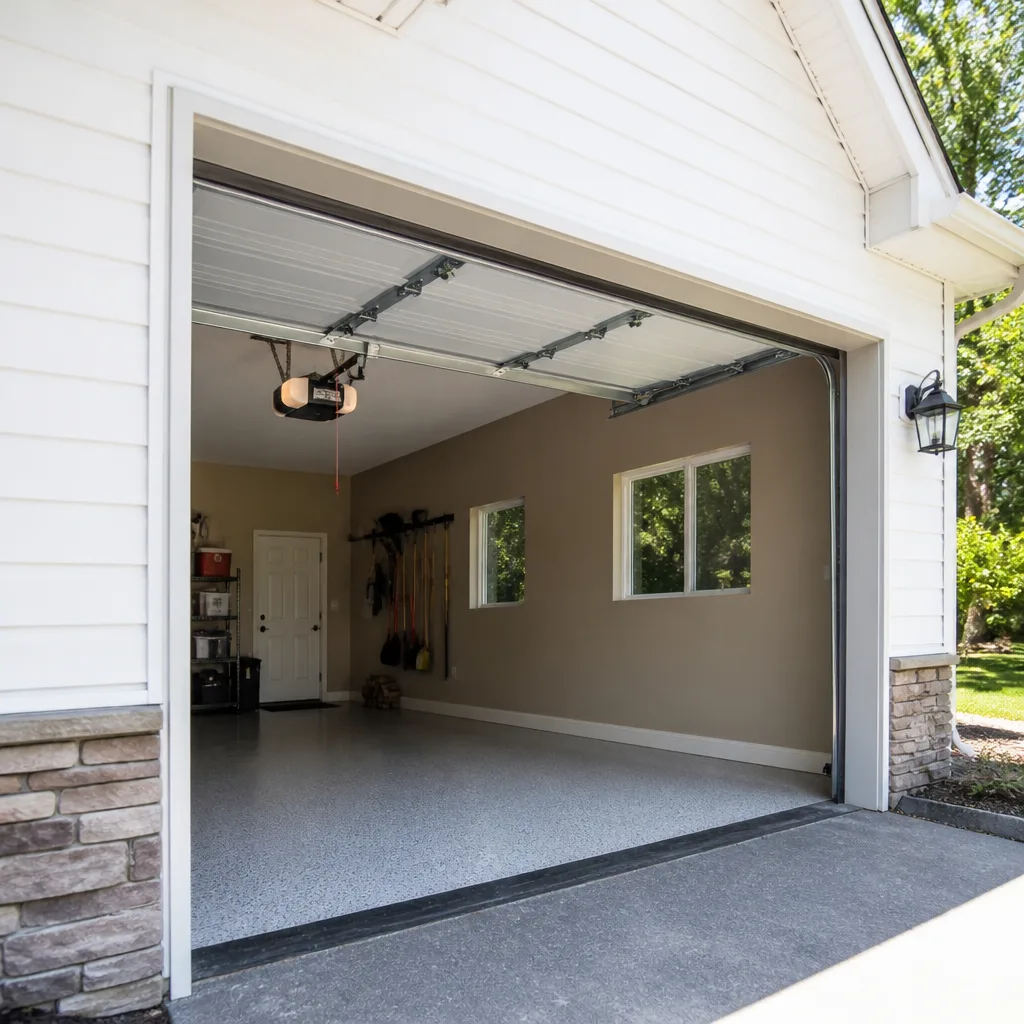 LiftMaster openers
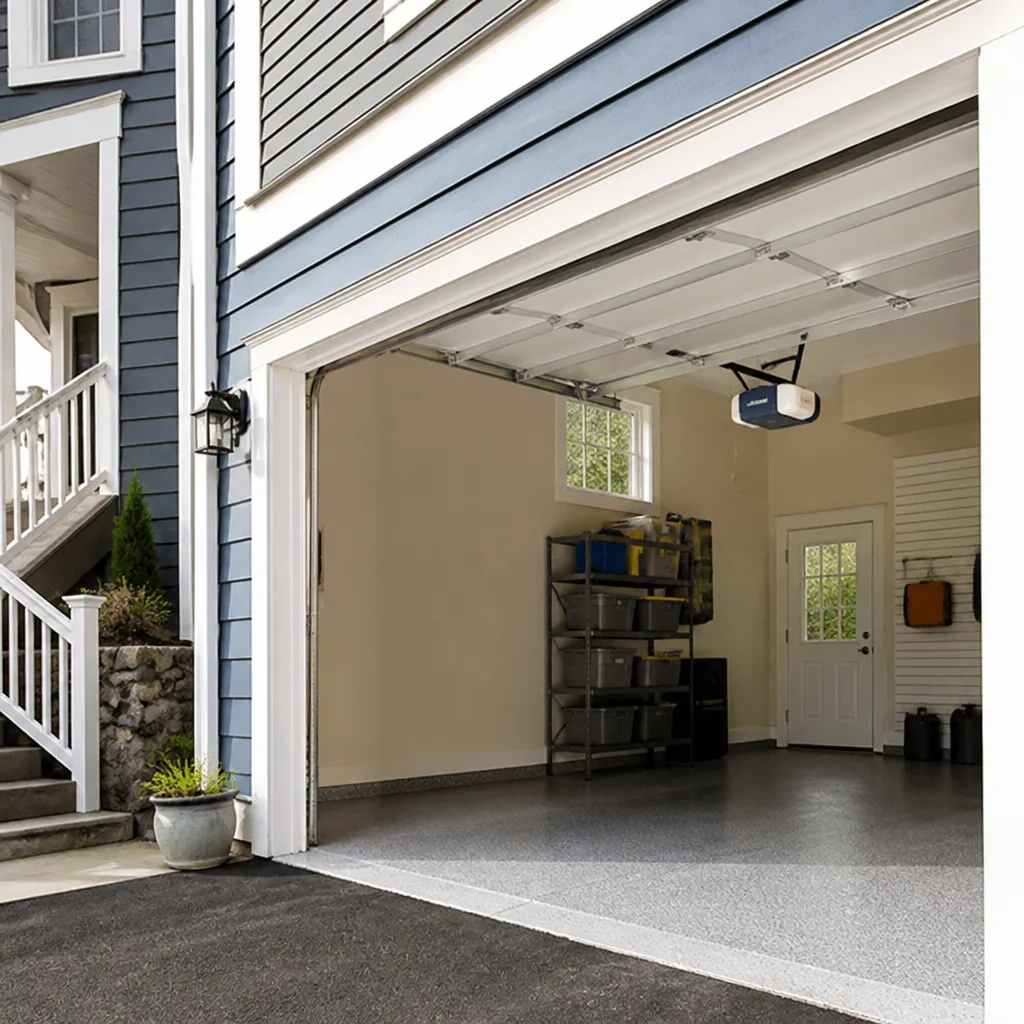 Chamberlain openers
Full 25-point door and opener safety check with every visit - springs, cables, rollers, tracks, and your LiftMaster or Chamberlain opener included
You get a price before we start. It does not change when the pro arrives.
Get your free estimateGarage Door Permits, Codes & Inspections in Edmond, OK: What You Need to Know
A garage door replacement that felt like a simple swap a few years back can trigger a city permit today. Homeowners in Edmond often assume any garage door job is a no-permit, no-inspection project, and that assumption is where trouble starts. A new door, an opener tied into new electrical work, or a change to the size of the rough opening can each pull in requirements that didn’t apply under older code language. Skip them and the work still functions. The problem surfaces later, at resale or after an insurance claim, when a paper trail is what everyone wants to see. This guide walks through what triggers a permit in Edmond, how inspections actually run, and what layers on top from your HOA.
Quick Answer
In Edmond, OK, a straight replacement of a garage door or opener in the same opening with like-for-like electrical usually needs no building permit, but a new installation that changes the rough opening, adds or relocates wiring, or alters the structure around the door generally does. Anything touching the fire-separation between the garage and the house is treated as a life-safety item. Before you sign a contract, call the City of Edmond building department and confirm the permit path for your specific job, because the answer depends on the scope, not the address.
Styles & brands we work with
- Raised-panel steel
- Carriage house
- Modern flush
- Full-view glass
- LiftMaster openers
- Chamberlain openers
Table of Contents
- What triggers a garage door permit in Edmond?
- Jobs that need a permit and jobs that don’t
- How Oklahoma’s IRC amendments affect your garage door
- The inspection timeline on a full installation
- What unpermitted work looks like on a home inspection report
- HOA approval in Edmond’s major subdivisions
- When to bring in a professional
What triggers a garage door permit in Edmond?
Permits follow scope. The City of Edmond decides whether a garage door job needs one by looking at whether you’re changing the structure, the electrical system, or the fire separation between the garage and the living space. A door that comes out and a same-size door that goes back in is typically a maintenance swap. A door that goes from an eight-foot opening to a nine-foot opening is a structural change, and structural changes go through review.
The confusion usually comes from opener work. Replacing a dead opener with a new unit on the existing wiring and the existing circuit is generally treated as a product swap. That’s where most Edmond homeowners live, and it’s why so many garage door replacements happen without a permit. But the moment a job involves a new dedicated circuit, a relocated outlet, a subpanel change, or a switch added in the house, you’re into electrical modification, and that’s a different conversation with the city.
Fire separation is the third trigger, and it’s the one people underestimate. The wall and ceiling between a garage and a house are supposed to resist fire long enough for people to get out. When a new door installation disturbs the framing or the drywall around the opening, that separation has to be restored correctly. An inspector will look for it. If you’re ever unsure which category your project falls into, this is exactly the kind of question to hand to a specialist rather than a generalist. Our team handles garage door installation as its own trade, which means we’ve watched how these thresholds play out across a lot of Edmond driveways.
Why the answer isn’t the same for every Edmond home
Edmond has a wide mix of housing stock, from older established neighborhoods to newer subdivisions on the edges of town. A home built decades ago may have a garage opening that doesn’t match today’s standard sizes, which means even a “replacement” can involve framing. Newer construction usually has closer tolerances and cleaner electrical, so the same job might sail through. Two houses on the same street can land on opposite sides of the permit line.
Jobs that need a permit and jobs that don’t
Here’s the practical split we walk Edmond homeowners through. Treat this as a starting map, not a ruling. The city’s building department has the final word, and it’s free to ask them.
Generally no building permit required
- Replacing a torsion or extension spring with the correct size spring
- Swapping rollers, hinges, cables, or a bent track section
- Replacing an opener with a new unit on the same circuit and same mounting point
- Replacing a door with an identical size and the same construction, with no framing change
- Routine adjustments to travel limits, force settings, or safety reversing sensors
Usually requires a permit or city review
- Enlarging or shrinking the rough opening
- Changing the header or any structural member around the opening
- Adding a new electrical circuit for an opener, or relocating an existing outlet
- Modifying the wall or ceiling that separates the garage from the house
- Converting a carport to an enclosed garage
- Adding a garage where none existed
Notice the pattern: the door itself is rarely the issue. The building around the door is. If you’re swapping a tired Craftsman opener for a new LiftMaster with the same wiring, you’re in the first list. If you’re adding a circuit so the new opener can support a battery backup and a smart panel, ask the city whether that electrical work needs a permit and a licensed electrician.
How Oklahoma’s IRC amendments affect your garage door
Oklahoma works from the International Residential Code with state and local amendments layered on top. For garage doors, three parts of that framework matter most.
1. Fire separation
The code expects a fire-rated separation between an attached garage and the house. That’s the wall, the ceiling, and the door between them, including the self-closing requirement on the door that leads from the garage into the home. When a garage door installation disturbs the framing or drywall near the opening, whoever does the work needs to restore that separation to its original rating. Inspectors check it. Home inspectors flag it.
2. Opener safety reversing
Every automatic garage door opener installed today has to reverse on contact with an obstruction and has to have a non-contact safety system, which is what those photo-eye sensors near the floor are. This is a life-safety requirement, not a convenience feature. A new opener installation that skips the photo eyes or disables the force limits won’t pass an inspection and shouldn’t pass a homeowner’s common sense. We work on the smart-home opener lines from LiftMaster, Chamberlain, Genie, and Craftsman, and the safety systems on those units are non-negotiable in our book. The connectivity is nice. The reversal is the point.
3. Labeling and standards
Doors and openers carry the labels and standards they were built to. Keeping that labeling intact, and keeping the installation manual with the house, matters when an inspector or a buyer’s home inspector asks what’s been installed. Save the paperwork. It’s the cheapest insurance you’ll ever buy on a garage door project in Edmond.
Where Edmond specifically diverges
Edmond has adopted residential code amendments over time that tightened how the city treats opener-panel combinations tied to electrical work. That’s the shift that catches people. A job that read as a simple swap under an older interpretation now reads as an electrical modification because of how the panel and the opener connect. If your home has an older electrical panel near the garage, or your opener shares a circuit with something else, that’s exactly the situation to call the building department about before work starts. We won’t pretend to know your panel better than the city does. We’ll just tell you it’s worth the phone call.
The inspection timeline on a full installation
A full garage door installation in Edmond, when a permit is involved, runs through a fairly predictable sequence. Understanding it keeps you from being surprised when the project stretches across days instead of hours.
- Measure and scope. The installer measures the opening, checks the header, confirms the electrical situation, and determines whether the job crosses a permit threshold. This is where a written scope gets locked in.
- Permit application. If a permit is required, the application goes to the City of Edmond with the scope, drawings if needed, and the contractor information. Review time varies with how busy the department is and how complete the application is.
- Permit issued. Work can begin. The permit has to be posted or available on site.
- Installation. The door and opener go in, the rough opening work gets done, electrical work gets completed by whoever is licensed to do it, and the fire separation gets restored.
- Rough-in inspection if required. Some scopes call for an inspection before the walls close up, particularly when framing or electrical is involved.
- Final inspection. The inspector verifies the installation, the safety systems, the fire separation, and the labeling. This is the step that produces the paperwork you’ll want at resale.
- Closeout. The permit is closed, and you keep the documentation with the house records.
The delays almost always come from steps two and five. An incomplete application gets kicked back. A rough-in inspection that fails because the fire separation wasn’t restored properly means a return trip and a rescheduled final. That’s why we build the rough-in question into the conversation before the first screw goes in. If you’re curious how the scheduling side works when no permit is involved, our garage door repair page covers the repair side of the house.
What unpermitted work looks like on a home inspection report
This is the part of the guide Edmond sellers wish they’d read earlier. Unpermitted garage door work doesn’t sit quietly. It shows up in writing, at the worst possible moment.
A home inspector walks the garage on nearly every residential inspection. When a door, opener, or framing change doesn’t have a permit on record with the city, the inspector has a few ways to notice. The most common is a mismatch between what’s on file at the city and what’s physically installed. Then there’s the visible evidence: a rough opening that doesn’t match the original framing, drywall patches that don’t match the fire-rated assembly, an opener on a circuit that doesn’t belong to it, or safety sensors that have been bypassed or removed.
The report language usually isn’t dramatic. It says something like “garage door opener installation does not appear to have been permitted; recommend verification with the City of Edmond.” That sentence is enough to send a buyer back to the negotiating table, and it’s enough to slow a title transfer while the seller scrambles to retroactively permit or correct the work. In some cases the correction means opening up the fire separation again, which is a much bigger job than doing it right the first time.
Insurance claims get complicated for the same reason. If a fire or a loss involves the garage, and the garage door installation doesn’t match what the city has on record, the claim conversation gets longer. We’re not in the business of predicting what an adjuster will decide. We are in the business of telling Edmond homeowners to keep the paper trail clean. Get the permit if you need one. Keep the inspection paperwork. Keep the installation manual. Future you will be grateful.
HOA approval in Edmond’s major subdivisions
City code is the floor, not the ceiling. In a lot of Edmond subdivisions, HOA architectural review layers on top and can be stricter than the building department in ways that surprise people.
Most homeowner associations in Edmond’s larger planned communities require architectural review committee approval before any exterior change, and a garage door counts as an exterior change. The usual requirements look like this:
- Style and design approval. Many associations restrict door styles to specific panel designs or carriage-house looks, and some prohibit certain materials outright.
- Color matching. The door color often has to match or coordinate with the house trim, the roof, or an approved palette. A perfectly legal door in the city’s eyes can still be a violation in the HOA’s.
- Submittal requirements. Product spec sheets, manufacturer color chips, elevation drawings, and sometimes a contractor’s information all go into the packet.
- Approval timeline. Review committees often meet on a schedule, so approval can take longer than the city permit. Build that into your project calendar.
- Opener and panel visibility. Some associations have opinions about visible wiring, exterior sensors, or panel mounting on a street-facing wall.
Here’s the sequencing rule that saves headaches. Get the HOA approval and the city permit question sorted before you order the door. A door that’s manufactured in a restricted style is a door you may not be allowed to install, and returning a custom door isn’t like returning a book. When we walk an Edmond homeowner through a new door, we ask about the HOA before we ask about the door style. That order matters. The full picture of what we handle is on our Edmond Garage Door Service page.
Where to check
Your closing documents from when you bought the house will name the association and often include the architectural rules. If you can’t find them, the city’s records and your neighbors who’ve replaced doors recently are both worth asking. We also ask on every installation estimate, so if you’re not sure, say so and we’ll help you find the right starting point.
When to bring in a professional
Some garage door questions are paperwork questions. Others are hands questions. The hands questions are the ones that carry real risk.
Torsion springs, cables under tension, and the mounting hardware that holds them are genuinely dangerous. We don’t walk homeowners through winding or unwinding a torsion spring, and we won’t describe the process here, because a mistake on a loaded spring can cause serious injury in a fraction of a second. That’s not a warning we add for legal reasons. It’s the reason this trade exists.
Electrical work tied to an opener is the same story. If your installation involves adding a circuit, moving an outlet, or touching the panel, that’s licensed electrician territory, and the city will want to see it done properly. We’ll tell you when your scope crosses that line. Edmond Garage Door Service offers free estimates in Edmond. Call (833) 545-4561 and we’ll help you sort out what your project actually needs. We answer 24/7, and we run fast dispatch from 7am to 7pm, Sunday through Friday.
Common Mistakes to Avoid
- Assuming a new door never needs a permit. Size changes, framing changes, and electrical changes pull the city in. Check the scope, not the category, before you assume you’re exempt.
- Skipping the HOA before ordering. Edmond’s planned subdivisions often have architectural rules stricter than the city code. Order a door that violates them and you own a problem, not a door.
- Letting the fire separation slip. Any time the wall or ceiling between the garage and the house gets disturbed, it has to go back to its rated assembly. Inspectors look for it and home inspectors flag it.
- Disconnecting the safety sensors to stop a nuisance reversal. Those photo eyes are a code requirement and a genuine safety system. If the door is reversing on nothing, the fix is diagnosis, not disconnection.
- Throwing away the manual and the labels. Documentation is what the next owner, the inspector, and the insurer all want to see. Keep it with the house records.
- Assuming a permit closed itself. A permit that’s issued but never inspected isn’t a finished project. Confirm the final inspection happened and the permit closed.
- Treating a garage door like a handyman job. Generalist contractors split attention across many trades. Spring and cable work, opener diagnostics, and fire-rated framing all deserve someone who does nothing else.
See the difference
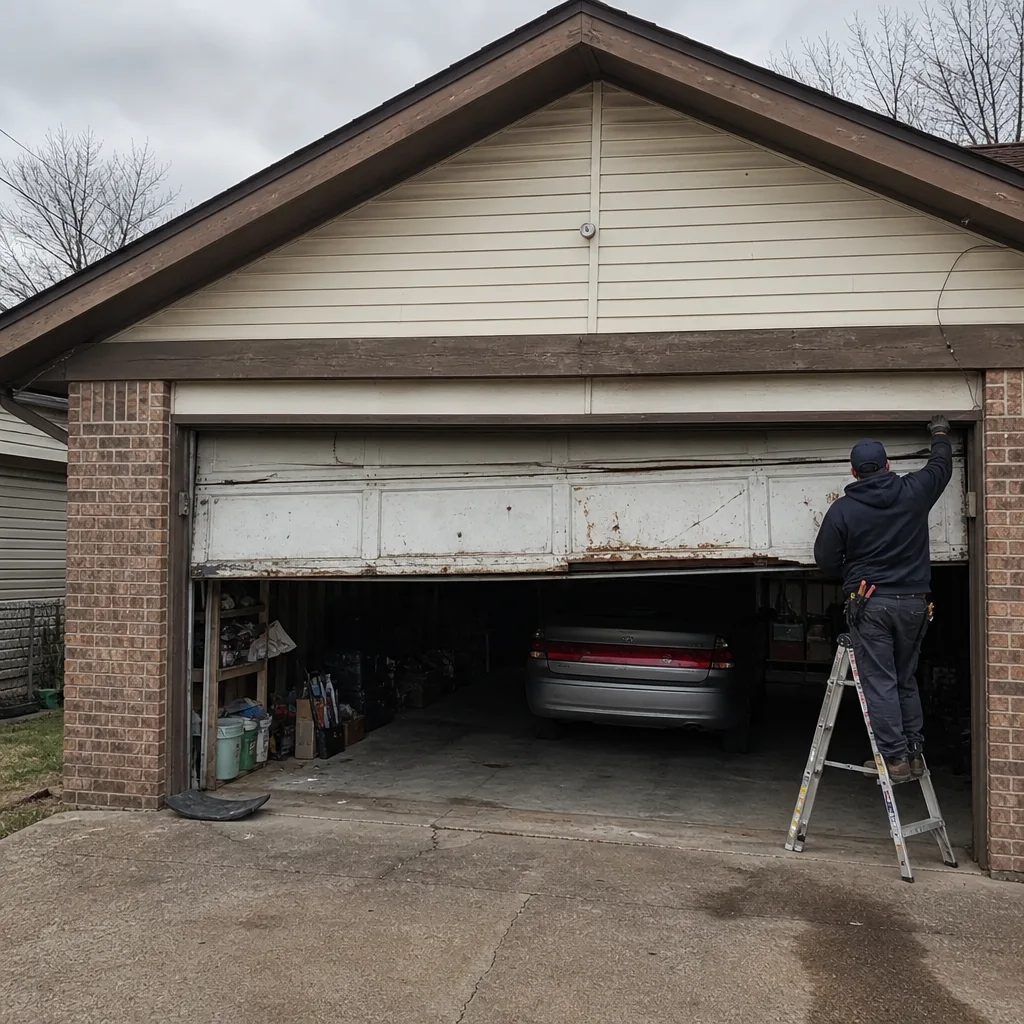 Before
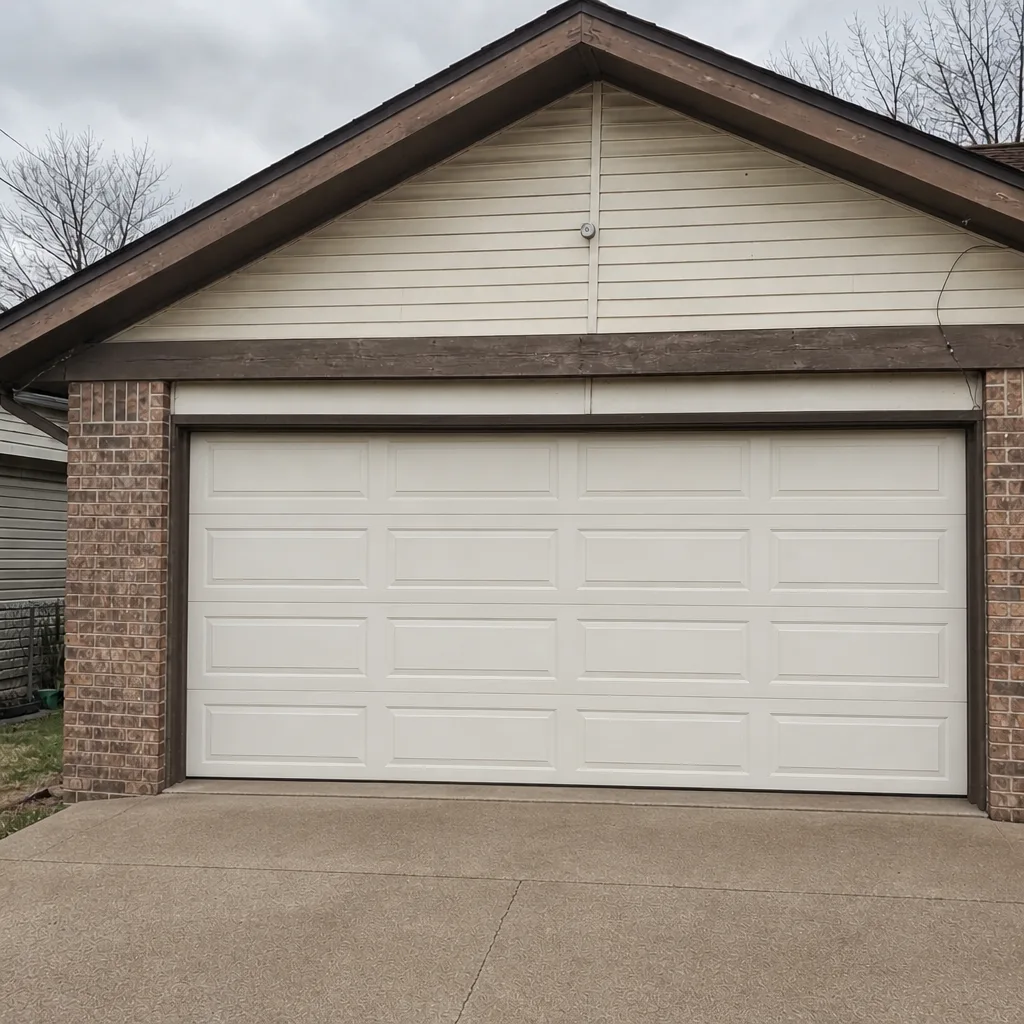 After
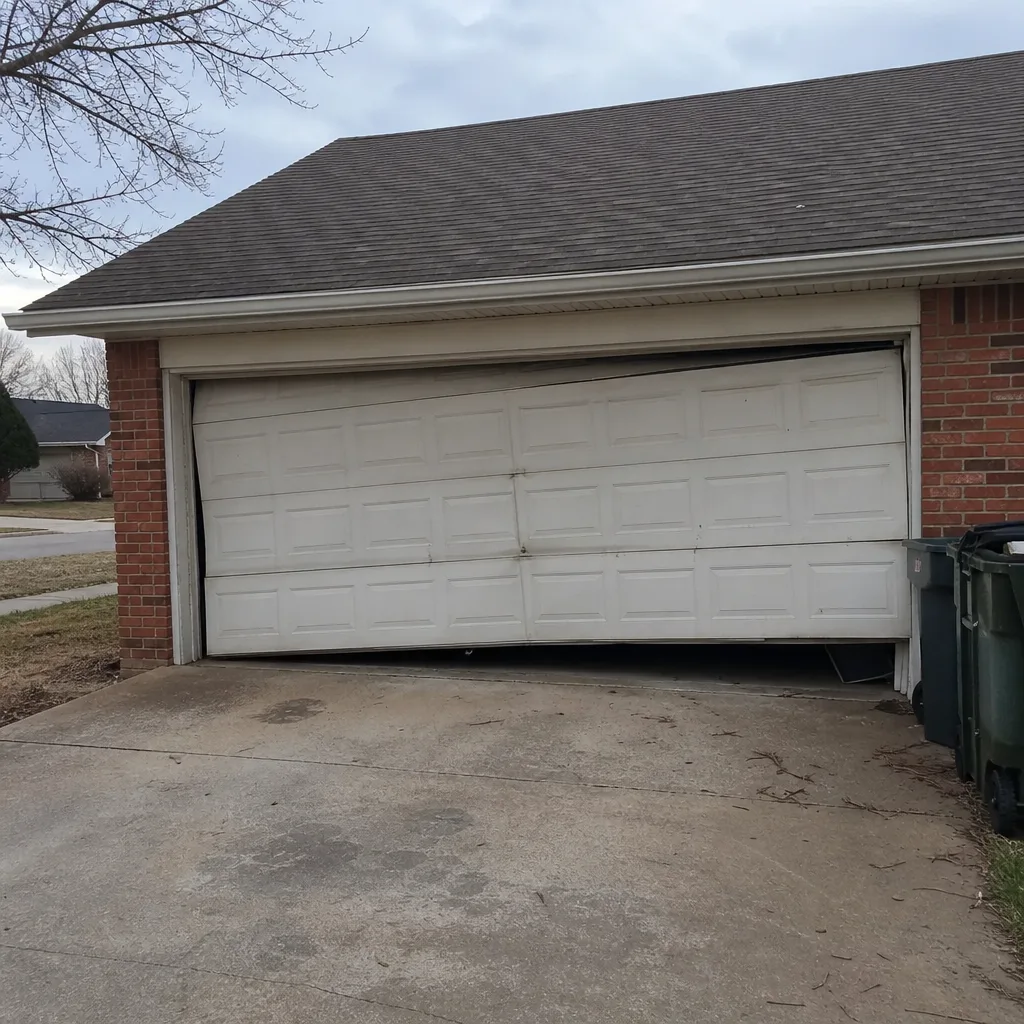 Before
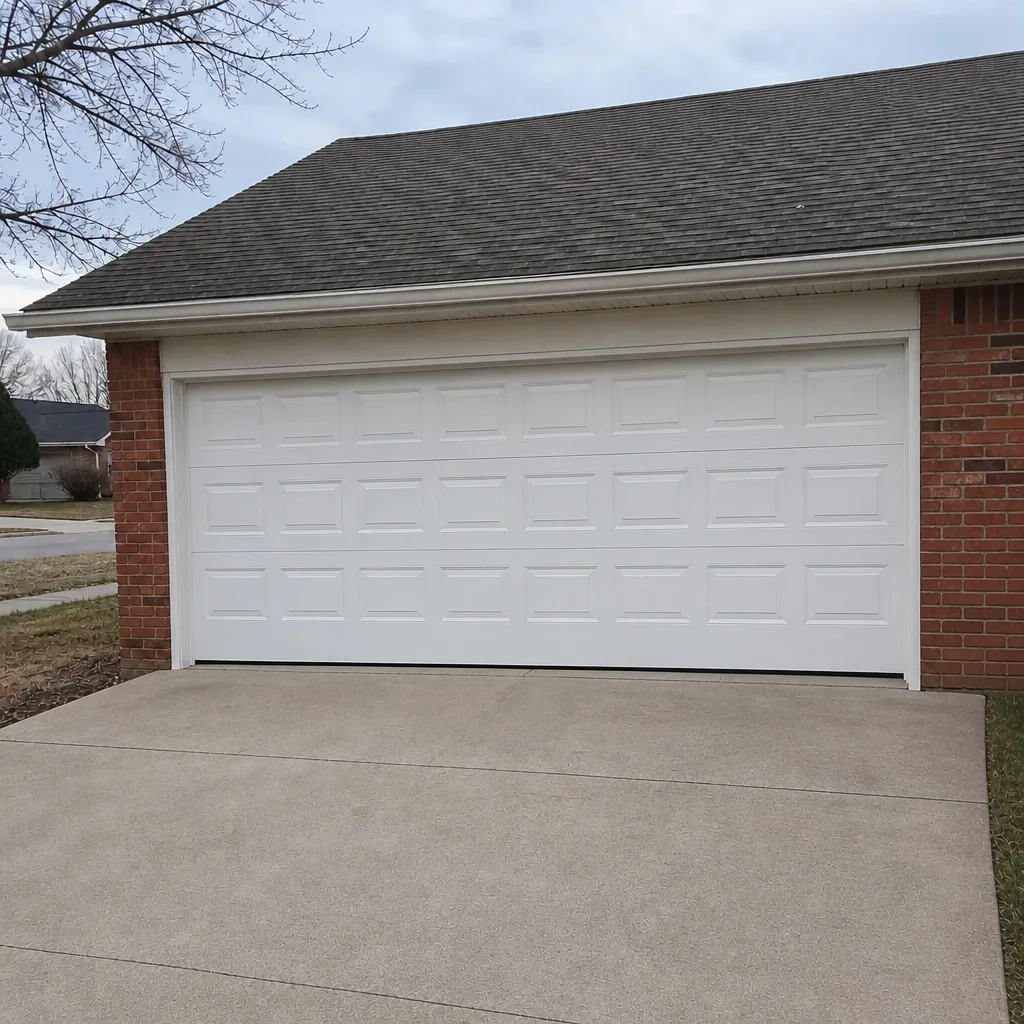 After
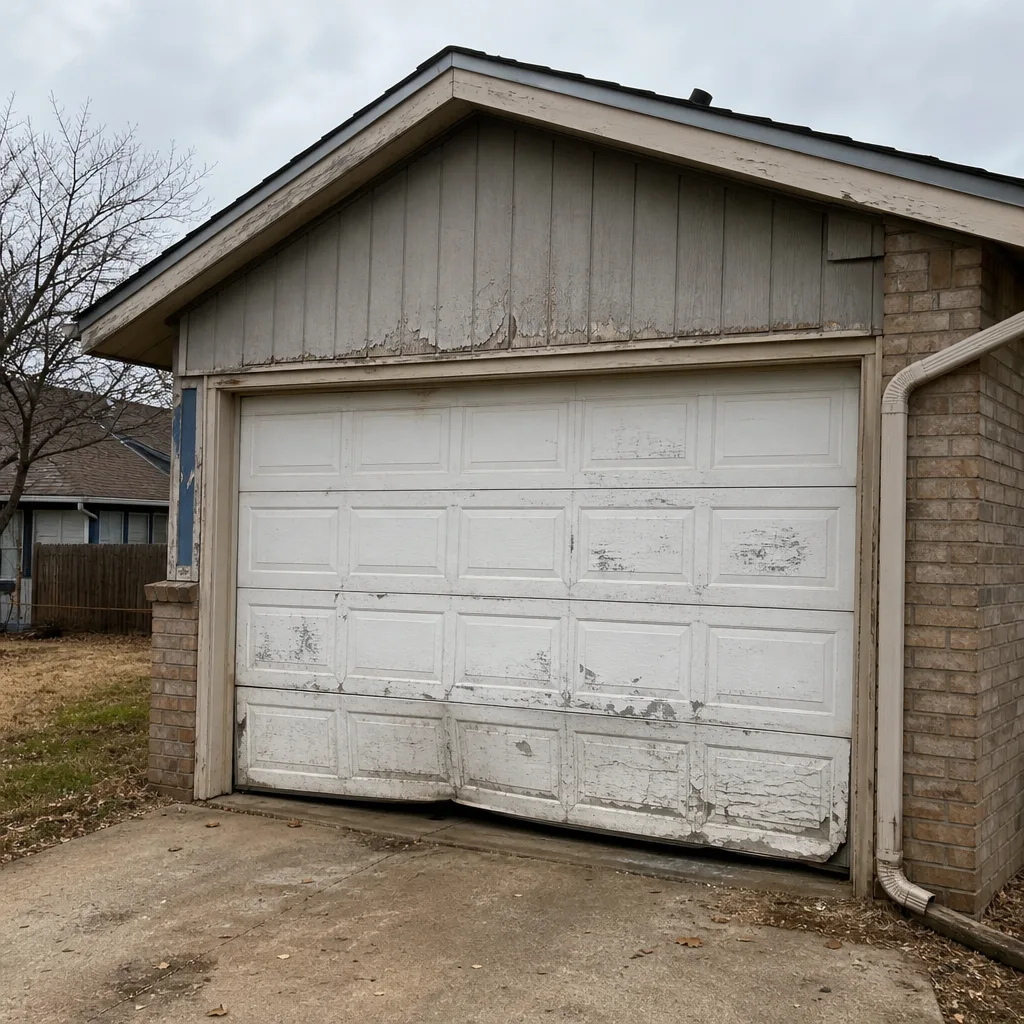 Before
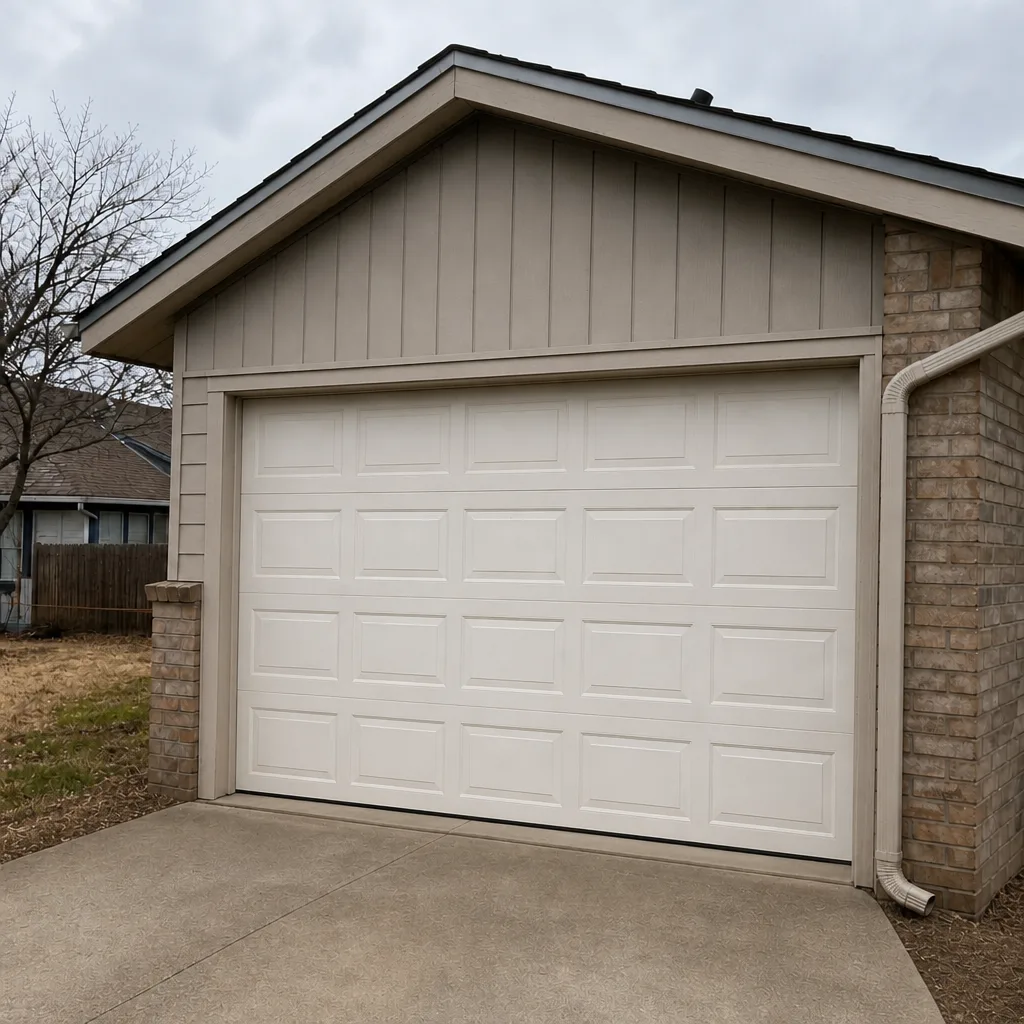 After
Frequently Asked Questions
Usually not, if the replacement is the same size in the same opening with no framing or electrical changes. A permit or city review typically comes into play when the rough opening changes, the structure around the door is altered, or new electrical work is added. Call the City of Edmond building department with your exact scope to confirm. Call (833) 545-4561 for a free estimate on the door side, and we’ll help you figure out which category your project falls into.
It depends on the electrical scope. A new opener on the existing circuit and existing mounting point is generally a product swap. Adding a dedicated circuit, relocating an outlet, or touching the panel is electrical modification and usually requires a permit and a licensed electrician. Ask the city before the work starts so the answer is in writing. Call (833) 545-4561 for a free estimate if you want help mapping out your opener project.
The installation itself is often a single day, but the full permit-and-inspection timeline typically runs longer because of application review and scheduling. The variable steps are the application review and any rough-in inspection, not the door install. Build extra calendar room if your project involves framing or electrical. Call (833) 545-4561 for a free estimate and we’ll walk you through the sequence before you commit.
A home inspector will often flag it as “permit not verified with the City of Edmond,” and that note can slow a sale or reopen negotiations. The remedy is usually to contact the city about retroactive permitting or a correction, which may involve opening up framing or the fire separation. Get it resolved before you list. Call (833) 545-4561 for a free estimate on any correction work.
In most of Edmond’s larger planned subdivisions, yes. Architectural review committees commonly want style, color, materials, and sometimes contractor information before they approve an exterior change, and their timeline can run longer than the city’s. Check your closing documents for the association rules and submit early. Call (833) 545-4561 and we’ll help you get the product specs the committee usually asks for.
The trade runs on properly licensed and insured professionals, and you should always ask for proof before work begins. Electrical portions of a job belong to a licensed electrician, and structural portions belong to whoever is permitted to do them. We connect Edmond homeowners with independent local professionals who carry the right credentials for the scope. Call (833) 545-4561 for a free estimate and we’ll be clear about what your project needs.
Safety reversing and non-contact sensors are a life-safety requirement for automatic openers, so an inspector will check that both the contact reversal and the photo eyes are working. If your door reverses on nothing, that’s a diagnosis problem, not a reason to disconnect the sensors. Call (833) 545-4561 for a free estimate on opener diagnostics.
Often yes, for repair work that doesn’t involve permitting. Repair and opener calls are a different track from a permitted installation, and same-day service is frequently available for those. We answer 24/7, and we run fast dispatch from 7am to 7pm, Sunday through Friday. Call (833) 545-4561 for a free estimate.
The Bottom Line
Garage door permitting in Edmond comes down to three questions: does the structure change, does the electrical change, and does the fire separation get disturbed. If all three answers are no, you’re usually in maintenance-swap territory. If any answer is yes, call the City of Edmond building department before you order anything, and get your HOA approval sorted in parallel. Keep the paperwork, keep the labels, and keep the safety sensors connected. That’s the whole guide in a paragraph. When you’re ready to talk about the door itself, we’re here.
Contact
Whether you’re replacing a tired Craftsman opener, upgrading to a LiftMaster or Chamberlain smart panel, or installing a new door from Clopay, Amarr, Wayne Dalton, or Raynor, we handle the whole job under one roof. Our technicians have up to 10 years of experience across eight major garage door and opener brands, and we treat every job as a garage door job, not a side project. We’ll tell you honestly whether your scope needs a permit and help you get the documentation your HOA and the city want to see. Call (833) 545-4561 for a free estimate. We answer 24/7, and we run fast dispatch from 7am to 7pm, Sunday through Friday, serving homeowners throughout Edmond.
Written by the team at Edmond Garage Door Service.