
Last updated November 16, 2026
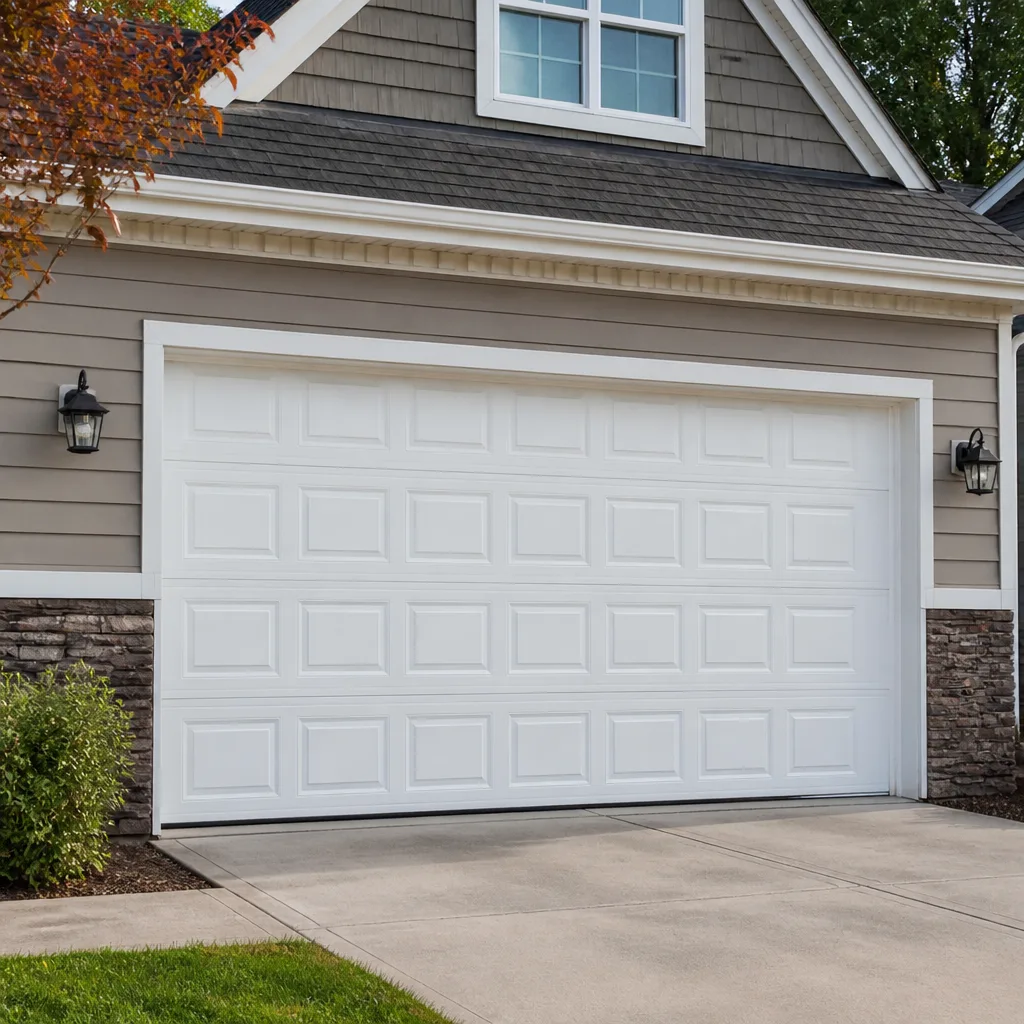 Raised-panel steel
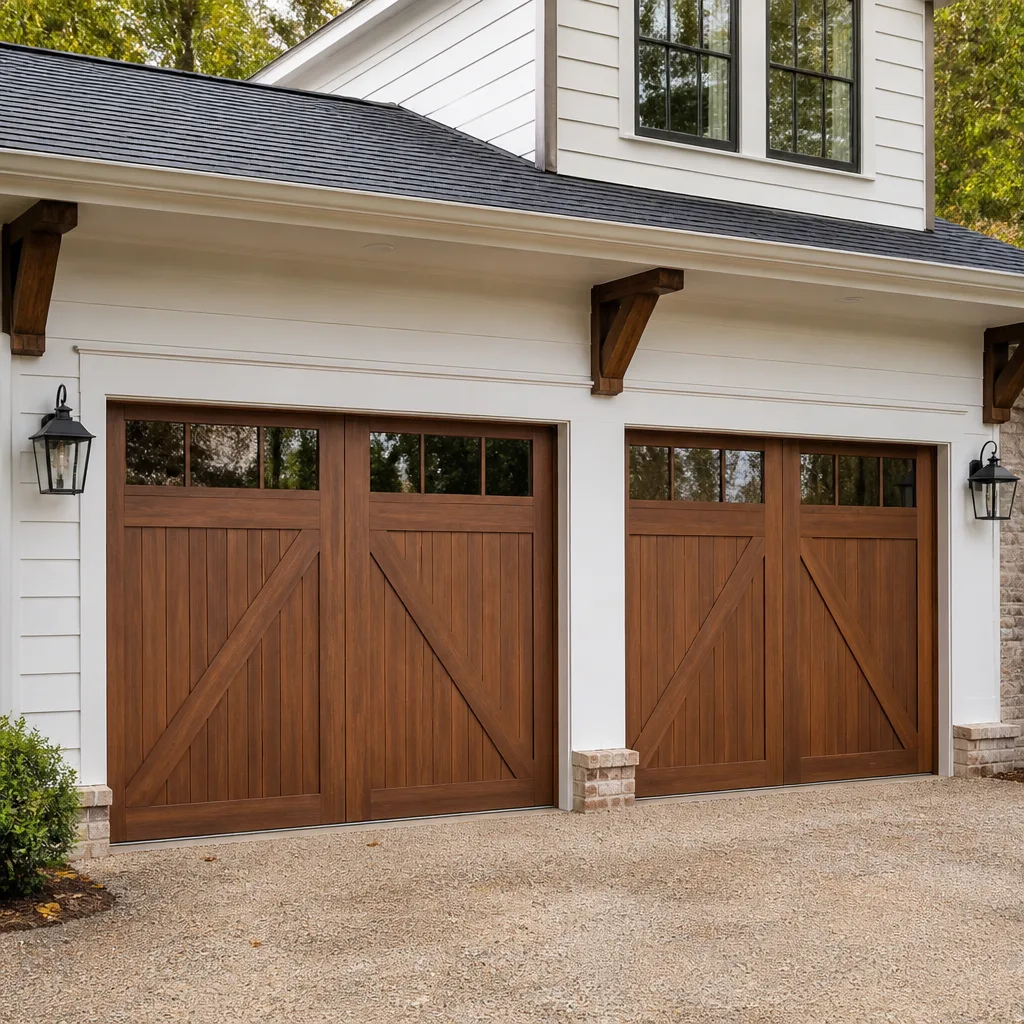 Carriage house
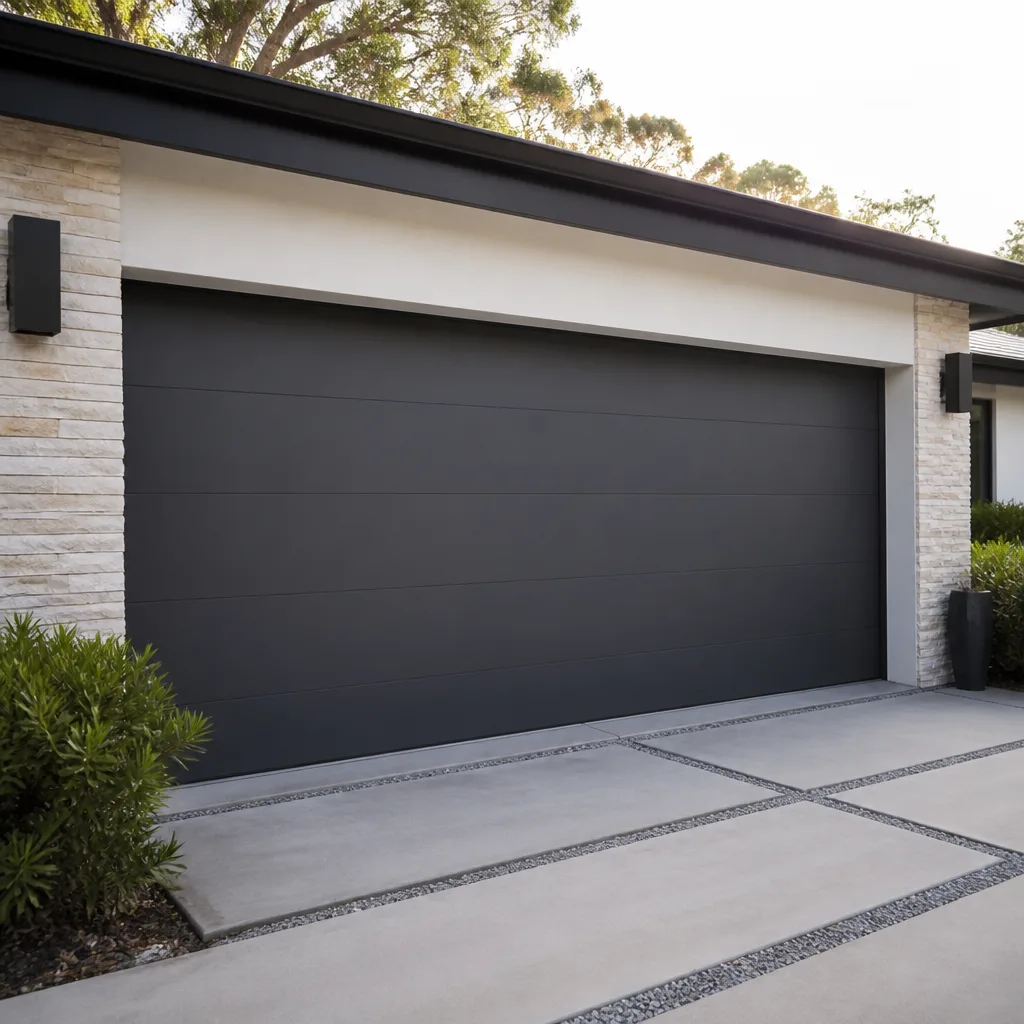 Modern flush
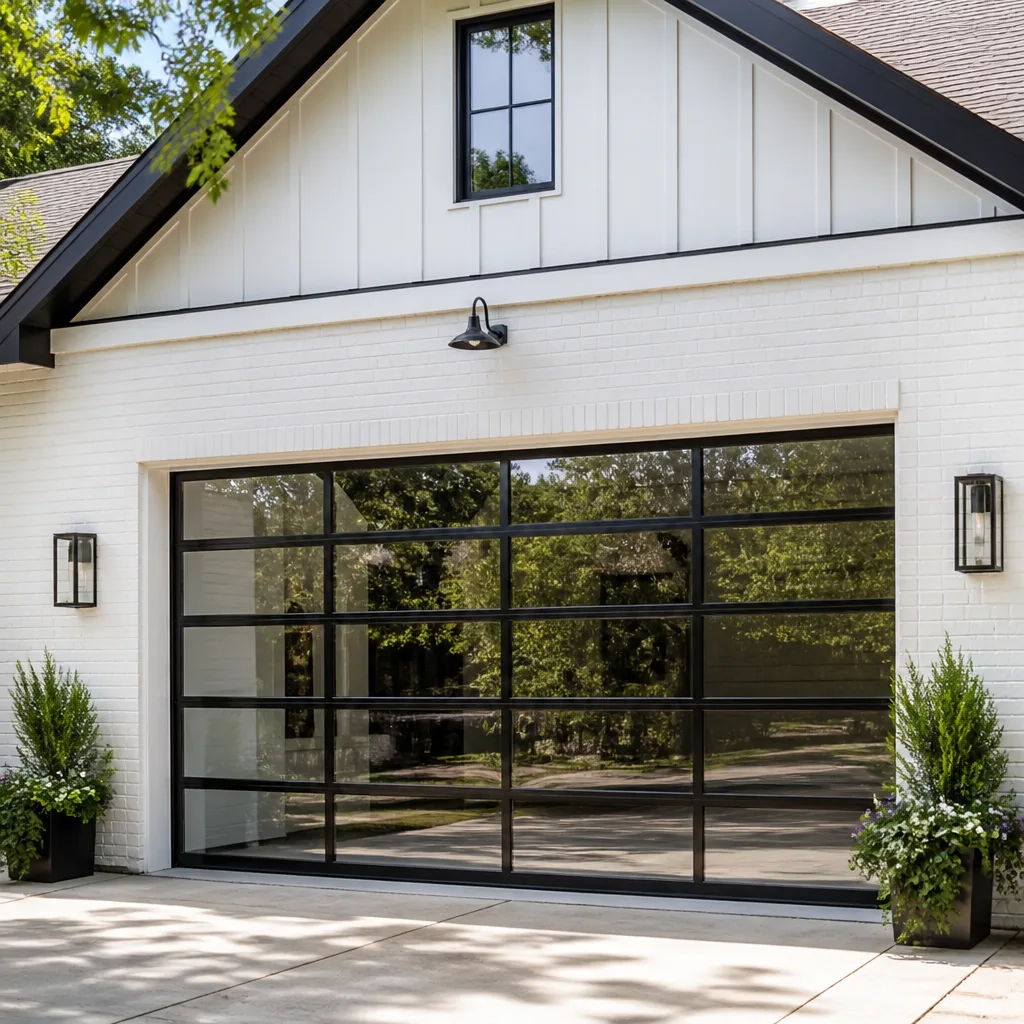 Full-view glass
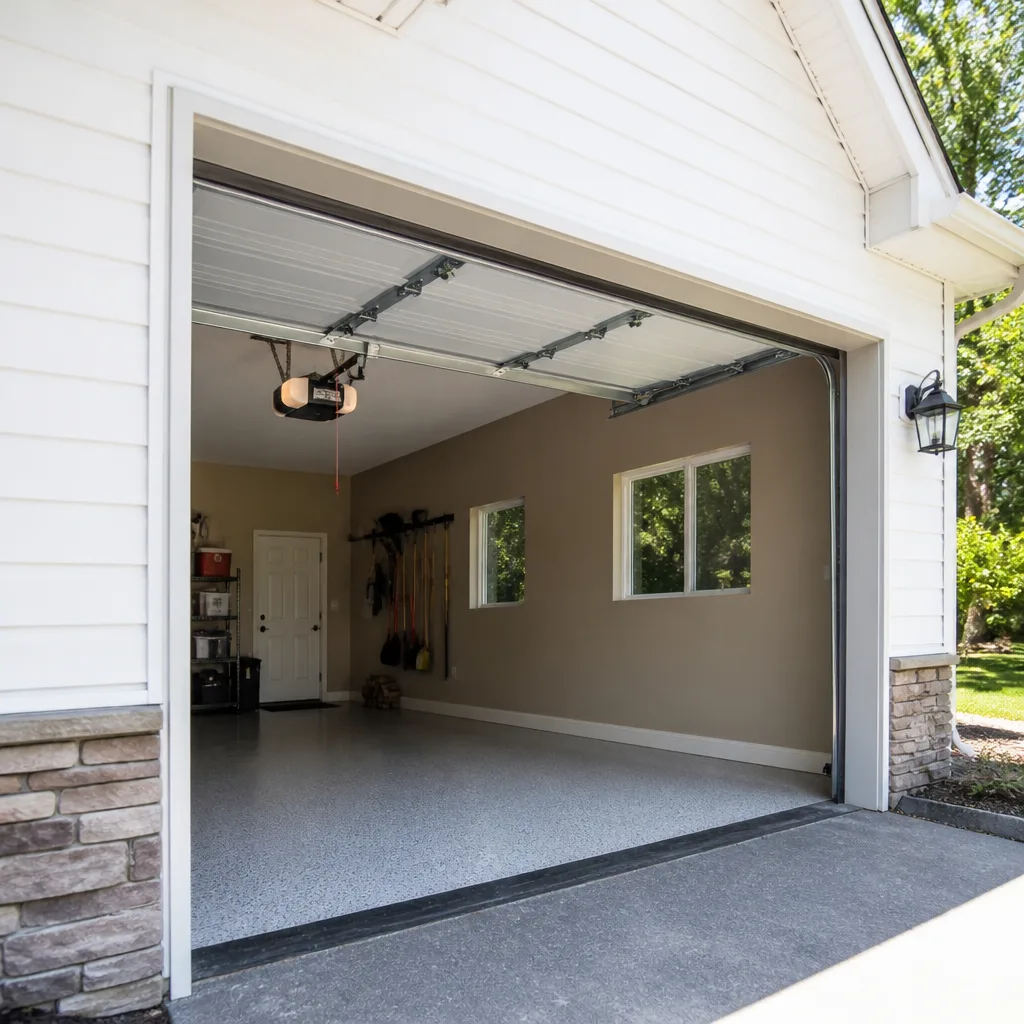 LiftMaster openers
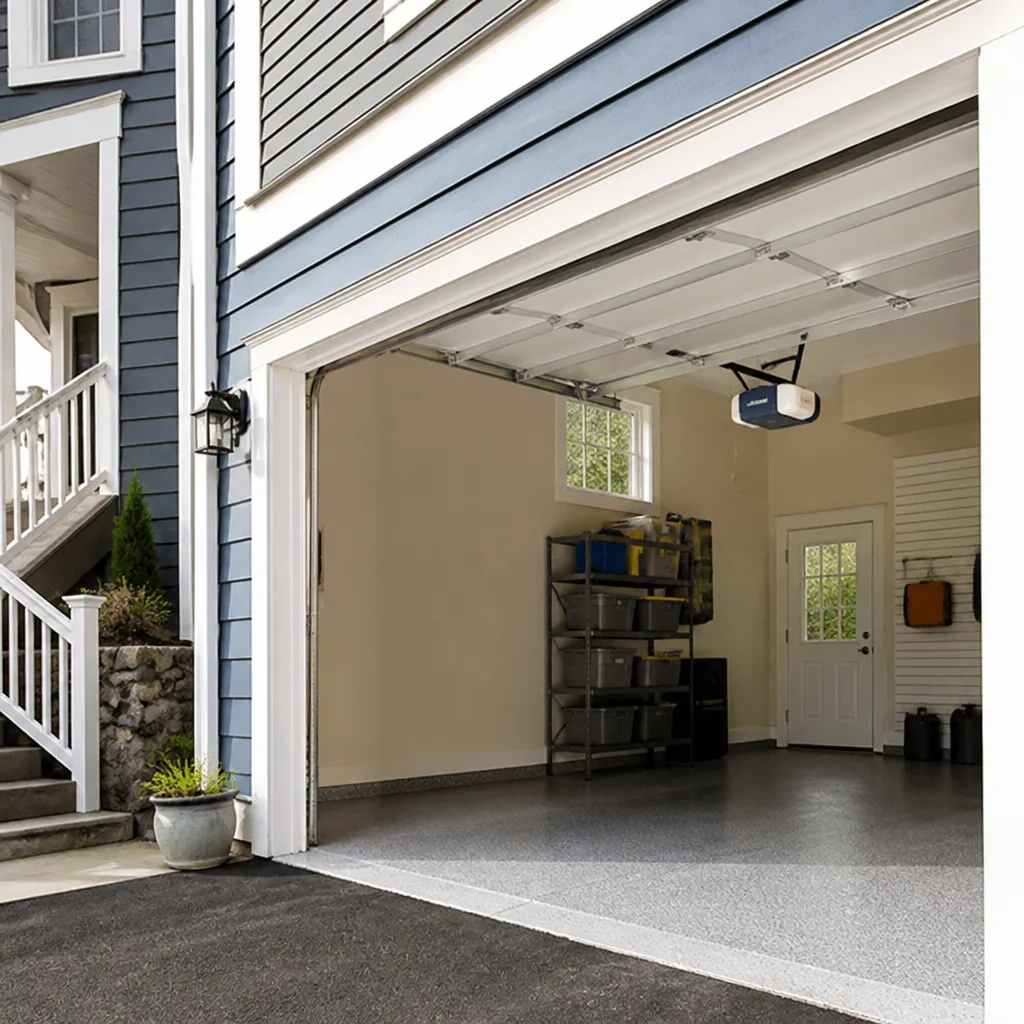 Chamberlain openers
Full 25-point door and opener safety check with every visit - springs, cables, rollers, tracks, and your LiftMaster or Chamberlain opener included
You get a price before we start. It does not change when the pro arrives.
Get your free estimateGarage Door Repair Maintenance Checklist for Edmond Homeowners
The number-one cause of avoidable emergency garage door calls in central Oklahoma isn’t neglect. It’s doing the right task at the wrong time of year. Lubricating a torsion spring in August heat, when the metal is already at peak expansion, can leave a door that binds and shudders every time it moves. The same goes for adjusting a seal in January when the rubber has gone stiff in a cold snap. What separates a garage door that runs quietly for years from one that starts grinding at eighteen months usually comes down to timing. This guide lays out a full-year maintenance rhythm built around Edmond’s actual temperature swings, the red clay that drifts onto driveways every spring, and the wear patterns we see most often on openers from LiftMaster, Chamberlain, and Genie. What you’ll walk away with is a checklist you can actually use, not a generic list.
Quick Answer
Maintain a garage door in Edmond on a seasonal cycle rather than a fixed “spring and fall” schedule: inspect and tighten hardware in March when winter cold contracts metal, lubricate rollers and hinges in late May after the worst of the spring dust settles, test the bottom seal and balance in September before the first cold front, and clean lubricant residue off springs and cables in December. Test the safety reverse monthly and log every adjustment so a technician can spot accelerated wear on the next service visit.
Styles & brands we work with
- Raised-panel steel
- Carriage house
- Modern flush
- Full-view glass
- LiftMaster openers
- Chamberlain openers
Table of Contents
- Why Timing Matters More Than the Task
- March: The Cold-Contraction Tune-Up
- Late May: Dust, Seal, and Lubrication
- September: Pre-Winter Balance Check
- Rollers: What Normal Wear Looks Like
- The Safe Way to Check Cable Tension
- Opener and Safety-Reverse Testing
- Keeping a Maintenance Log
Why Timing Matters More Than the Task
Most checklists you’ll find online tell you to lubricate twice a year and call it done. That advice assumes a stable climate. Edmond doesn’t have one. A garage in this part of Oklahoma can swing from a hard freeze to a warm afternoon within a single week in March, and that rapid cycling does things to the metal and rubber on your door that a steady climate never does.
Heat causes the steel torsion tube and its springs to expand. Cold contracts them. When the metal expands, a lubricant applied in January thin enough to penetrate a cold spring becomes too runny by August and drips off before it protects anything. When it contracts in December, a lubricant applied in July can crack and leave bare metal exposed to moisture from overnight dew. The parts are the same. The behavior of the maintenance is what shifts with the season.
Edmond homeowners on a fixed schedule often find themselves doing tasks at the worst possible time. Lubricating a torsion spring while the metal is hot and expanded traps grit against the coils and can mask a real problem. Adjusting a seal while the rubber is cold makes the rubber stiff and it won’t compress correctly against the door. Both feel like progress. Both can cause the issue you were trying to prevent.
Our technicians have up to 10 years of experience, and the single most common pattern we see on Edmond doors is a maintenance rhythm copied from a climate where it doesn’t fit. The fix is simple: shift each task to the month when the metal, rubber, and wood are in a state that actually accepts the work. That’s what the rest of this checklist is built around.
March: The Cold-Contraction Tune-Up
March is when you check hardware, not when you lubricate it. The reasoning is straightforward. Metal and wood have spent the winter contracted from the cold. Screws, bolts, and lag screws are more likely to be loose now than at any other point in the year, because the parts they hold together shrank. Check them while the fit is at its loosest and you’ll catch the problems that would otherwise only show up as a rattle in June.
Walk the door when it’s closed. Any bolt or lag screw that turns more than a quarter turn without resistance is telling you it has been backing out. Tighten it. Look at the hinge plates on each side and where the hinges attach to the door panel; those are the screws that back out first on doors that get used four to six times a day. Check the track brackets too. In Edmond, the freeze-thaw cycling over the winter is what loosens these, and the first warm weekend of the year is when a homeowner notices the rattle and blames the opener.
Do this once in March, before the heat arrives:
- Close the door completely and turn off the opener at the wall switch or unplug it. Never work on a live door.
- Walk each hinge and tighten the panel screws with a socket or screwdriver that fits properly.
- Check the lag screws that anchor the track brackets to the wall. Tighten any that turn easily.
- Look at the roller stems inside each hinge. Lift each one slightly; it should move a small amount. If any roller is jammed against its hinge, note it and don’t force it.
- Visually check the springs above the door for rust or dark discoloration. Don’t touch springs. If you see either, it’s a call-us moment, not a tighten-it moment. Springs are under extreme tension and can cause serious injury if handled incorrectly.
- Turn the power back on and open the door once to confirm nothing scrapes.
If a screw turns endlessly without tightening, the wood or metal behind it has stripped out. That’s a bigger fix than a screwdriver can handle, and it’s the kind of thing to note for a professional visit. A door that sags on one side usually starts with a stripped bracket anchor, not a broken spring.
Late May: Dust, Seal, and Lubrication
Late May is when to lubricate, and it isn’t because summer is coming. It’s because the worst of Edmond’s spring wind and red clay dust has finally settled. Lubricating in April traps grit against the rollers; lubricating in late May, after the dust has blown through, means the lubricant is doing its job on clean metal.
Red clay dust is relentless in central Oklahoma. It drifts through the gap under any door that isn’t sealing correctly, and it coats the rollers, the hinges, and the bottom of the door. If you skip this step, the dust doesn’t just look bad. It grinds away at the roller bearings and makes the door louder and harder to move over the summer. A homeowner who cleans and lubricates in late May noticeably extends roller life compared to one who does it in April or June.
What to Lubricate
- Roller stems and bearings. A small amount of silicone-based lubricant on each roller stem, not the roller wheel itself.
- Hinge pivots. A drop on the pin of each hinge where it meets the door.
- Track surfaces. A very light wipe with a silicone cloth, not sprayed on. Oil-based lubricants in a track attract dust.
- The torsion spring. A very light application on the spring and the torsion bar. Too much is worse than none.
Don’t lubricate the track itself with grease or a heavy oil. It traps dust and turns the track into a grinding paste. Same goes for the rollers themselves; the bearing is what needs the lubricant, not the wheel. In an Edmond climate, the correct amount of lubricant is less than you think it should be.
This is also the month to check your bottom seal. More on that below.
September: Pre-Winter Balance Check
September is the month to check balance, seal compression, and travel limits, because the temperature is still warm enough that the metal is expanded and the rubber is soft. Doing these checks now, before the first cold front, means the corrections you make hold through the winter rather than fighting you every morning in January.
Test Door Balance Safely
Balance testing tells you whether the door’s springs and cables are doing their job evenly. A door that’s out of balance strains the opener on every cycle. Here’s the safe way to check:
- Close the door and disconnect the opener by pulling the emergency release handle.
- Lift the door by hand about halfway up and stop. Let it rest.
- The door should stay where you put it, with only slight drift. If it drops on its own or rises on its own, it’s out of balance.
- Bring the door back to the closed position by hand and re-engage the opener.
- Don’t try to adjust the springs to correct balance yourself. Let a trained professional handle the tension adjustment. Springs can cause serious injury during adjustment, and this is not a job for a homeowner with a wrench.
A door that fails the balance test in September will be worse by December. The cold will shrink the metal and change the spring tension further, and the opener will start straining to lift a door it wasn’t designed to fight. Booking a balance check now beats booking a rescue call in the middle of a cold snap.
Test the Bottom Seal
The bottom seal is the rubber or vinyl strip along the bottom edge of the door. Its job is to keep dust, wind, and water out of the garage. In Edmond, the red clay dust intrusion is the most common reason homeowners finally replace a seal, and testing it is simple. With the door closed, press your finger against the seal on the interior side. It should compress easily and spring back. If it feels stiff, cracked, or won’t compress at all, it’s due for replacement. A seal that no longer compresses is letting dust through every time the wind blows.
Rollers: What Normal Wear Looks Like
Rollers are the parts most commonly ignored on a checklist, and the ones that most often signal an oncoming problem if you know what to look for. A door used four to six times a day in Edmond will wear through a set of steel rollers in a handful of years. Nylon rollers last longer but fail differently. What matters is recognizing the change from “normal” to “about to go.”
Normal Wear
- A slight film of lubricant on the roller stem.
- Roller wheel showing light surface scratches but spinning freely.
- Very slight squeaking that disappears after lubrication.
- Rollers that roll smoothly in the track with no wobble.
Signs of Imminent Failure
- Roller that has stopped rolling and slides in the track instead. You’ll hear it as a grinding or scraping sound.
- Flat spots on the roller wheel, visible as a slice of missing material.
- Roller stem that wobbles in the hinge. That play is the start of a broken stem.
- Nylon roller that has chipped or cracked, or one that has gone dark with ground-in dust.
- Door that gets noticeably louder or shudders on one side. That’s often a roller about to fail completely.
If you see more than two rollers in the “imminent” category, it’s worth replacing the set. Replacing one roller on a door that’s been running on four worn ones just shifts the load; the new one takes the stress. A technician can tell you whether the wear is isolated or the whole set is due. Our technicians work with all of the major door and opener brands, from LiftMaster openers to Clopay door panels, so a single call covers both diagnosis and replacement.
The Safe Way to Check Cable Tension
Cables on a garage door run along the sides from the bottom brackets up to the drums above the door. They’re under thousands of pounds of tension. If one lets go, it can whip through the garage with enough force to hurt anyone in its path. That’s why you never touch cables. You check them from a safe distance and you look for the signs that they’re loosening or fraying, and you let a professional handle anything beyond that.
The Safe Cable Inspection
- Keep the door closed. Cables are under tension whether the door is open or closed, but at closed position you can see the entire run clearly.
- Look at the cable run from the bottom bracket, up along the door edge, to the drum above the door. Don’t reach up or put your hand near the drum.
- Look for kinks, fraying, or exposed wire strands. Any of these signals a cable that needs professional attention.
- Look at the bottom bracket where the cable attaches. It should be straight, not bent or tilted. A tilted bracket means uneven loading, which can happen in Edmond after the freeze-thaw cycle loosens the bracket anchors.
- Look at the drum above the door. The cable should sit neatly wrapped in the grooves. A cable that’s jumped the grooves and sits outside them is an emergency; stop using the door until it’s fixed.
- If any of these are visible, close the door, don’t use it, and call a professional. Do not attempt to tighten a cable yourself. Cables can cause serious injury to someone untrained.
What you’re checking for during a cable inspection is change. A cable that has looked the same for two years is probably fine. A cable that looks different than it did last season, or one that’s made the door start moving unevenly or noisily, is not. That’s when an Edmond homeowner should stop and call.
Opener and Safety-Reverse Testing
Openers are where the checklist and the electron side of the door meet. Modern openers, whether you’re running a LiftMaster with smart-home features or a Genie with a legacy belt-drive system, need two things tested on a schedule: safety reverse and op-force.
Test the Safety Reverse
The safety reverse is the feature that stops the door and reverses it when it meets an obstruction. It’s tested monthly, and it’s simple:
- Open the door fully with the opener.
- Place a piece of wood or a roll of paper towels on the ground where the door will close.
- Press the wall button to close the door.
- When the door hits the object, it should reverse without hesitation.
- If it pauses, hesitates, or continues closing, don’t use the door until a professional looks at it.
The safety reverse sensors at the bottom of the track also need cleaning in Edmond. Dust builds up on the sensor lenses during the spring wind season, and a dusty lens will fail to see the beam. A quick wipe with a dry cloth once a month keeps them working. If your opener keeps reversing for no reason, the sensors are usually the first thing to clean and check.
Test the Force Setting
Force setting is a less-known test. It measures how much resistance the opener will push through before it decides something is wrong and reverses. In Edmond, the force setting that worked in spring can be too low in winter, because cold makes the door move harder and the opener interprets that as an obstruction. If your door starts reversing unexpectedly when the temperature drops, the force setting almost certainly needs adjustment. That’s not a homeowner job; it involves the opener’s setting controls and a careful sequence that varies by brand. A technician who services LiftMaster, Chamberlain, Genie, and Craftsman openers will know exactly which settings to adjust based on your model.
If your opener has stopped responding, cycles partially, or is making grinding sounds it didn’t make before, that’s a job for garage door opener repair rather than routine maintenance.
Keeping a Maintenance Log
A maintenance log is not busywork. It’s the single most useful tool a technician can have when they show up to a garage door call in Edmond, because it tells them whether the wear pattern they’re looking at is normal or accelerated. A door that has eaten a roller in eight months is telling a story; a log turns that story into numbers.
You don’t need a fancy system. A notebook taped inside the garage door opener cover, or a note in your phone, works. Here’s what to log:
- Date of each maintenance task. March tighten, May lubricate, September balance, December clean.
- What you did. Which screws you tightened, which rollers you lubricated, whether you replaced the seal.
- Any noises you heard. “Loud on left side,” “grinding at halfway up,” “squeaks on close.”
- Any parts replaced and when. Rollers, seal, hinges, opener battery.
- Any symptom that changed. Balance drifting, safety reverse hesitation, opener reversing unexpectedly.
When you call for service, hand the log to the technician. A door that has been lubed four times in a year and still squeaks tells the technician the problem isn’t lubrication. A door whose balance has drifted three times in a year tells the technician the springs are probably due. That kind of pattern is worth hours of diagnostic time, and it’s the reason garage door repair starts faster when the homeowner can show what they’ve been doing to the door.
Keep the log going. Over two or three years, you’ll have a document that tells any technician everything they need to know about your door before they’ve unloaded a single tool.
Common Mistakes to Avoid
- Lubricating the springs in the heat of summer. When the metal is at peak expansion, lubricant thins and runs off, and grit can get trapped against the coil. Lubricate in late May or late October, not in July or August.
- Adjusting the bottom seal in a cold snap. Cold rubber is stiff and won’t compress correctly. If your seal needs work in December, wait for a warm afternoon, or let a professional do it once the temperature moderates.
- Greasing the track. Track grease turns into a dust magnet in this climate; the red clay powder sticks to it and packs into the track. Silicone spray, used sparingly, is the right product for a track surface.
- Tightening a stripped screw and calling it fixed. A screw that turns endlessly without resistance isn’t holding the bracket. It’s going to back out again. Have the hole filled and the bracket re-anchored properly.
- Skipping the safety-reverse check because “it worked last year.” Safety sensors and force settings drift over time. The test takes thirty seconds. Skipping it is the single most common cause of an opener that closes on something that shouldn’t be there.
- Touching a torsion spring or a cable out of curiosity. Both are under extreme tension and can cause serious injury. Springs and cables are not homeowner territory. If you see rust, a kink, or uneven movement, call a professional.
- Ignoring the maintenance log for the first year, then wondering why the technician can’t pinpoint the problem. Start the log on the first day and it pays off for as long as you own the door.
See the difference
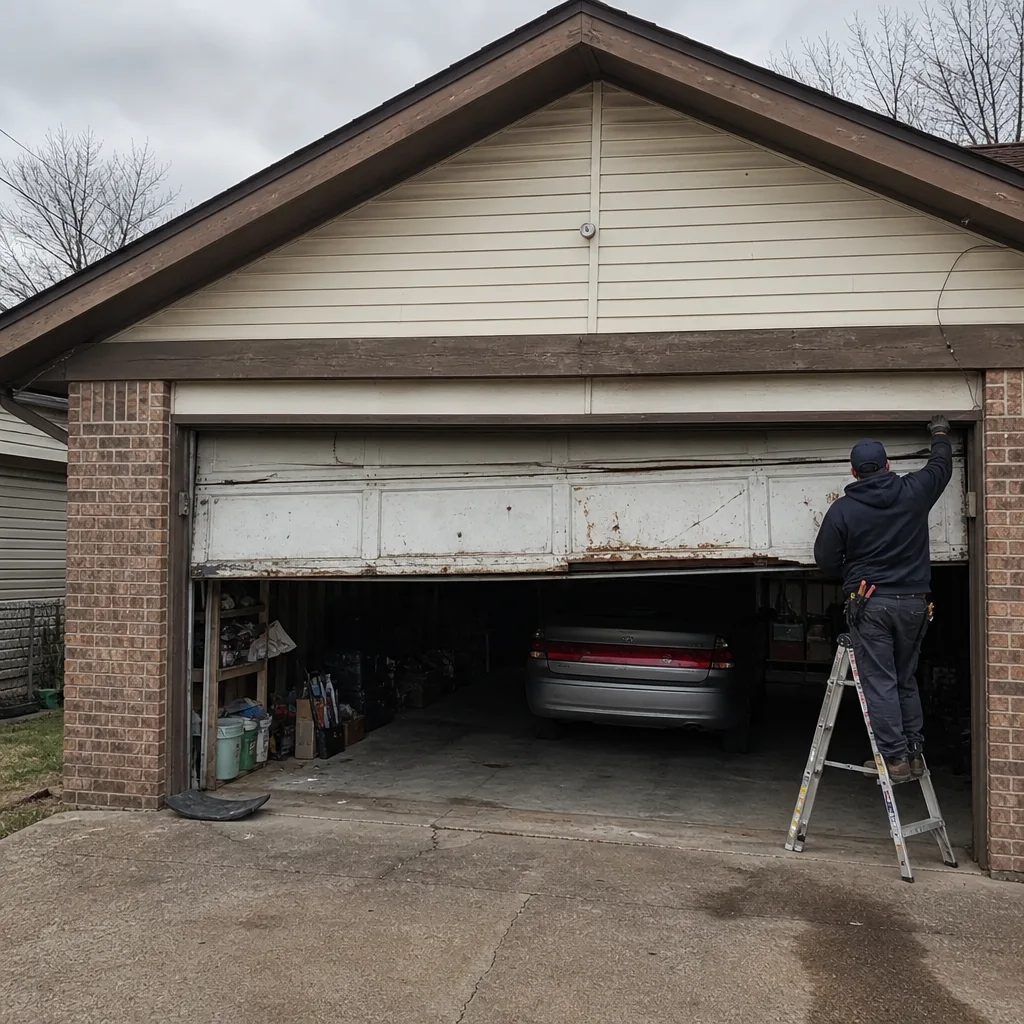 Before
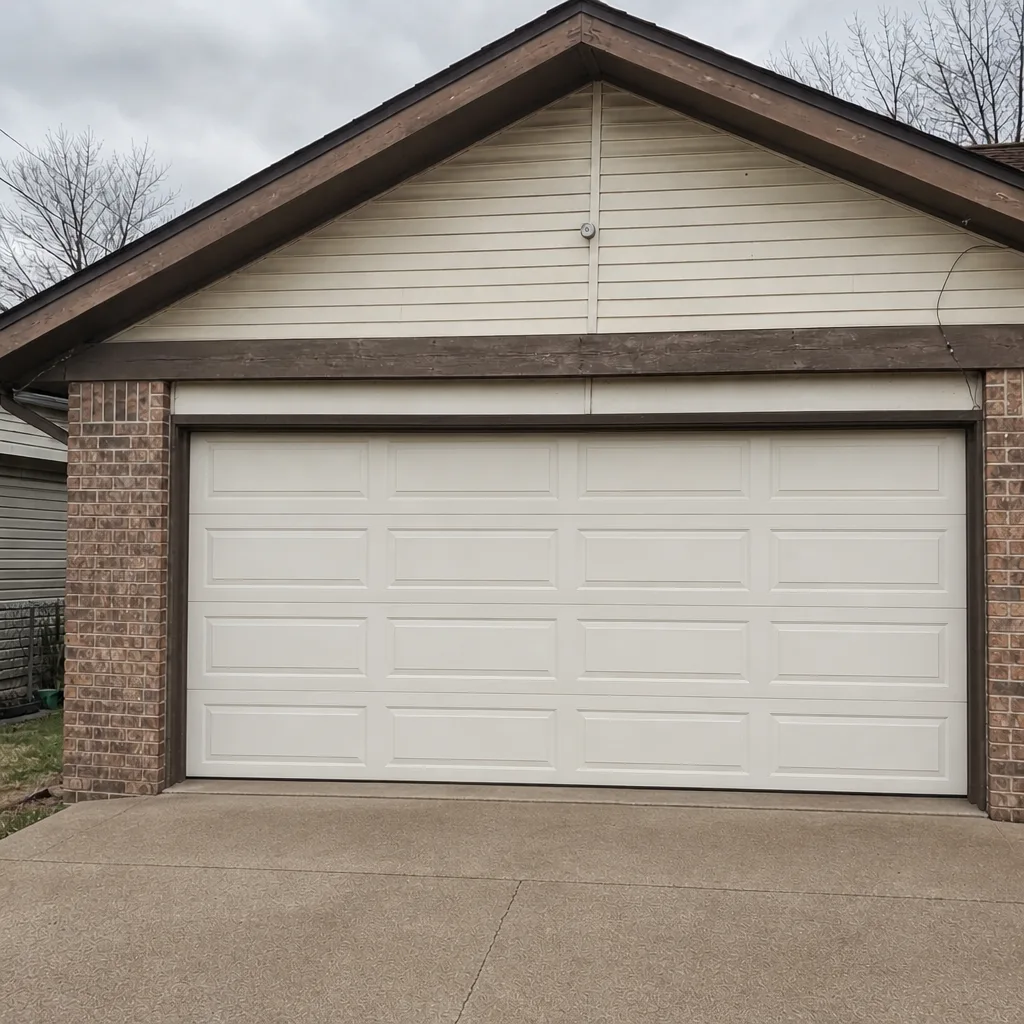 After
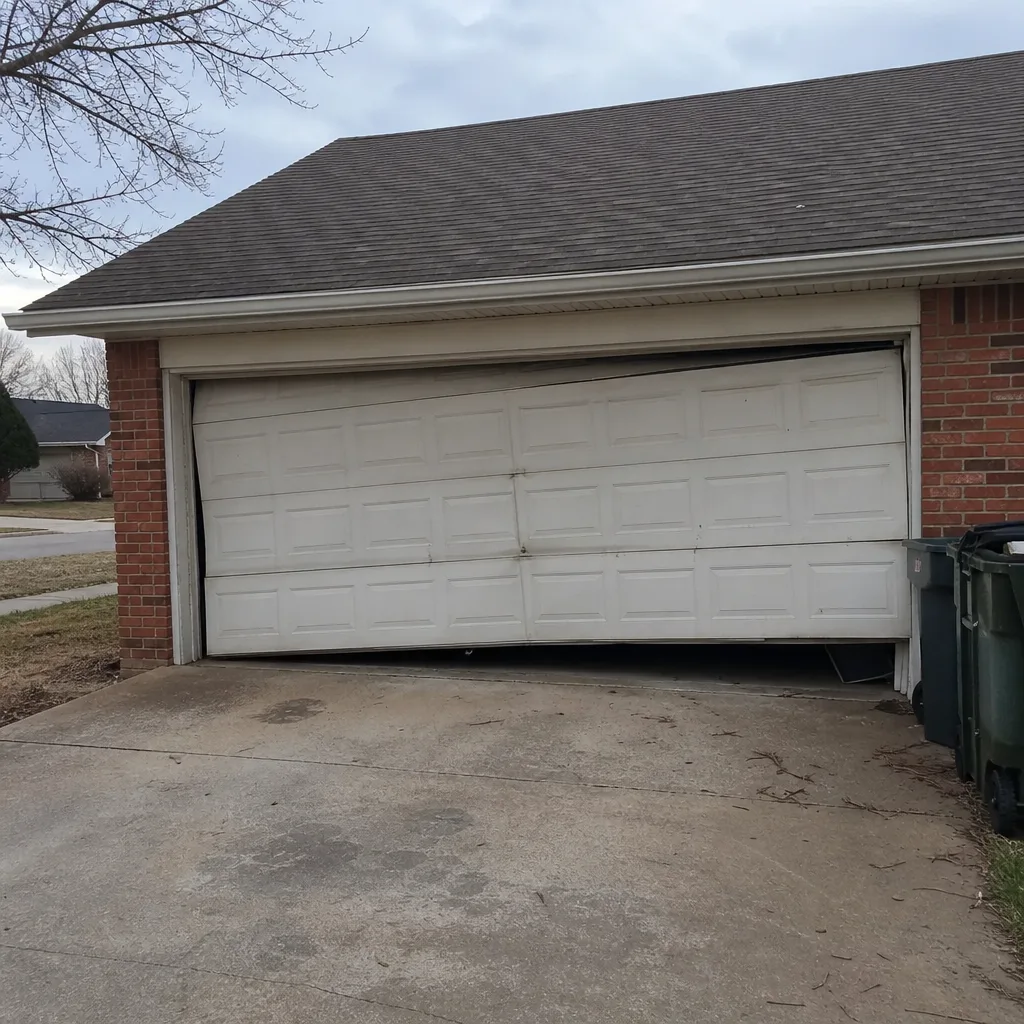 Before
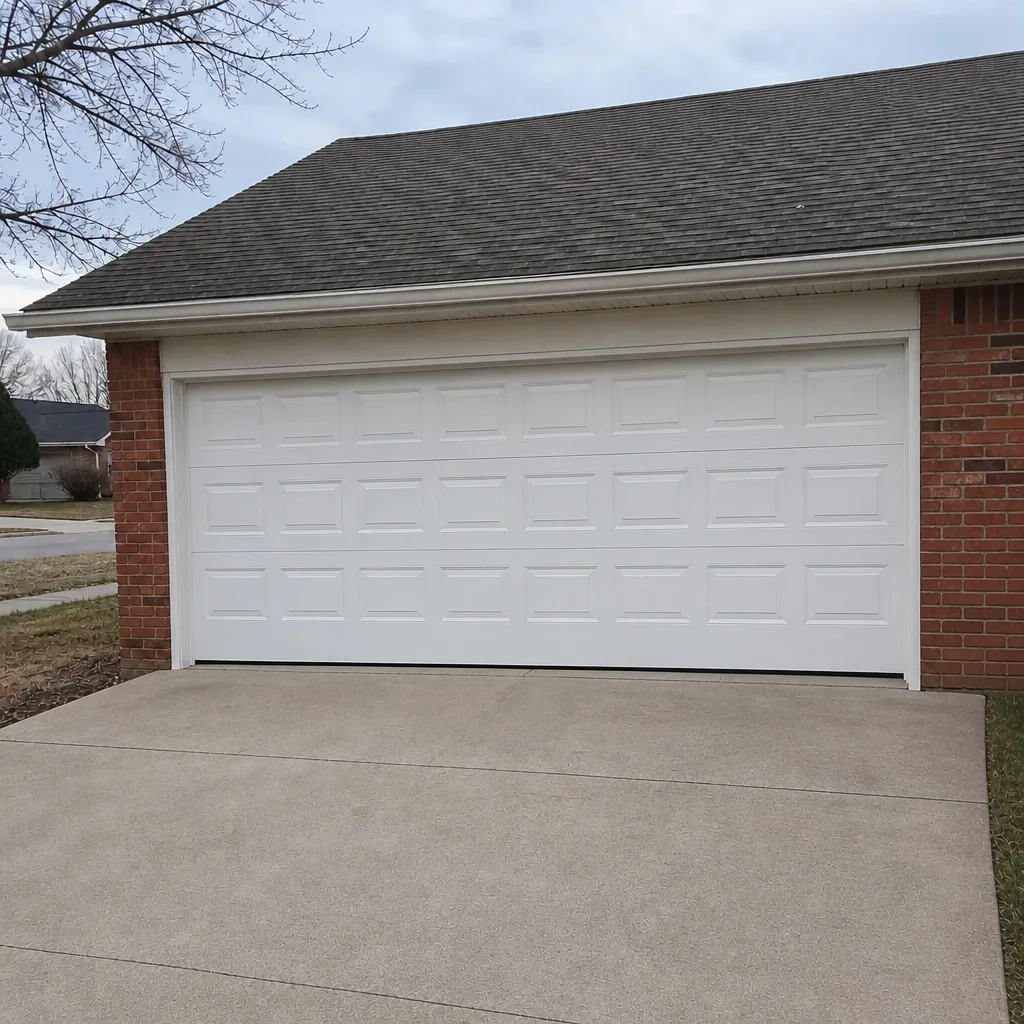 After
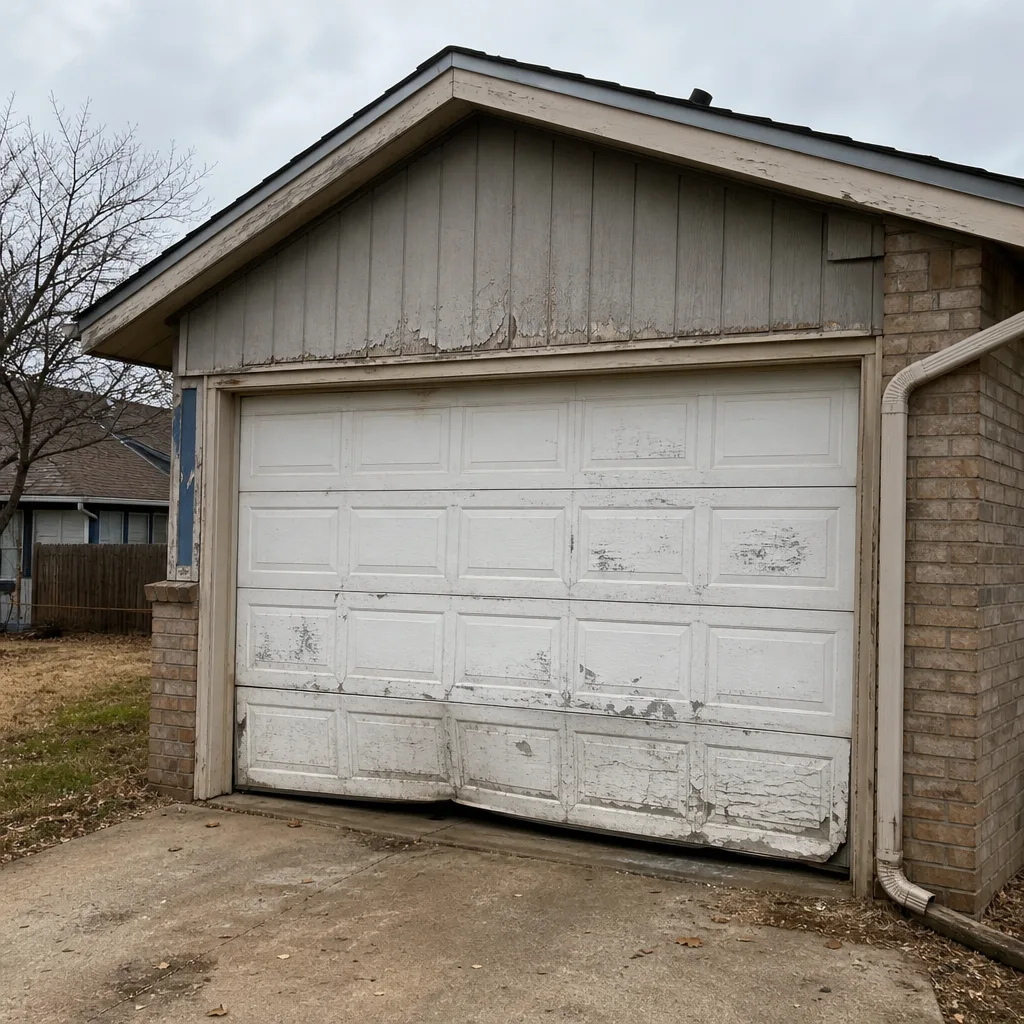 Before
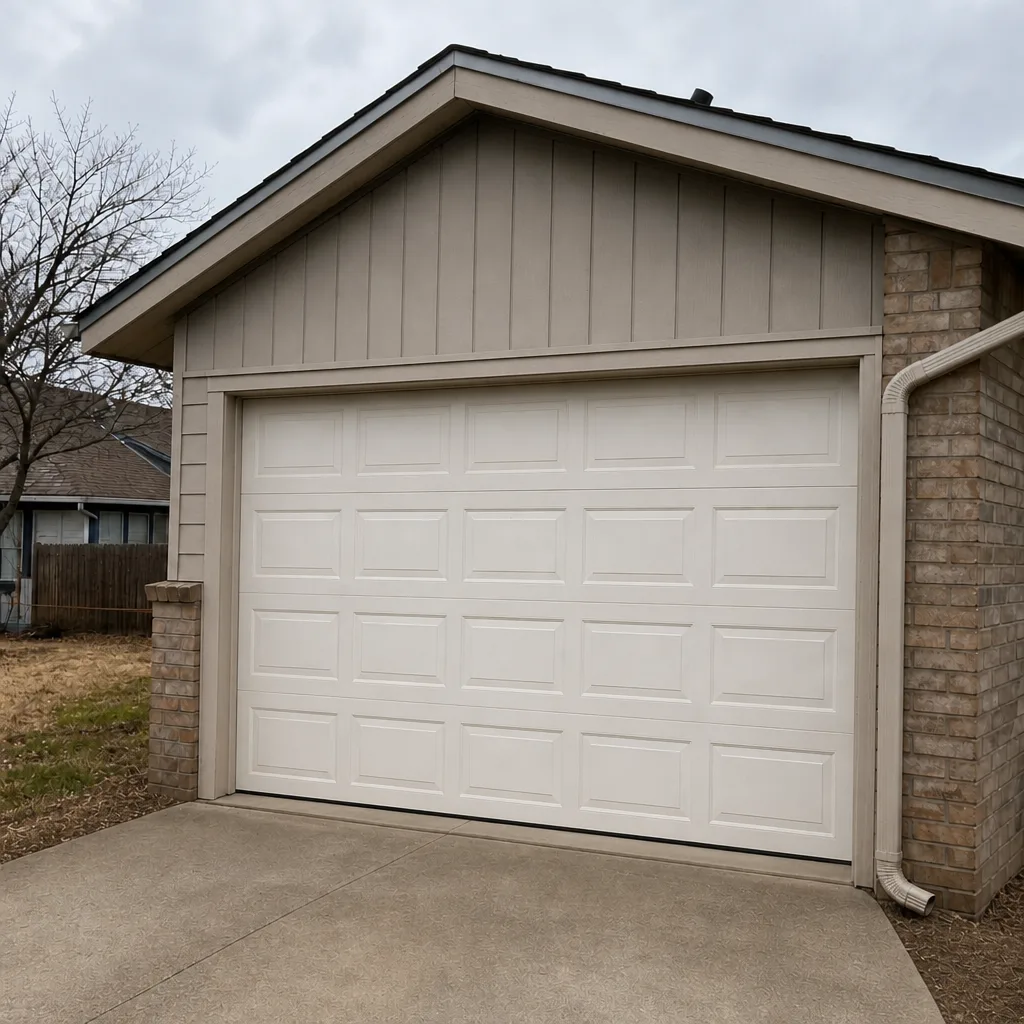 After
When to Call a Professional
Some garage door problems are homeowner-maintainable and some are not. The line between the two is mostly about tension. Anything that involves loosening, tightening, or releasing the springs, cables, or torsion assembly is a professional job, full stop. So is any balance correction that requires spring adjustment. So is any diagnosis of an opener that’s cycling, reversing, or failing to respond. Also on the professional side: a door that sags on one side, a bracket that’s pulled out of the wood, a roller set that needs replacing all at once, and any safety-reverse system that fails its monthly test. Edmond Garage Door Service offers free estimates in Edmond. Our technicians work on all major brands, including LiftMaster, Chamberlain, Genie, and Clopay, so a single call handles the entire door and opener system. Call (833) 545-4561 for a free estimate. We answer 24/7, with fast dispatch from 7am to 7pm, Sunday through Friday.
Frequently Asked Questions
Lubricate the moving parts – roller stems, hinge pivots, and very lightly the springs and tracks – twice a year, in late May after the spring wind dust settles and again in late October once the heat has broken. Lubricating in the middle of summer in an Edmond garage is less effective, because the metal has expanded and lubricant runs off before it protects the parts underneath.
No. Torsion springs are under extreme tension and can cause serious injury during adjustment, and no manufacturer intends for homeowners to adjust them. If your door is out of balance, call a trained technician. Even a technician uses winding bars and a careful sequence to release tension safely, which tells you everything about the risk.
Look for kinks, fraying, or exposed wire strands along the cable run, and check that the bottom bracket where the cable attaches is straight and not tilted. If a cable has jumped out of the grooves in the drum above the door, stop using the door until a professional fixes it. Never touch a cable to test tension by hand.
Test the safety reverse once a month, year-round. The test takes thirty seconds and it’s the same test every month: place an object where the door will close, hit the close button, and confirm the door reverses. Also clean the sensor lenses monthly during spring, since Edmond’s dust season coats them quickly and a dusty lens can make the door reverse for no obvious reason.
Cold weather makes the door move harder, and an opener with a marginal force setting interprets that resistance as an obstruction and reverses. The fix isn’t a homeowner adjustment; it’s a force-setting change specific to your opener brand. If your LiftMaster, Chamberlain, or Genie opener starts reversing on cold mornings in Edmond, that’s a call-a-technician moment.
Ask directly when you call whether they service both the door brand and the opener brand on your door – not just one or the other. Many companies handle one side of the trade and farm out the other. A company that works on both, and knows the difference between builder-grade doors and premium ones, will diagnose the problem correctly the first time, which is the point. Call (833) 545-4561. Estimates are free.
The Bottom Line
The best garage door maintenance in Edmond isn’t a list of tasks; it’s a calendar. Tighten hardware in March when cold-contracted metal makes loose screws obvious. Lubricate in late May once the spring dust settles, not in the heat of summer. Check balance and the bottom seal in September before the first cold front. Clean and inspect hinges and springs in December. Test the safety reverse monthly. Keep a log. Leave the springs and cables to a professional. Do those things and your door will run quieter, last longer, and cost you far less in preventable repairs. If you’d rather have the whole sequence done properly the first time, call us and we’ll put the calendar to work on your door.
Call (833) 545-4561 for a free estimate. We answer 24/7. Fast dispatch from 7am to 7pm, Sunday through Friday. Our technicians have up to 10 years of experience and handle Edmond Garage Door Service for every major brand. Whether you’re in Edmond proper or nearby, one call covers the whole system.
Written by the team at Edmond Garage Door Service.