
Last updated November 16, 2026
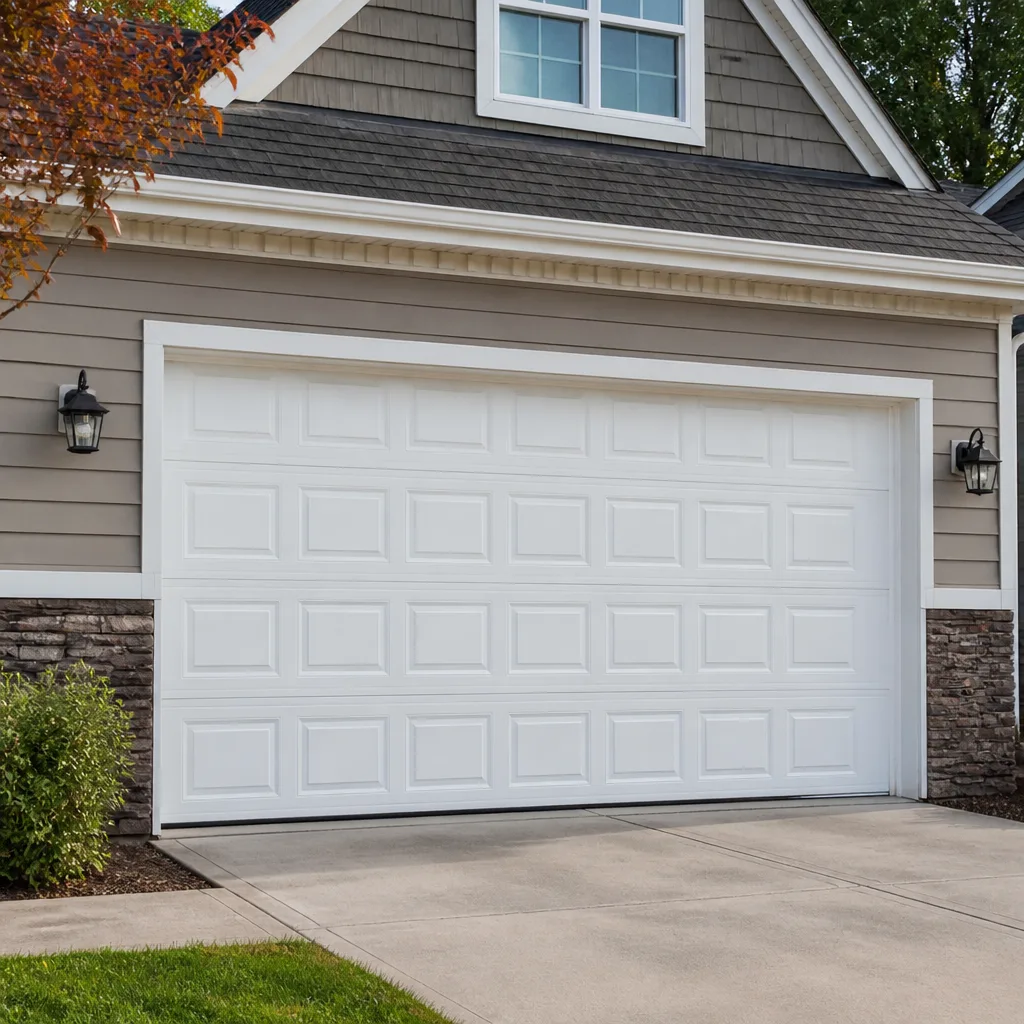 Raised-panel steel
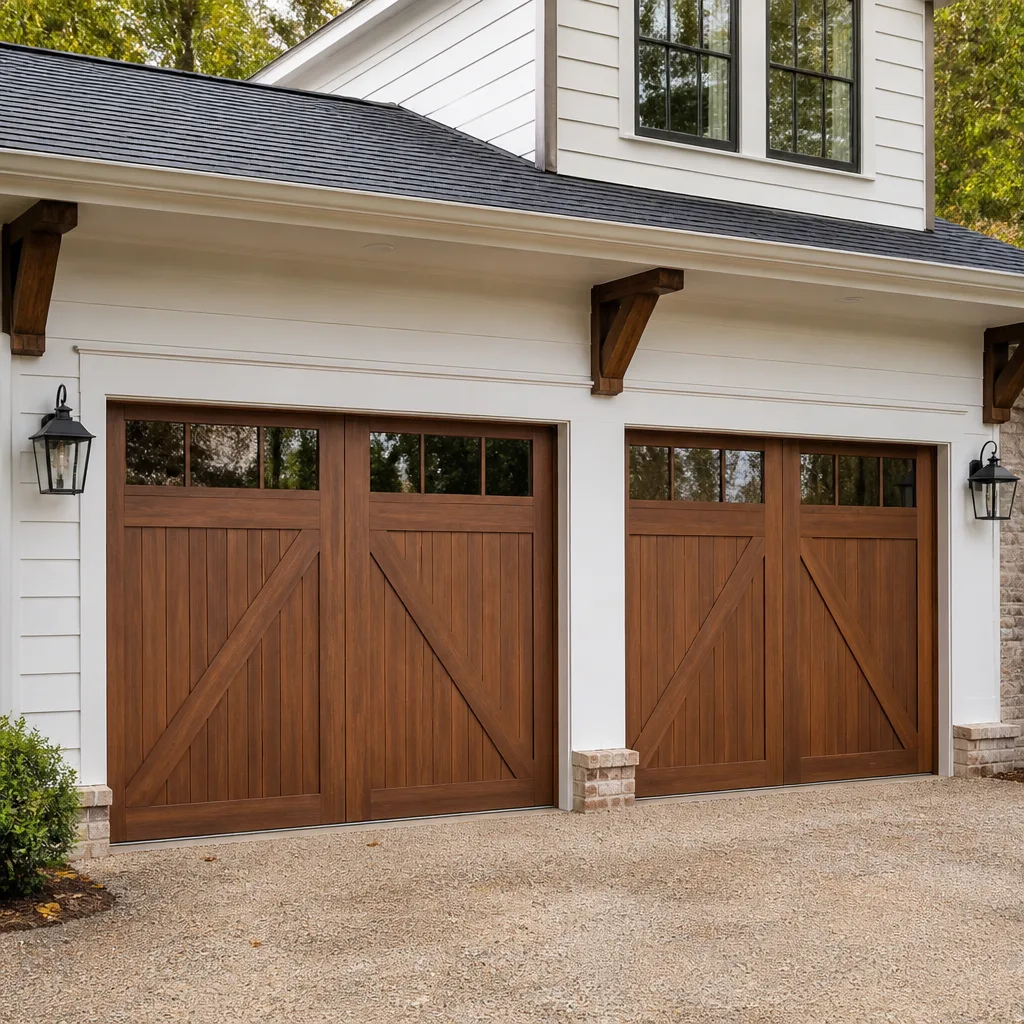 Carriage house
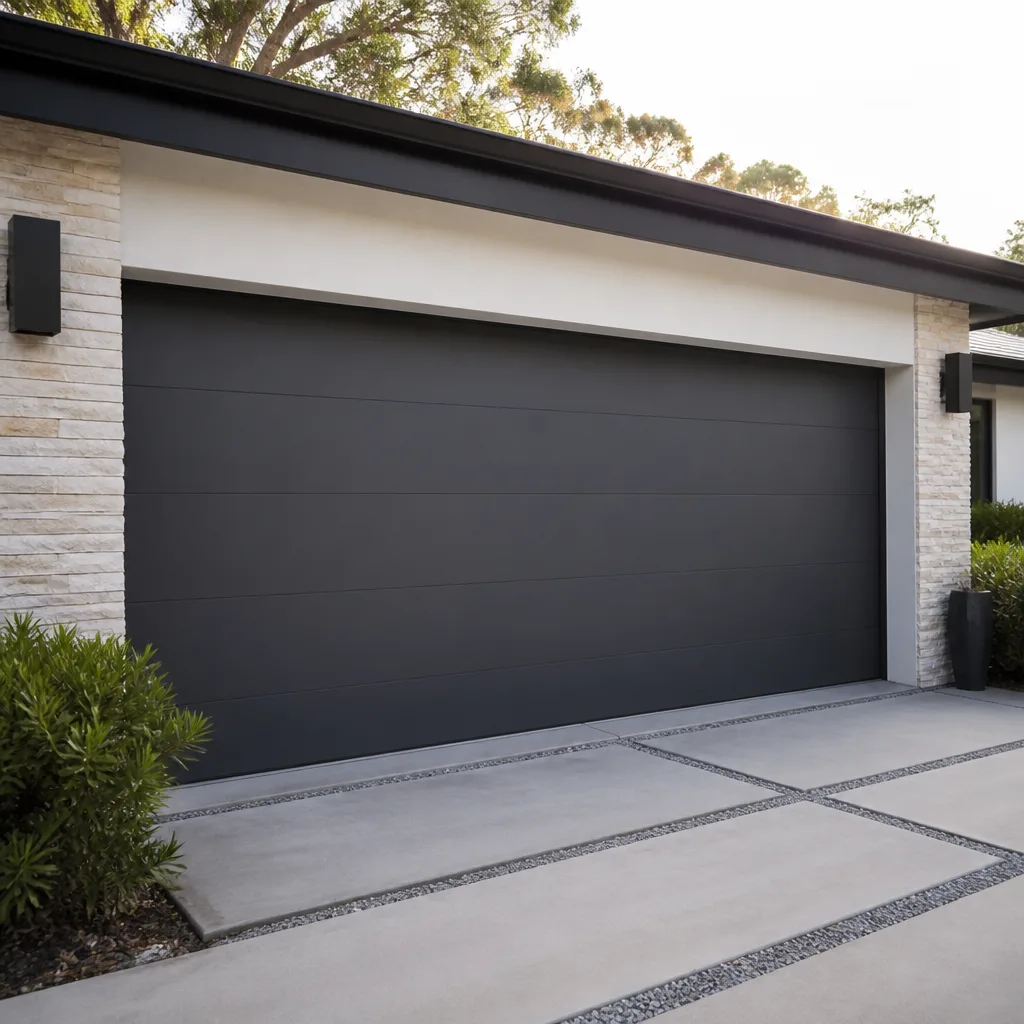 Modern flush
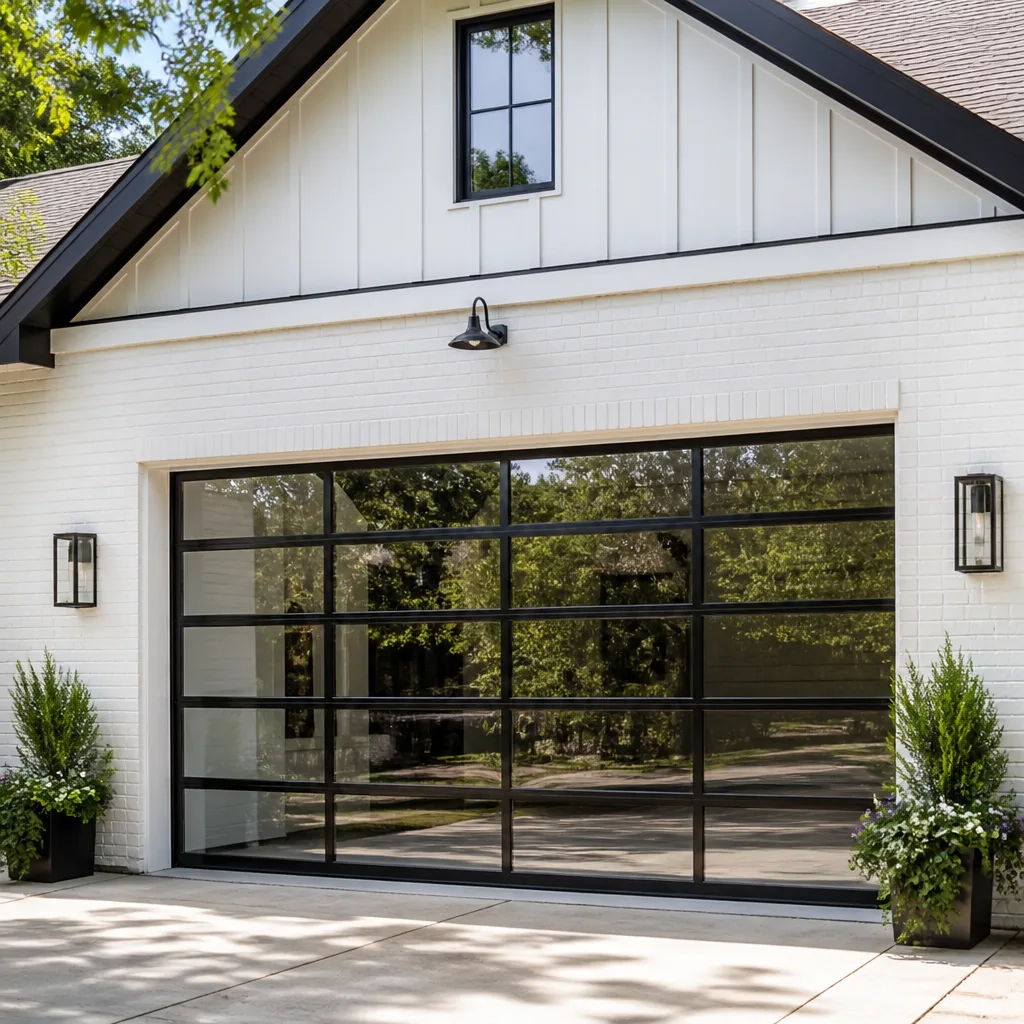 Full-view glass
 LiftMaster openers
 Chamberlain openers
Full 25-point door and opener safety check with every visit - springs, cables, rollers, tracks, and your LiftMaster or Chamberlain opener included
You get a price before we start. It does not change when the pro arrives.
Get your free estimateThe Complete Guide to Garage Doors in Edmond
Most homeowners here choose a garage door the way they’d choose a front door: they look at the panel style, the color, maybe the window inserts, and they decide. That’s the wrong order. In Edmond, a door that looks right in a showroom can fight the conditions outside it for the next decade. Oklahoma wind, clay soil that swells and settles with every wet and dry cycle, and the architectural rules of master-planned neighborhoods like Coffee Creek decide whether a door lasts a few years or a couple of decades. This guide walks through the decisions that actually matter for garage doors in Edmond, from spring and opener repairs to choosing steel gauge, insulation, and wind ratings that hold up when the weather turns.
Quick Answer
A garage door in Edmond should be chosen around wind resistance, frame and track stability in clay soil, and your neighborhood’s HOA rules before anything cosmetic. Most of the repair calls we see here come from spring failure, opener logic problems, and track misalignment caused by soil movement, not from the door panels themselves. Get those three things right and a garage door system in Edmond can go the distance.
Styles & brands we work with
- Raised-panel steel
- Carriage house
- Modern flush
- Full-view glass
- LiftMaster openers
- Chamberlain openers
Table of Contents
- Why Edmond Is Hard on Garage Doors
- Clay Soil, Frames, and Tracks: The Oklahoma Misalignment Problem
- Wind-Load Ratings on Paper vs. Real Oklahoma Weather
- HOA Rules in Edmond’s Master-Planned Neighborhoods
- Matching Door Construction to Edmond’s Climate
- Brands, Parts Availability, and What to Ask a Dealer
- Repair or Replace? A Decision Framework
- A Maintenance Routine That Fits Edmond
Why Edmond Is Hard on Garage Doors
Edmond sits in one of the most active severe-thunderstorm corridors in the country. Hail, straight-line wind, and sudden temperature swings are part of the normal year here, not exceptions. That reality should drive how you think about every part of your door, but most garage doors sold in the area are ordered with almost no attention to wind performance. The gap between what a door is rated for on paper and what it actually does under Oklahoma conditions is the single biggest thing homeowners here misunderstand.
The second factor is the ground. Edmond’s clay-heavy soil expands when it’s wet and contracts hard when it dries out. A garage slab and the wood frame around the opening move with it. Metal tracks bolted to that frame move too, and when they do, a door that ran quietly in March can grind, bind, or trip the opener’s safety reverse in August. That soil behavior, more than anything else, is why garage door repair calls in Edmond so often trace back to the tracks rather than the panels.
The third factor is the neighborhoods themselves. Edmond has a large share of master-planned communities with architectural review committees. In those areas, the door you’re allowed to install is not entirely your decision. Knowing the rules before you order saves weeks and avoids having a door delivered that the committee then rejects.
None of this means garage doors in Edmond are a constant problem. It means the smart money goes into the parts you don’t see: springs sized correctly, tracks anchored to a frame that’s been checked, and a wind-rated door spec that matches the actual exposure of your house.
Clay Soil, Frames, and Tracks: The Oklahoma Misalignment Problem
If your door has started rubbing, catching, or reversing on its own, the cause is usually the opening, not the door. Clay soil movement pushes and pulls the wood frame, the frame drags the track out of plumb, and a track that’s out of plumb forces the door to fight its own path. Springs then work harder than they were sized for, which shortens their life. That chain reaction is the most common structural story we see on Edmond doors.
Here’s how a track and frame check usually goes:
- We sight each vertical track against a level to see whether the soil has pushed the frame out of plumb.
- We check the lag bolts that anchor the track to the jamb and look for wallowed-out holes where the wood has softened or shifted.
- We look at the horizontal track’s pitch and the header above the opening for sag, which is common where soil has settled unevenly.
- We run the door by hand to feel for binding, which tells us whether the problem is alignment or a failing roller or hinge.
- We check the opener’s safety reverse and travel limits, since a track that’s off by a quarter inch will throw off both.
What you can check yourself is simpler. Stand inside the garage with the door closed and look at the gap between the door and each vertical track. If that gap is visibly uneven from top to bottom, or if the door shudders on the way up, stop running it and have it looked at. A binding door puts stress on the springs and the opener, and a spring under that kind of load is a genuine safety concern. Do not attempt to adjust springs or cables yourself. Those parts carry the full weight of the door and can cause serious injury if released incorrectly. Track and frame work is a job for a trained technician.
Wind-Load Ratings on Paper vs. Real Oklahoma Weather
A wind-load rating describes how much pressure a door assembly is engineered to resist. It’s a real number, tested under controlled conditions, and it matters. What it doesn’t tell you is how that door behaves after a few Oklahoma seasons of hail impacts, thermal cycling, and soil movement that slowly loosens the anchoring. A door rated for a given wind pressure performs to that rating only while its tracks, hinges, and anchors are intact and correctly installed. That’s the gap most homeowners never hear about.
What to look for when a door is specified for Edmond:
- Reinforced struts and hinges. Wind-rated doors use heavier hinge plates and horizontal reinforcement struts across the panels. These aren’t cosmetic upgrades. They’re what keeps panels from folding under pressure.
- Anchor depth and frequency. A wind-rated door installed with standard anchors into a soft jamb won’t hold. Ask how the tracks will be anchored and whether the jamb is sound.
- Panel gauge. Thin steel flexes. Flexing fatigues hinges and eventually distorts panels. In a storm corridor, gauge matters more than face style.
- Tested assembly vs. rated components. A door, its tracks, and its hardware are rated as an assembly. Swapping in a lighter track or generic hinges quietly undoes the rating.
Ask any installer to show you the wind rating documentation for the specific door and hardware package, not just the panel. And ask what happens to that rating as the anchoring ages. A wind-rated door that’s been running out of plumb for two seasons is not performing at its rating, and that’s the scenario Edmond weather tends to expose.
HOA Rules in Edmond’s Master-Planned Neighborhoods
In Edmond’s master-planned communities, including Coffee Creek and similar developments with architectural review committees, replacing a garage door usually requires approval before installation. Committees typically care about a few specific things, and getting them right up front avoids the worst outcome: a door you can’t install.
The specs these committees most often address:
- Color. Most require the door color to match the existing palette or the approved list for the plat. “Close enough” usually isn’t.
- Material and panel style. Switching from a raised-panel steel door to a carriage-house style, or from steel to wood-look, is exactly the kind of change that triggers review.
- Window inserts. Adding or removing windows changes the elevation, and many committees treat that as a modification.
- Visible hardware. Decorative hinges and handles sometimes need approval, sometimes don’t. Ask.
Here’s a practical sequence for an Edmond replacement:
- Get your community’s architectural request form and the current approved color and style list before you shop.
- Pick two or three door models that fit the rules, not one, so you have a fallback if the committee prefers a different elevation.
- Submit the request with the manufacturer’s spec sheet, color sample, and a photo of your current door.
- Wait for written approval before ordering. Verbal approval from a board member is not approval.
- Schedule installation only after the written approval is in hand.
If your neighborhood doesn’t have a review committee, you’re free to choose based on the house and the climate. If it does, treat the HOA as part of the spec, right alongside wind rating and insulation.
Matching Door Construction to Edmond’s Climate
Edmond summers are hot, and the winters are mild right up until they aren’t. A surprise ice storm can drop temperatures fast, and a garage that’s been baking at triple digits can go cold in a night. That swing is what stresses door construction. Two specs matter more than any other in this climate: steel gauge and insulation.
Steel gauge. Garage door steel is measured in gauge, and lower numbers mean thicker steel. Builder-grade doors are typically the thinnest, and they’re the ones that dent from a stray lawnmower and flex in wind. A thicker-gauge door resists both, and it holds its shape better through thermal cycling. If your garage faces west and takes the full afternoon sun, gauge matters even more.
Insulation. An insulated door does two things in Edmond. It slows heat transfer into the garage, which keeps the space usable in summer and protects anything stored there. And it adds rigidity, which helps with wind performance. Insulation is rated by R-value, and the right number depends on whether your garage is attached and conditioned, how the space is used, and whether you care about the room above it. A door on a detached, unheated workshop doesn’t need the same insulation as one under a bonus room.
What to weigh against those two specs:
- How the garage is used. Workshop and gym spaces justify more insulation than a space that only holds cars.
- Sun exposure. West- and south-facing doors take the most heat load.
- Wind exposure. More exposed elevations call for a heavier assembly, not just a heavier panel.
- Noise. Insulated doors are quieter, which matters if a bedroom sits above the garage.
None of these choices are made well in a showroom. They’re made by looking at your house, your exposure, and how you use the space.
Brands, Parts Availability, and What to Ask a Dealer
The brand on your door matters less than whether the parts for it are available when something breaks. Some dealers stock common springs, rollers, and hinges locally. Others order everything to fit and ship it in, which means a simple repair can turn into a week without a working door. That difference is worth asking about before you buy.
We work on the brands most Edmond homes actually have: LiftMaster and Chamberlain openers, Clopay and Amarr doors, Wayne Dalton, Raynor, Genie, and Craftsman. Each has its own parts ecosystem. LiftMaster and Chamberlain share a lot of opener architecture, which makes certain logic board and travel-limit repairs straightforward. Genie and Craftsman openers have their own motor and gear designs, and the diagnostic path is different. Clopay and Amarr each have specific panel profiles, so if you need a single panel replaced after a dent, the profile and color have to match what’s on the house.
Questions worth asking any dealer or installer:
- Which parts for this door do you keep on hand, and which do you order?
- If a panel needs replacing in two years, can you still source the same profile and color?
- Does the wind rating documentation cover the tracks and hardware, not just the panels?
- For openers, is the model you’re quoting compatible with my smart-home setup, and what happens to connectivity if the Wi-Fi changes?
On the opener side, modern smart-home systems have introduced a category of problems that didn’t exist a decade ago: connectivity drops, app pairing failures, and firmware quirks. Those are garage door opener repair calls in their own right, distinct from a stripped gear or a dead logic board. A technician who understands the connectivity layer resolves them faster than someone who only knows the mechanical side.
Repair or Replace? A Decision Framework
Most garage door decisions come down to whether the door can be brought back to reliable condition or whether the money is better spent on a new system. There’s no single threshold, but a few signals point clearly in one direction.
Lean toward repair when:
- The panels and frame are sound, and the issue is a spring, roller, hinge, cable, or opener.
- The door is out of alignment from soil movement, not damaged.
- The wind rating and insulation still fit how you use the space.
Lean toward replacement when:
- Multiple panels are dented, rusted through, or bent, especially after hail or wind.
- The door has no meaningful wind rating and your exposure is high.
- The opener is failing repeatedly and the door is older than the rest of the system.
- You’re changing the garage’s use, and the current insulation doesn’t fit.
Either way, the decision should be based on what the door actually needs. A door that needs a spring and an alignment doesn’t need a new panel set, and a door that’s lost its anchoring and wind integrity won’t be fixed by tightening a few bolts. Our approach is to diagnose the whole system and explain what’s failing, what’s fine, and what the options are, then quote the work before anything starts.
A Maintenance Routine That Fits Edmond
A garage door in Edmond needs less maintenance than most people think, but it needs the right maintenance at the right time of year. The goal is to catch the soil-driven misalignment and spring wear before they escalate into a broken door.
- Once a month: run the door and listen. New grinding, squealing, or a door that shudders on the way up is an early sign of track or roller trouble.
- Once a month: check the safety reverse. Put a small object in the door’s path and confirm it reverses. This is the single most important safety feature on the system.
- Seasonally: look at the gap between the door and each vertical track. Uneven gaps point to soil movement and a frame out of plumb.
- Seasonally: wipe down the weather seal at the bottom of the door. Oklahoma temperature swings wear it faster than most climates.
- Before storm season: have the springs, cables, and anchoring checked by a technician. These are the parts that fail under wind load and the parts you should never adjust yourself.
- After a major hail or wind event: have the panels, tracks, and hinges inspected. Damage that looks cosmetic can compromise the assembly’s wind performance.
What not to do: don’t lubricate the tracks themselves. Lubricant attracts grit and makes rollers slide instead of roll. Don’t paint over hinges or rollers. And don’t attempt spring or cable work. Those parts are under high tension and can cause serious injury.
Common Mistakes to Avoid
- Choosing a door by style before checking the wind rating. In a storm corridor, a beautiful door that isn’t rated for the wind load is a liability. Choose the spec first, then the look.
- Treating a binding door as an opener problem. If it grinds or reverses on its own, the issue is often the track alignment caused by soil movement. Replacing the opener won’t fix it.
- Ordering a replacement door in an HOA community before getting written approval. Verbal approval doesn’t count, and a delivered door you can’t install is the worst possible outcome.
- Ignoring the anchoring on a wind-rated door. A rated door on loose or shallow anchors is not performing at its rating. Check the anchors, not just the panel label.
- Picking insulation by price rather than by use. A detached workshop and an attached garage under a bonus room have completely different insulation needs.
- Buying a door brand without checking local parts availability. If the panel profile or hinges have to be ordered and shipped, a simple repair becomes a long wait.
- Adjusting springs or cables yourself. This is the most common serious-injury mistake in garage door work. Leave it to a trained technician.
See the difference
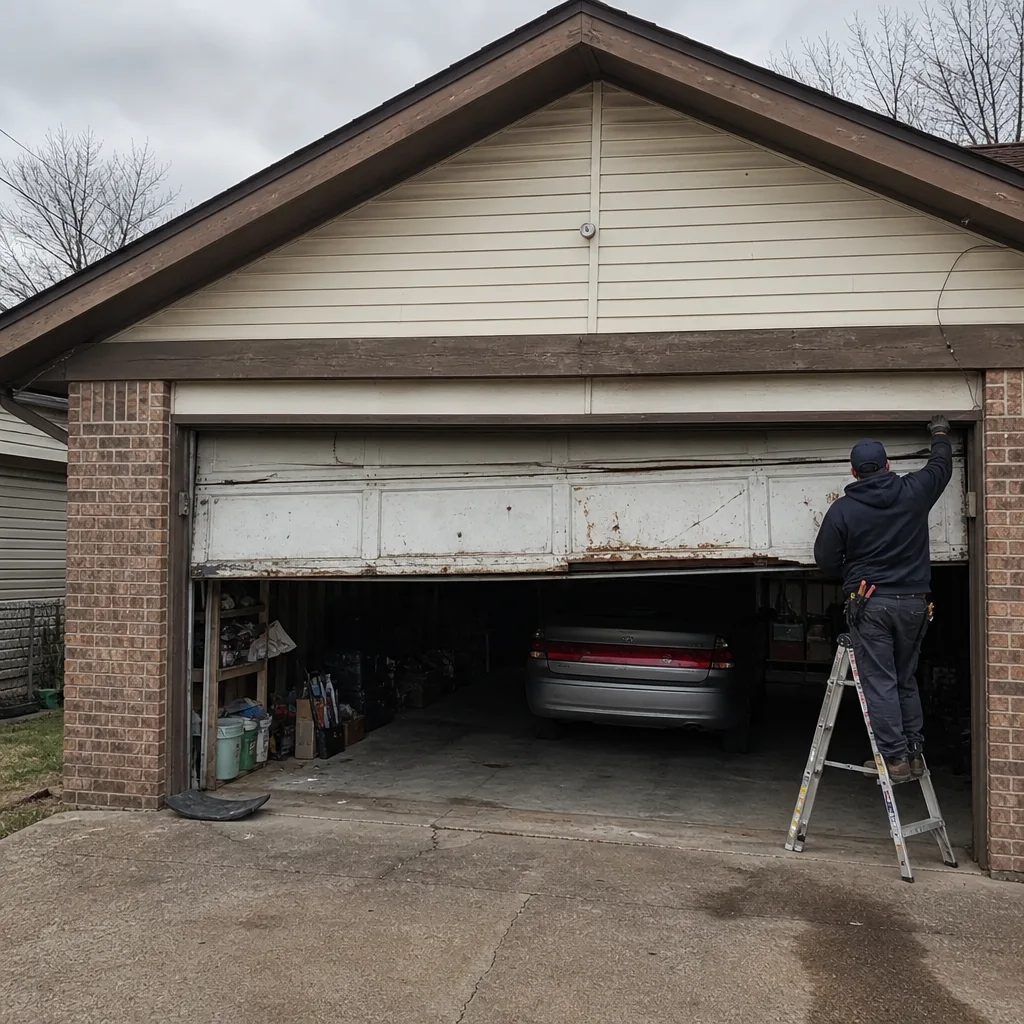 Before
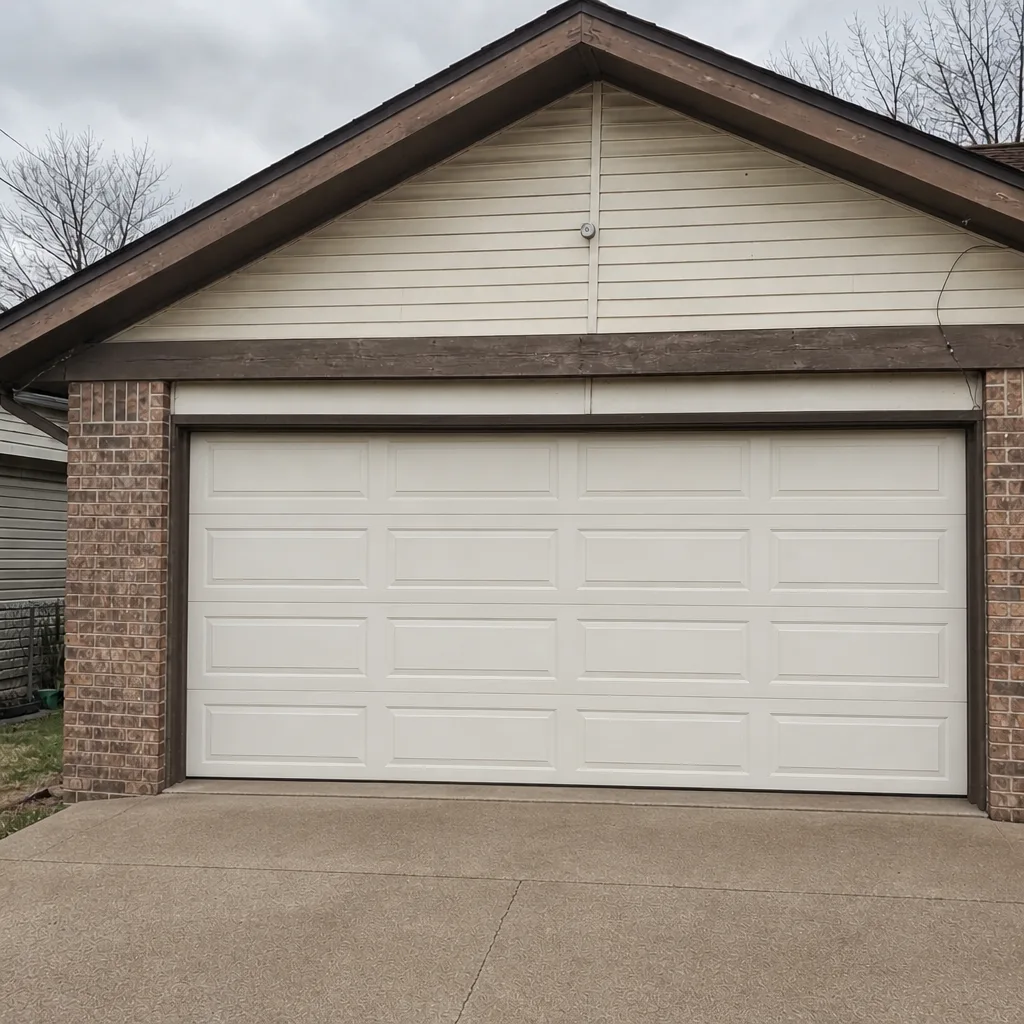 After
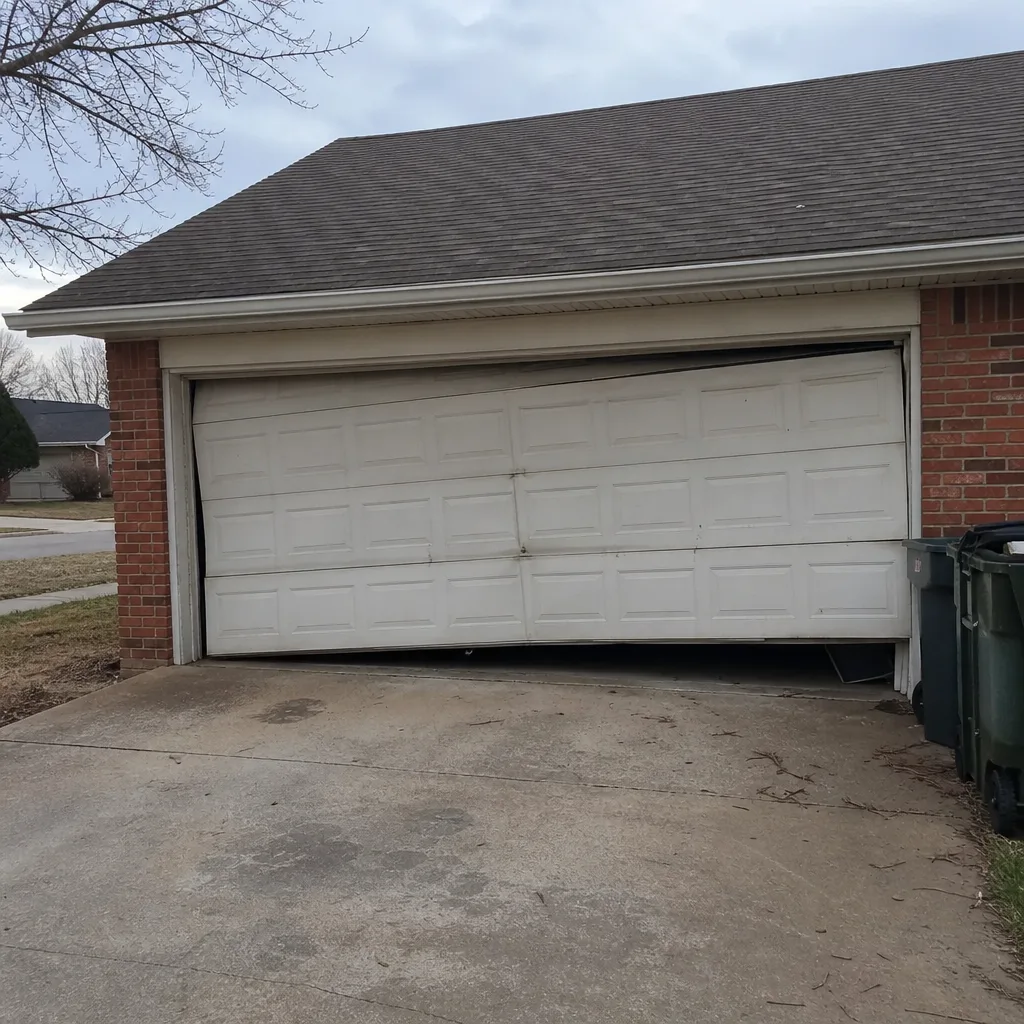 Before
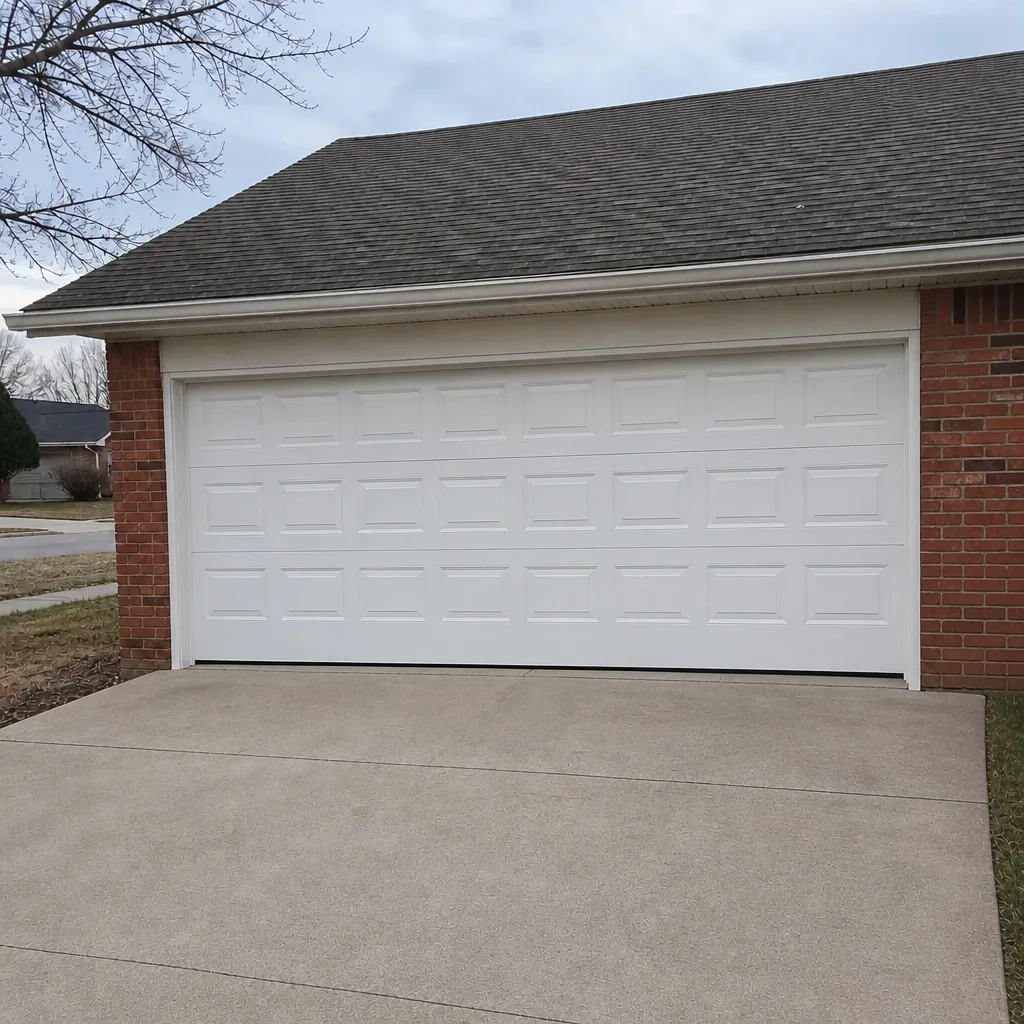 After
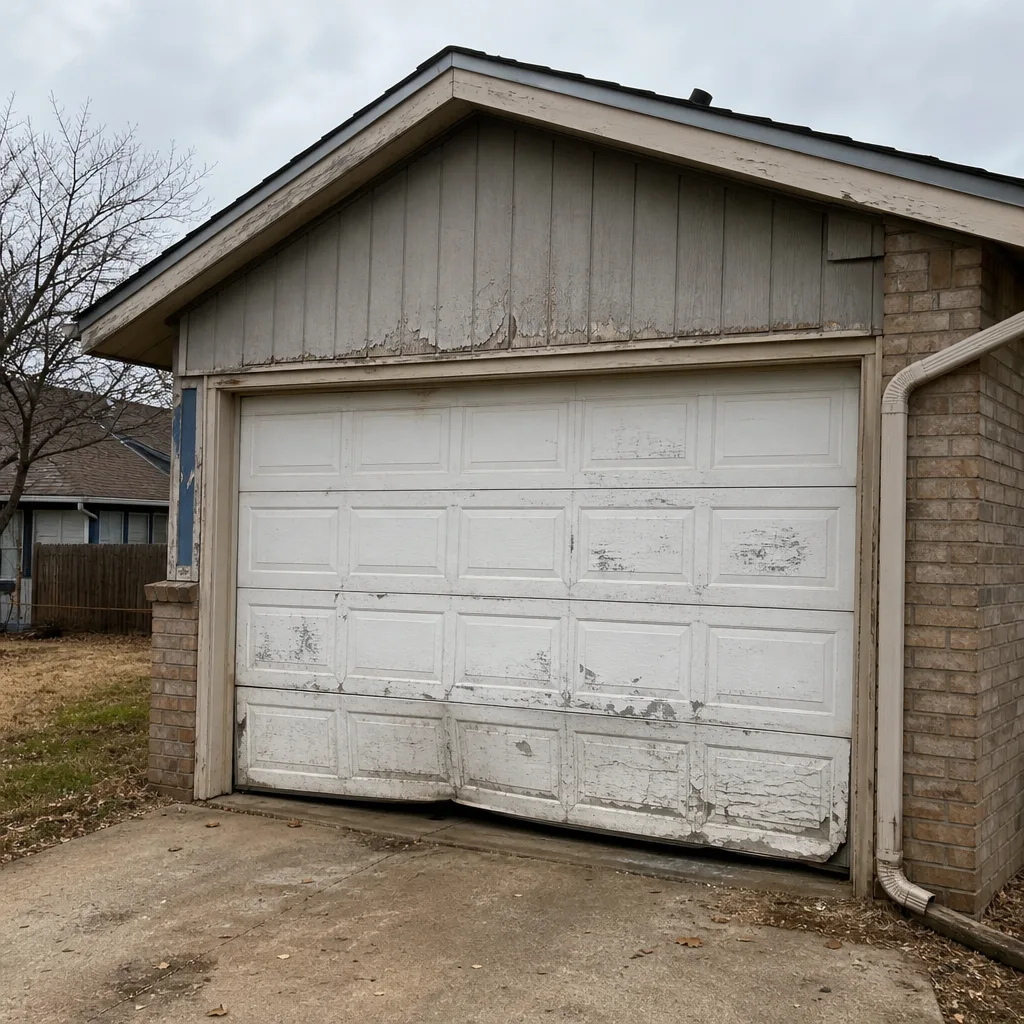 Before
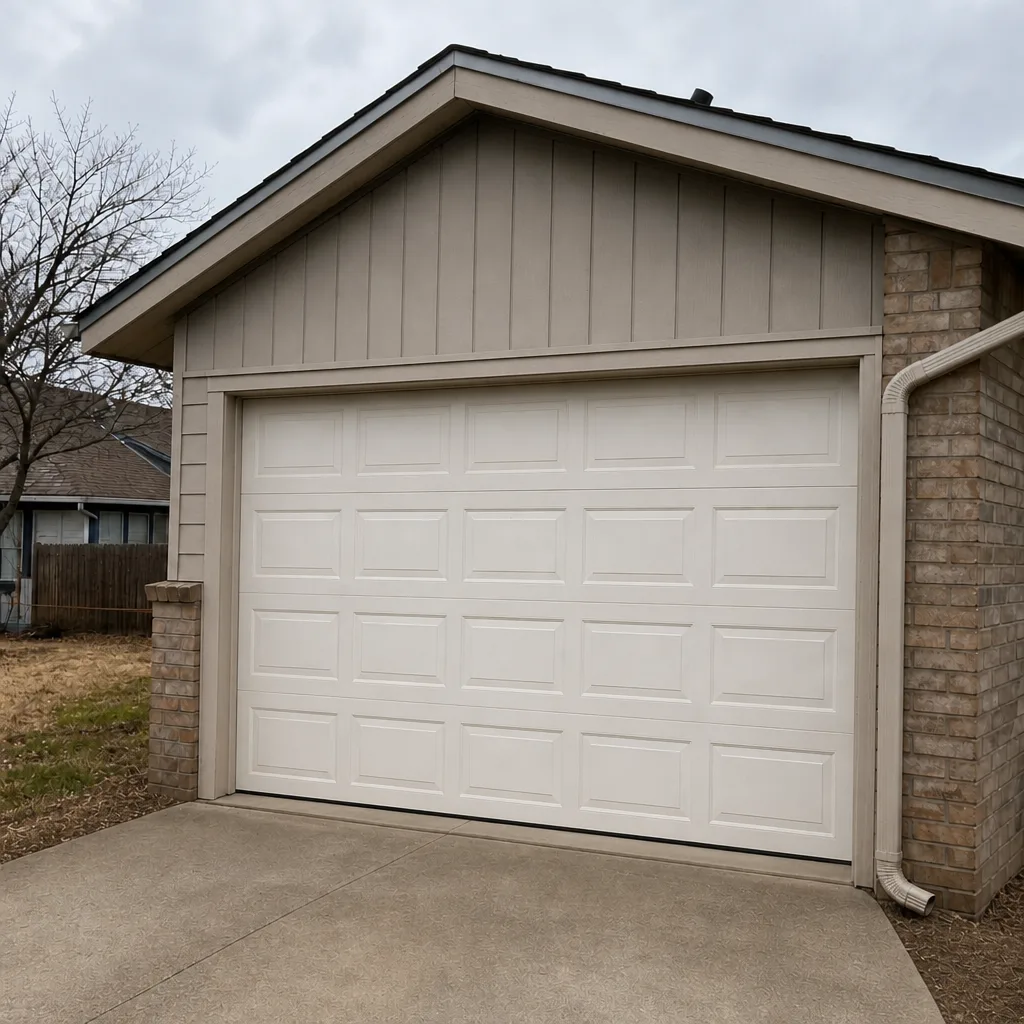 After
When to Call a Professional
Call a professional when the door binds, grinds, reverses on its own, or won’t open with the opener. Call when a spring breaks, when a cable comes off, when the door has been hit by hail or wind, or when tracks look visibly out of line. Those are the situations where the wrong fix can make the problem worse or put someone at risk. Also call before you order a replacement in an HOA neighborhood, so the spec matches what the committee will approve, and before storm season if you’ve never had the springs and anchoring checked. Some work, like track and frame correction after soil movement, needs a technician to diagnose and correct in one visit rather than guess at remotely.
Edmond Garage Door Service offers free estimates in Edmond. Call (833) 545-4561. We answer 24/7, with fast dispatch from 7am to 7pm, Sunday through Friday. The price is quoted and agreed before any work starts, so there’s no surprise at the end.
Frequently Asked Questions
Garage door repair in Edmond typically runs from about $150 to $450 depending on the part and the access, with spring replacements and opener repairs at the higher end. The written estimate sets the final price, and we confirm it with you before any work starts. Call (833) 545-4561 for an exact quote. Estimates are free.
Same-day service is often available for repairs and opener issues. We answer 24/7, with fast dispatch from 7am to 7pm, Sunday through Friday. Installations are measured, ordered, and scheduled, so those are planned rather than same-day. Call (833) 545-4561 and we’ll find the soonest opening.
The most common cause of a grinding or binding door in Edmond is clay soil movement pushing the frame out of plumb, which drags the tracks out of line. That forces the door to fight its own path and stresses the springs and opener. It’s a track and alignment fix, not an opener replacement. Call (833) 545-4561 to have it diagnosed.
In master-planned communities like Coffee Creek and similar Edmond neighborhoods, yes. Most architectural review committees require written approval before installation, and they usually care about color, panel style, and window inserts. Get the written approval before you order. Call (833) 545-4561 if you want help matching the spec to your committee’s rules.
No. The price is quoted and agreed before any work starts. If the diagnosis turns up something the initial conversation didn’t cover, we’ll explain it and get your approval on an updated estimate before proceeding. Call (833) 545-4561 for a free estimate.
Yes. Our technicians are state-licensed and insured and bonded, and they have up to 10 years of experience across the major door and opener brands. We work on LiftMaster, Chamberlain, Genie, Craftsman, Clopay, Amarr, Wayne Dalton, and Raynor. Call (833) 545-4561 with your brand and model and we’ll confirm support before we arrive.
The Bottom Line
Choosing a garage door in Edmond comes down to three things before anything else: wind resistance, frame and track stability in clay soil, and your neighborhood’s HOA rules. Get those right and the door will hold up through storm seasons and temperature swings. Get the color right and the spec wrong, and you’ll be paying for repairs for years. Our guide covers how to think through each decision, what to ask any installer, and what a sensible maintenance routine looks like for this climate. If you’re ready to move from research to a plan, we’re a call away: Edmond Garage Door Service handles repairs, opener repair, and replacement across all major brands. Call (833) 545-4561 for a free estimate. We answer 24/7, with fast dispatch from 7am to 7pm, Sunday through Friday.
Written by the team at Edmond Garage Door Service.